
Fagus hayatae: Nuts Protect the Embryo
Updated:2026-04-20 Source:Shennongjia National Park
Fagus hayatae, also known as Taiwan Beech, is very rare. It is labeled as VU (vulnerable) by the IUCN and listed as a national second-class protected wild plant of China. It is also a relic species, a living fossil. During the Ice Age approximately 18,000 year ago, Fagus hayatae migrated from mainland China to Taiwan Province. As the climate warmed and glaciers melted, seawater separated the two sides. Since then, Fagus hayatae has settled there and become "special" to Taiwan. It was once thought that Fagus hayatae only lived in Taiwan Province and was endemic to Taiwan Province. However, through the efforts of anatomy and molecular research, the trees in Zhejiang and Bashan were also classified as Fagus hayatae.
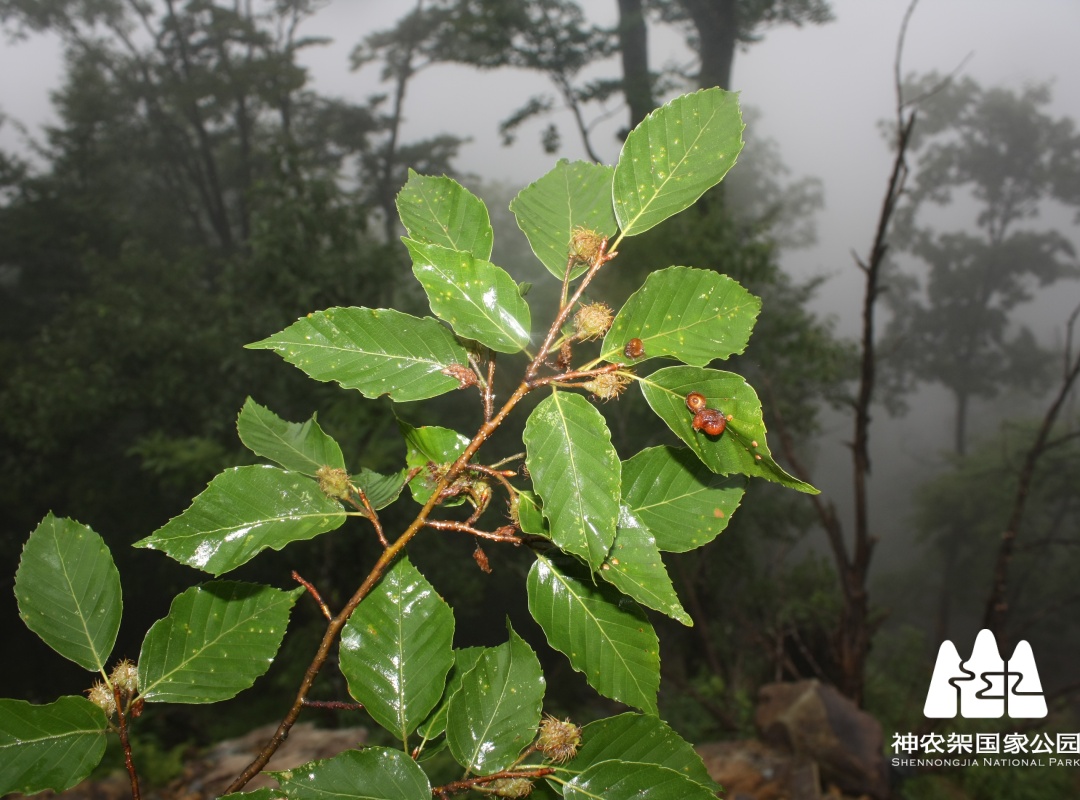
This rare species generally grows in mountainous areas at an altitude of 1,000-2,300 meters in steep terrain, humid climate and soft and acidic soil. Fagus hayatae wood is tough, fine in texture, durable and corrosion-resistant, and it is an excellent building material. Even in Bashan where it was not yet recognized as Fagus hayatae, it had been cut down in large quantities because of its huge economic benefits and made into floors, beams, furniture, etc. Unfortunately, Fagus hayatae is monoecious, whose female and male inflorescence grows on the same tree. Under natural conditions, its pollination rate is low, and the seeds are mostly not full enough with low germination rate, few seedling, and weak natural regeneration ability. The population of Fagus hayatae in Taiwan Province faces the threat of typhoon during pollination and fruiting. Also, due to the topographical limitation in its distribution area and the global climate change, its survival in Taiwan Province is not optimistic. At present, Micangshan National Nature Reserve preserves the largest area of Fagus hayatae in inland China.
When the long-awaited subsolar point shifts towards the northern hemisphere, the cold northern hemisphere finally feels a hint of warmth, and spring has arrived. Then, the seeds of Fagus hayatae, which has spent a long dormancy, break through the hard shell through unremitting efforts and breathe the first wisp of air outside. The shell protects the embryo and limits the germination of the embryo, but it also allows the fruit more time to migrate and spread its population, which is also the way for nuts to survive for a long time. Fully grown Fagus hayatae paints another picture. Its tender flower buds come out first, and the leaf buds then reveal their sharp edge. And there is a rare butterfly called Sibataniozephyrus kuafui, whose larvae feed on the tender leaves. It only takes two weeks for the leaflets of Fagus hayatae to grow up to age. It is during these two weeks that the butterfly eggs hatch and the larvae feed on tender leaves, and then pupate before the leaves age. The imagoes break out of the pupae and move through the leaves and branches of Fagus hayatae. In early summer, the butterfly lays its eggs on branches and spends the summer, autumn, and winter, waiting for the arrival of spring in the following year. The harmony between the phenology of the tree and the butterfly makes one marvel at the wonders of nature.
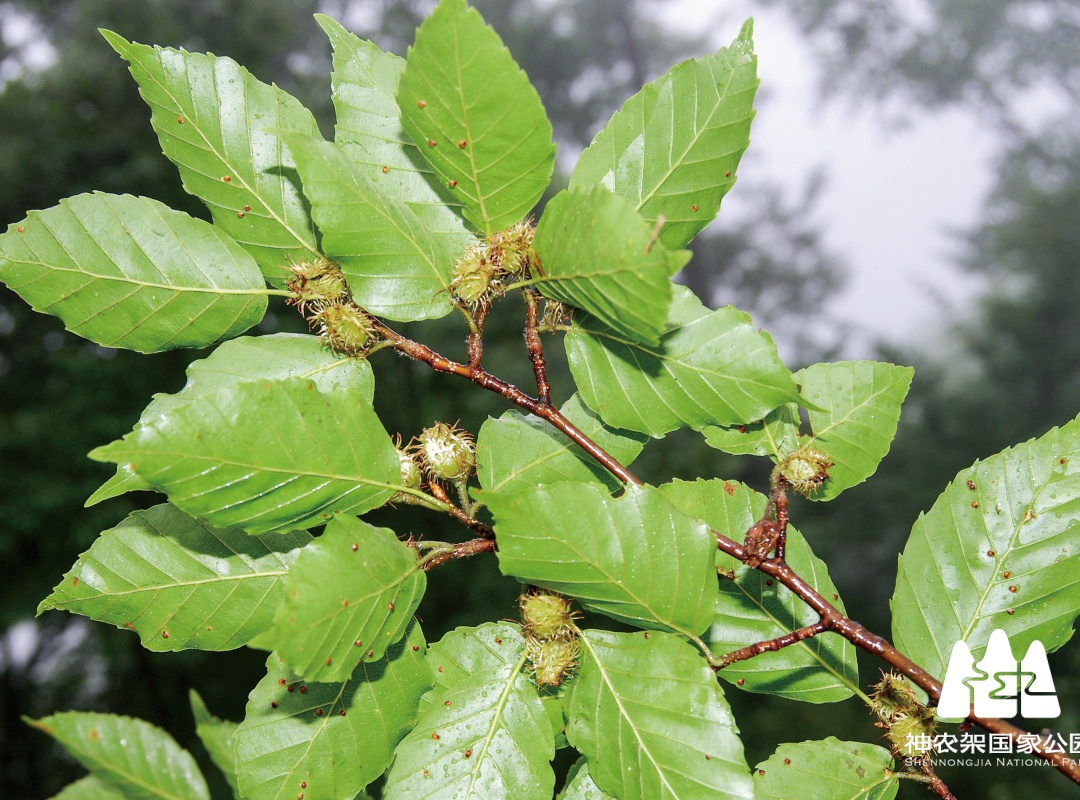
A Chinese poem goes, "Trees bring cool cicadas to sing the rainy days in summer," which means, in summer, the canopy of Fagus hayatae covers up the ground and sky. There is a thick cuticle membrane on the epidermis of the leaves of Fagus hayatae, and the main veins of the leaves are densely pilose, which can prevent excessive loss of water, and prevent strong sunlight from burning the leaves in tropical and subtropical areas. This is a survival strategy to adapt to the environment. When the bleak autumn wind sweeps across the earth, we may think of the imagery of the poem, "I stopped the carriage to admire the maple forest at night, where the frosted maple leaves are redder than the spring blossoms". The beauty of maple leaves has long been deeply rooted in people's hearts, but the Fagus hayatae also creates a special spectacle. The leaves, once green in summer, seem to want to make a final cry, turning themselves into boney yellow and finally golden. From the top of the mountain, we can see the golden sea of trees connected with the sky——quite a view. Also, a year of efforts in Fagus hayatae also starts to pay off with fruits emerging from the branches. The cupule is a bowl-shaped organ formed by the aggregation and fusion of bracts. Each cupule contains 1-2 nuts, and the fruit scar is triangular. One nut contains one seed.
When the last leaf on the tree falls, it signals that winter is coming, and Fagus hayatae again lays dormant, but this is only temporary——when spring comes, this seemingly lifeless deciduous tree will again exude life, adding a touch of green to the earth. In this way, day by day and year by year, Fagus hayatae has survived to this day, and it will be passed down from generation to generation on this land in the future.(Written by Yang Teng, Reviewed by Jiang Mingxi, Photography by Zhang Hongwei,Translated by Liang Tianjing)
Species profile:
Fagus hayatae
Order: Fagales
Family: Fagaceae
Genus: Fagus
Identification Key:
Fagus hayatae grow into trees up to 20 meters tall, with a DBH (diameter of breast height) of about 60 centimeters. Its annual shoots are maroon, while the old branches are off-white. The leaves are angular, ovate and serrate with a mucronate or short acuminate tip. Male inflorescence is head-shaped, drooping. Its nut is the same size as its petal, or slightly longer. There are narrow wings at the petiole, often two. The flowering phase is from April to May, and the fruiting period from August to October.
Geographic distribution in China:
Mountainous areas of Northern Taiwan Province, Sichuan Province, Hubei Province, Gansu Province, Shaanxi Province, and Zhejiang Province. 
Copyright Shennongjia National Park
Address:36 Chulin Road, Muyu Town, Shennongjia Forestry District, Hubei Province 鄂ICP备18005077号-3
Address:36 Chulin Road, Muyu Town, Shennongjia Forestry District, Hubei Province 鄂ICP备18005077号-3
Email:2673990569@qq.com
Phone:0719-3453368
Phone:0719-3453368


TOP