
Tetracentron sinense: Where The Water Runs, The Green Leaves Shake
Updated:2026-04-16 Source:Shennongjia National Park
Tetracentron sinense is a relic species that has long existed since the early stage of the Earth. It holds significant scientific value for the study of the phylogeny of angiosperms, the evolution of ancient plant communities in China, and the paleoclimate. Plant taxonomists classify plants by constructing phylogenetic trees, which is similar to our family trees, to represent the affinities and evolutionary relationships among species. Tetracentron sinense is a monotypic genus and species. Recently, researchers have found that it may belong to the same Trochodendraceae family as the Trochodendron aralioides in Taiwan.
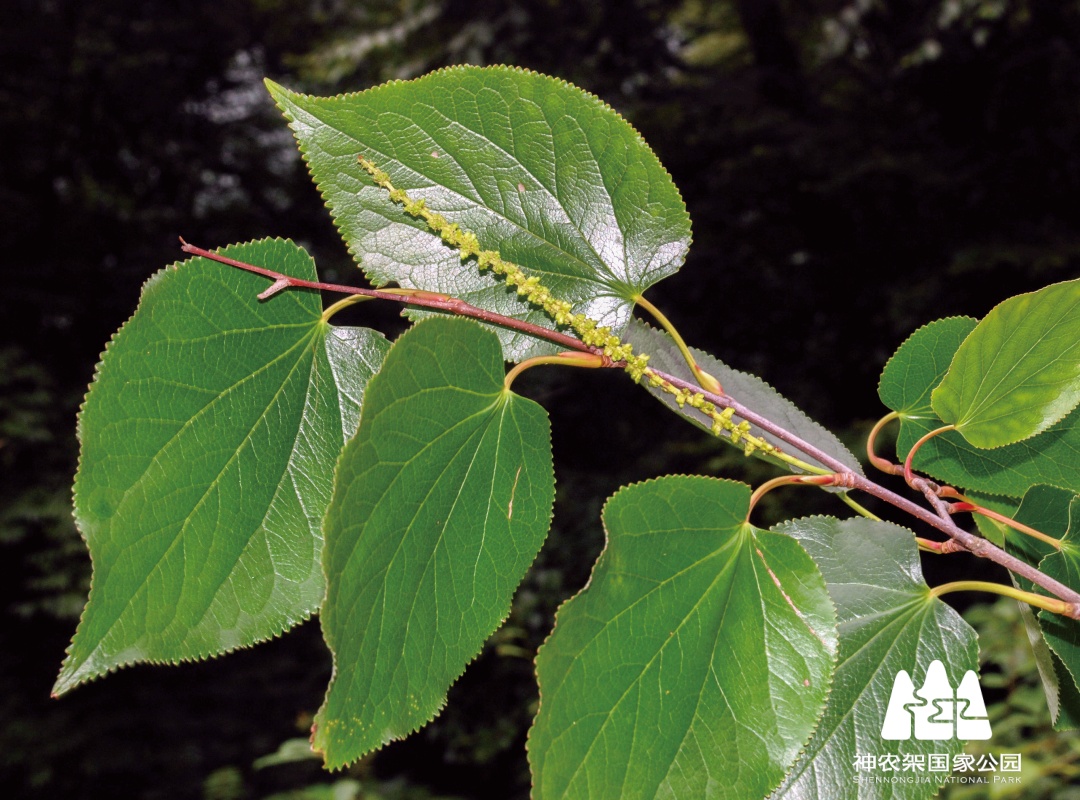
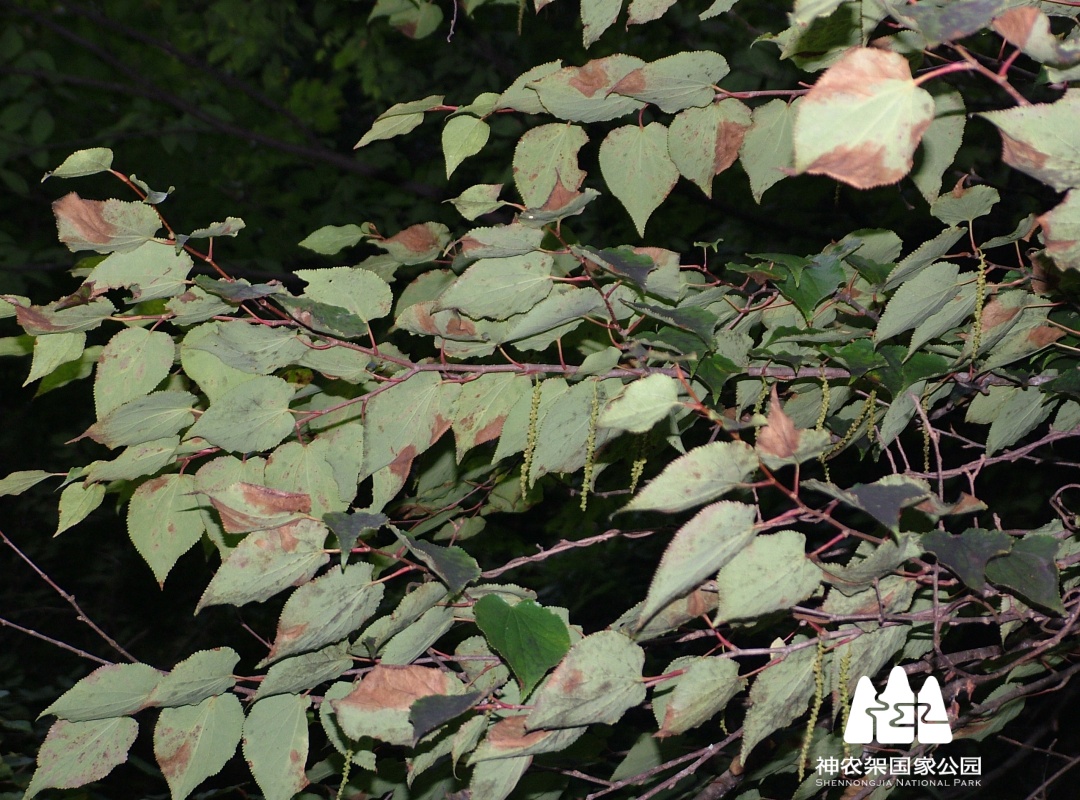
Leaving its origin aside, Tetracentron sinense is also listed as a national second-class key protected plant because it is endemic to East Asia and has important scientific value. These trees are distributed in broad-leaf forests in valleys or mixed forests by the stream, more adapted to humid environments. Tetracentron sinense has long branches and short branches. The short branches are only a few millimeters long, and the leaves grow on the end of the short branches, while the petioles are 4 centimeters long. So if you don't look carefully, it is easy to ignore the short branches. Its leaves are smooth and hairless on both sides, and the back is often covered with white frost. When the wind blows, the reflection of the leaves and their white backs make the forest sparkling in daylight.
I was lucky enough to participate in the second national survey of national key protected wild plants. In western Hubei, experienced guides told us that wherever we heard running water, we could find Tetracentron sinense! How come? The morphological changes of the leaf, which functions as a nutrient-producing organ, will directly affect the growth and development of the plant, and then affect its long-term adaptation, survival and evolution. And its phenotypic traits are the result of the combined action of its environment and genes. A study has found that the degree of differentiation of phenotypic traits such as leaf shape and leaf area that affect the adaptability of Tetracentron sinense to light and temperature is relatively high, which is beneficial for it to adapt to temperature and light changes. However, the differentiation level of stomatal size and density is relatively low, which may be related to its relatively strict selection of habitat conditions. The lower differentiation level of stomatal traits is precisely a highly selective adaptation to this humid environment. The humidity by the valley and stream is conducive to their survival, which is why the guides' words often check out.
Rare and endangered species like Tetracentron sinense, which prefer gentle and humid habitats, will be particularly sensitive to global warming and the gradually drying climate change. The fragmentation of the habitat of Tetracentron sinense has led to a continuous shrinkage of its population, increasing the distance between trees, thus inhibiting wind-borne pollination, which in turn reduces its number of pollinators. And its flowering period is rainy, also affecting pollinators. Therefore, cross-pollination efficiency is low, and self-pollination leads to low adaptability of offspring. Because of its ornamental, timber and medicinal values, Tetracentron sinense has been over-exploited, mostly scattered and difficult to regenerate naturally. At present, they are listed in Appendix III of the CITES (Convention on International Trade in Endangered Species of Wild Fauna and Flora). Fortunately, more and more attention is paid to the protection of ecological diversity——the establishment of nature reserves, and the research of its endangered mechanism by domestic and foreign scholars have laid a solid foundation for its the protection and repopulation. May this ancient species that has existed since the Tertiary Age continue to live on Earth.(Text by Gan Shirui, Reviewed by Jiang Mingxi, Photography by Jiang Zhiguo Translated by Liang Tianjing)
Species profile:
Tetracentron sinense
Order: Trochodendrales
Family: Trochodendraceae
Genus: Tetracentron
Identification Key:Tetracentron sinense is an arbor tree with a height of up to 30 meters and DBH (diameter at breast height) of 1.5 meters, completely hairless. Its bark is grayish brown and flaky. Long branches grow at the top, short branches grow on the side. Its leaves are ovate heart-shaped, with serrations on the edge, and slightly covered in white frost on the back. Its spike shaped inflorescence droops and grows at the top of short branches. Its fruit is oblong, seed strip-shaped, 2-3 millimeters in length. Its flowering phase is from June to July, and the fruiting period is from September to October.
Geographic distribution in China:Gansu, Shaanxi, Hubei, Hunan, Sichuan, Guizhou, Yunnan and other provinces.

Copyright Shennongjia National Park
Address:36 Chulin Road, Muyu Town, Shennongjia Forestry District, Hubei Province 鄂ICP备18005077号-3
Address:36 Chulin Road, Muyu Town, Shennongjia Forestry District, Hubei Province 鄂ICP备18005077号-3
Email:2673990569@qq.com
Phone:0719-3453368
Phone:0719-3453368


TOP