
Chrysanthemum indicum var. aromaticum: Luring Insects with an Extraordinary Scent
Updated:2026-04-10 Source:Shennongjia National Park
Just a touch, and its fragrance clings to your fingers—lingering, persistent. Sniff once, it's there. Sniff again, it remains. This remarkable plant is the Chrysanthemum indicum var. aromaticum, endowed with a rare and potent aroma. Yet, encountering it is not so easy.
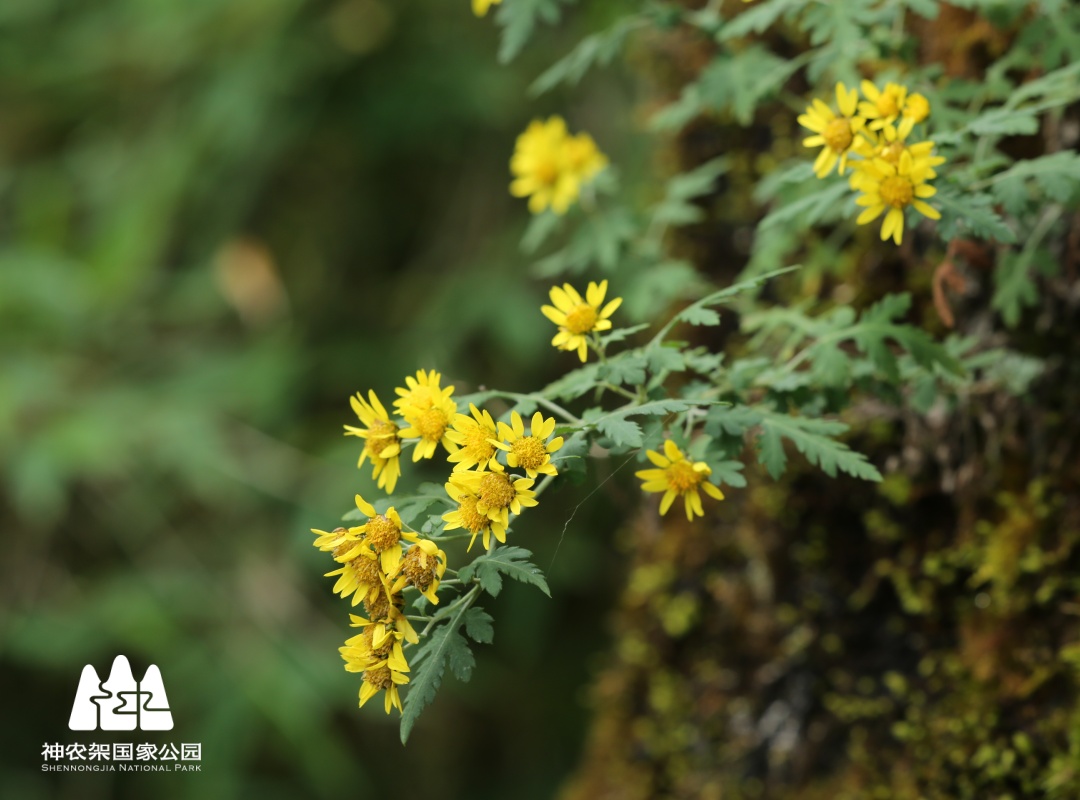
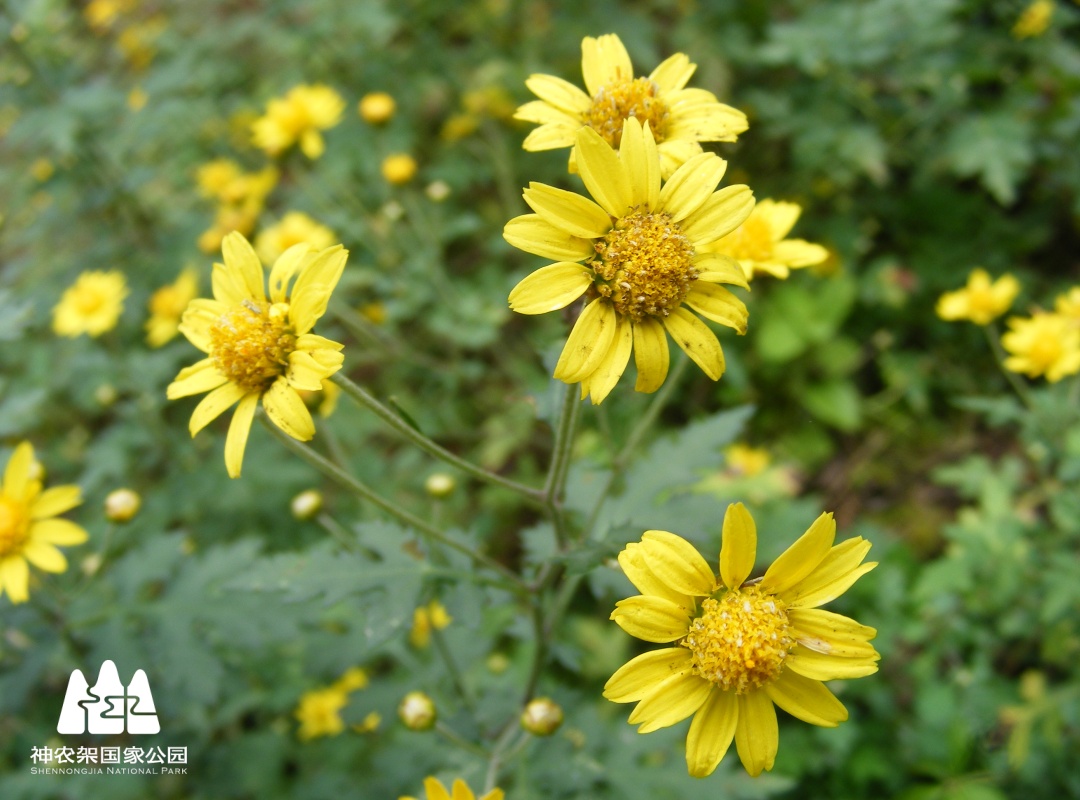
Chrysanthemum indicum var. aromaticum is inconspicuous—green leaves, small yellow flowers, appearing rather plain. Its flowering period spans from mid-August to early September. Flowers bloom for the purpose of fruiting. To attract insects, flowers employ every means possible. Its extraordinary fragrance is not meant to please humans, but to lure insects—all for the sake of gene propagation. Across the vast alpine meadows, where insects are scarce, plants must pull out all the stops to ensure pollination. Compared to color, scent often holds greater allure. Thus, Chrysanthemum indicum var. aromaticum unveils its unique trick: its flowers, leaves, roots, and stems are all fragrant. Recklessly, it releases all the aroma it has stored up, like long-pent emotions, permeating the highland meadows, diffusing through Shennongjia. Come, insects. I have this rare fragrance—let's create a story together.
People are captivated by its scent, using it in perfumes and spices. Notably, "Yellow Crane Tower" cigarettes have even incorporated luteolin extracted from this chrysanthemum into their tobacco, aiming to counteract harmful substances. In traditional Chinese medicine, Chrysanthemum indicum var. aromaticum is also used to calm the liver, improve vision, clear heat, and detoxify the body.
Mr. Liu Qihong of the Wuhan Institute of Botany first discovered and named the Chrysanthemum indicum var. aromaticum in Shennongjia in 1982. Large natural communities thrive in sunny, open areas at around 2,600 meters above sea level, concentrated in locations such as Da Shennongjia, Xiao Shennongjia, Shennong ding, Changyanwu, Liangfengya, Badongya, Jujuyan, Houzishi, Tianmenya, and Yanziya.
A question from a middle school exam goes like this:
A wild chrysanthemum grows in Shennongjia, emitting a distinctive fragrance. Botanists call it the "Chrysanthemum indicum var. aromaticum." However, when transplanted elsewhere, it loses its scent. This phenomenon indicates:
A. Organisms can adapt to the environment.
B. The environment can affect organisms.
C. Organisms can affect the environment.
D. The environment can adapt to organisms.
The answer is B. The explanation hinges on the environmental differences between the two locations—variations in moisture, soil, sunlight, and temperature between Shennongjia and other places.
Chrysanthemum indicum var. aromaticum is endemic to Shennongjia. Away from its native habitat, producing that scent becomes difficult—or perhaps unnecessary. Evolution is a process of continually shedding superfluous traits. If an organism can be "lazy," why bother working? If it can attract bees and butterflies without being showy or fragrant, why expend resources manufacturing colors and scents?(Written by Shui Yi Reviewed by Jiang Mingxi Photography by Jiang Zhiguo)
Species Profile:
Chrysanthemum indicum var.aromaticum
Order:Asterales
Family:Asteraceae
Genus:Chrysanthemum
Key Identification Features:A low-growing perennial herb sparsely covered with white pubescence. The flowers, leaves, and roots all emit a strong, distinctive fragrance. Stem base tinged purplish-red. Leaves are relatively small, thick, dark green with raised veins on the upper surface and small sunken glands beneath. Flowers small, yellow.
Distribution in China:Shennongjia.

Copyright Shennongjia National Park
Address:36 Chulin Road, Muyu Town, Shennongjia Forestry District, Hubei Province 鄂ICP备18005077号-3
Address:36 Chulin Road, Muyu Town, Shennongjia Forestry District, Hubei Province 鄂ICP备18005077号-3
Email:2673990569@qq.com
Phone:0719-3453368
Phone:0719-3453368


TOP