
Fargesia murielae: It Blooms And It Dies, It Dies Yet It Stands
Updated:2026-03-31 Source:Shennongjia National Park
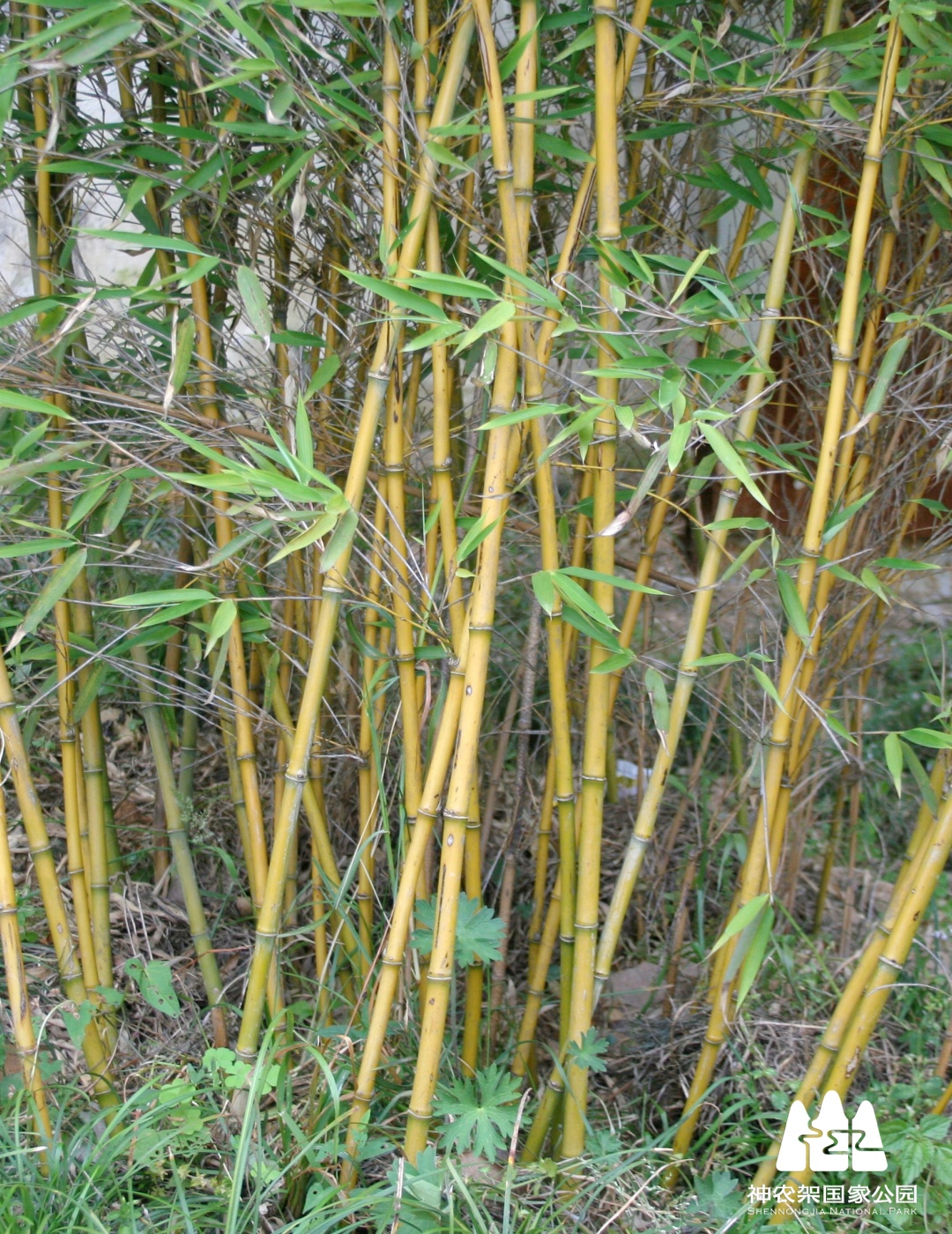
The beauty and mystique of Shennongjia enchants every soul, every plant and tree oozing magic. It is a miracle of nature's creation. In this superior hub grows none other than the Fargesia murielae, or Shennong arrow bamboo. Its cane is slender, orange and shiny, solid yet flexible. It was named arrow bamboo because the ancient Chinese used it to make arrows. Although arrow bamboo is not as tall as moso bamboo, it inspires in us a different sense of awe and beauty with its vast greenness, and it comes with a unique history and value.
Shennong arrow bamboo is native to Shennongjia Forestry District, and it is the bamboo with the highest vertical distribution in the area. At an altitude of 2,800-3,000 meters, on the slope of the mountain, arrow bamboo covers the whole area, creating a splendid picture with alpine meadows and tall firs, which lives in the heart of beholders. However, why is Shennong arrow bamboo so rare in China, yet so common in Europe, when it is original to the Shennong Forestry District? That is the result of artificial introduction and cultivation, and its growth habits.
Over a hundred years ago, Ernest Henry Wilson, a plant hunter, discovered this kind of bamboo during his expedition in Shennongjia. He couldn't help but exclaim, "This is the most beautiful bamboo I have ever seen." Thus he introduced it to the United States and United Kingdom, and then successfully planted it in Kew, England. Due to the coldness in low circumpolar Europe, similar to the low temperature at high altitude in its normal region in Shennongjia, it can also be grown in Europe. Also admired for its unique beauty, arrow bamboo is thus widely grown by European countries, later becoming a common garden plant in the region. However, most areas in China have low altitude and high temperature, which is not conducive to the survival of Shennong arrow bamboo, so it is less cultivated in China, even difficult to find in the low altitude areas of Shennongjia.
After its introduction to Europe, Shennong arrow bamboo was named European umbrella bamboo (Arundinaria murielae) by Wilson in praise of his beautiful daughter Muriel. In recent years, Chinese scientists have investigated the bamboo resources in Shennongjia and compared the specimens, confirming that the European umbrella bamboo introduced by Wilson is the Shennong arrow bamboo originated in Shennongjia. So far, its "mystery of origin" has been revealed.
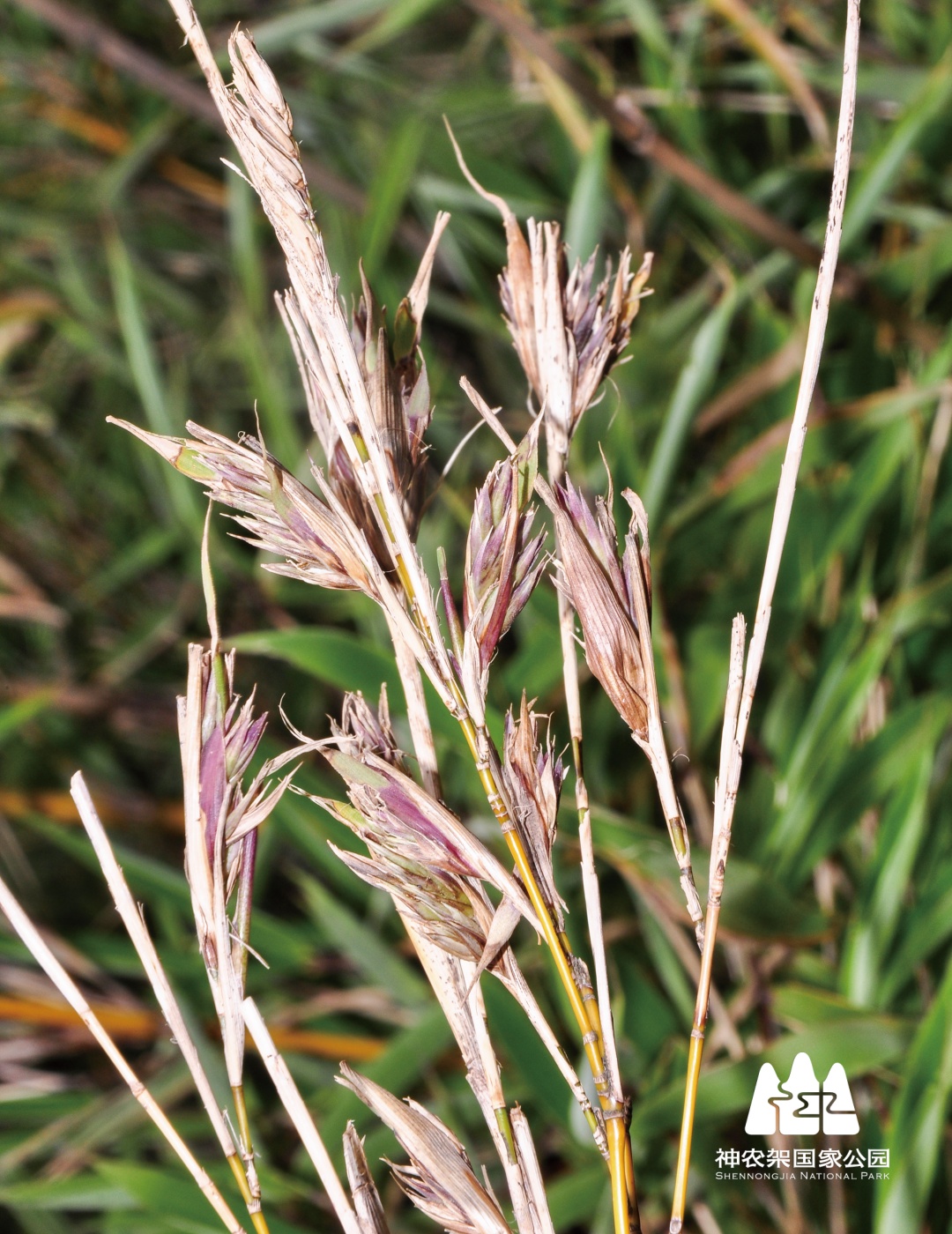
Over 20 years ago, arrow bamboo introduced in Europe began to bloom and die one after another, almost like a signal. At the same time, a huge amount of Shennong arrow bamboo in Shennongjia also began the same process, causing a sensation in the gardening world. Normally, it is quite common for plants to flower and die, which is also recorded in Shan Hai Jing: "Bamboo blooms, and it will wither." However, that does not solve the puzzle of the wide and almost simultaneous death of the arrow bamboo.
Most bamboos only bloom once in their entire life cycle, which lasts about 60 years. After flowering, they gradually wither and die, and mass death mainly happens in clumping bamboo. This is because clumping bamboo is connected by bamboo rhizome. A large bamboo grove or forest is very likely all connected by the same rhizome. Therefore, no matter in which year the bamboos grow, they will bloom at the same time as long as they are connected to the similar-aged rhizomes, resulting in a mass concurrent death of these bamboos.
Shennong arrow bamboo falls into the category of clumping bamboo, and naturally grown Shennong arrow bamboos are mostly "of the same age". The first batch of Shennong arrow bamboos cultivated in Europe was also roughly planted at the same time period, so, decades later, a large number of them bloomed almost simultaneously, resulting in a surprising mass concurrent death. In addition, the Shennong arrow bamboo, which bloomed and died almost at the same time in Europe and Shennongjia, may also have been grown in the same time period.
Shennong arrow bamboo blooms and dies every sixty years, but it does not fall after flowering and bearing seeds, in order to prevent the invasion of other plants. It is not until three years later when the new bamboo is fully grown that the old bamboo falls down and turns into fertilizer to nourish the new, painting a true portrayal of the verse, "turning into spring mud to nurture flowers". Shennong arrow bamboo is also among the staple food for China’s national treasure, giant pandas, playing a key role in supporting their activities in high-altitude areas, both as a source of food and a natural cover for defense. Although arrow bamboo is small, its significance is extraordinary. Apart from the functions above, Shennong arrow bamboo also plays a key part in mountain soil and water conservation, slowing down surface runoff, and conserving water resources, and provides important guarantee for sustainable ecological development in Shennongjia alpine area.
Written by Wang Shitong, Reviewd by Jiang Mingxi, Photo by Gong Yuan Translated by Liang Tianjing
Species profile:
Fargesia murielae
Order: Poales
Family: Poaceae
Genus: Fargesia
Key Identification Features:
Fargesia murielae is a type of clumping bamboo. Its cane is 1-5 meters in height, 5-14 millimeters in width and cylindrical in shape. Its culm wall is 1.5-2.5 millimeters in width. The shape of its marrow bears resemblance to sawdust, and the node forms a bulge. 3-10 solid branches cluster at the nodes, pointing straight up, only 1-1.5 mm in diameter. The leaf base is broadly cuneate or nearly rounded, the undersurface is grayish green, and both surfaces are glabrous.
Geographic distribution in China:
Shennongjia Forestry District, Hubei Province and Ningshan County, Shaanxi Province. 
Copyright Shennongjia National Park
Address:36 Chulin Road, Muyu Town, Shennongjia Forestry District, Hubei Province 鄂ICP备18005077号-3
Address:36 Chulin Road, Muyu Town, Shennongjia Forestry District, Hubei Province 鄂ICP备18005077号-3
Email:2673990569@qq.com
Phone:0719-3453368
Phone:0719-3453368


TOP