
Cypripedium japonicum: An Opportunist in the Understory
Updated:2026-03-27 Source:Shennongjia National Park
Along the streams of Guanmenshan Valley, the spring sun filters softly through the canopy of tall trees, spilling light over leaf-littered slopes. As the ravines warm and bask in the season’s precious sunlight, flowers of the forest under story begin to emerge and bloom quietly. The forests of Shennongjia form an organic whole—like a tranquil, harmonious neighborhood where every resident keeps to its own rhythm without disturbing others.
Before the canopy closes in late spring, the forest floor becomes a paradise for early bloomers. Especially on slopes flanking the streams, a vibrant array of small flowers competes for attention, drawing bees and butterflies into a lively bustle.
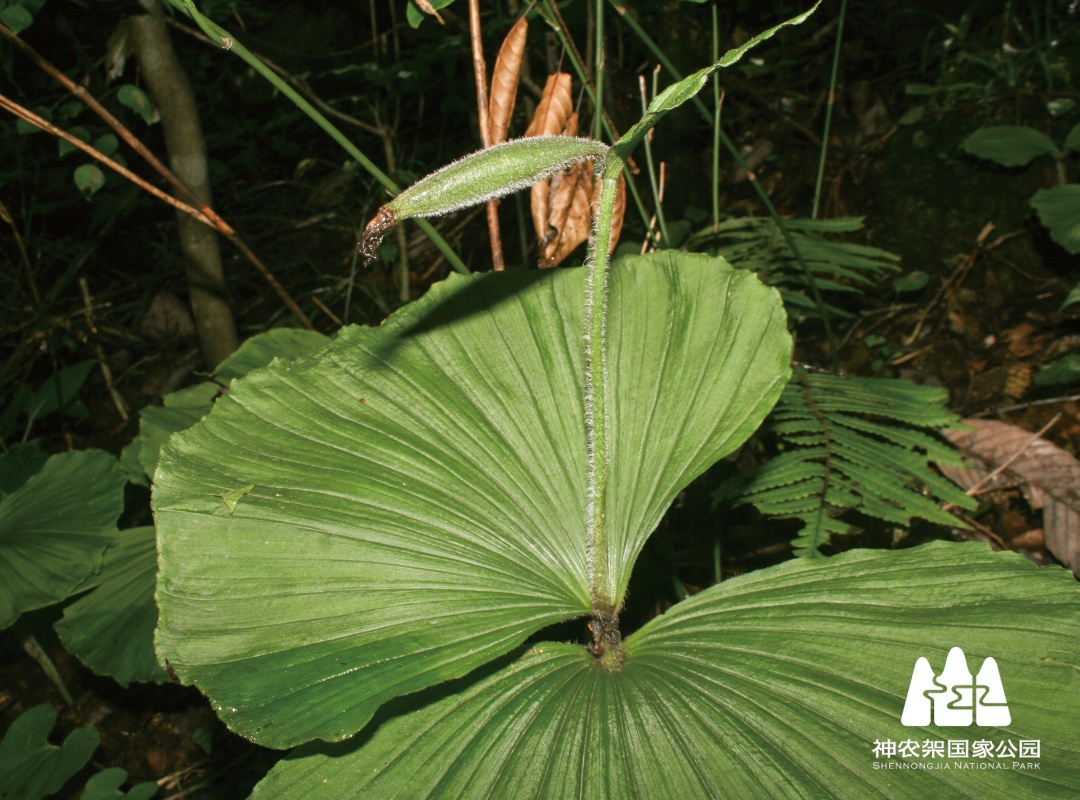
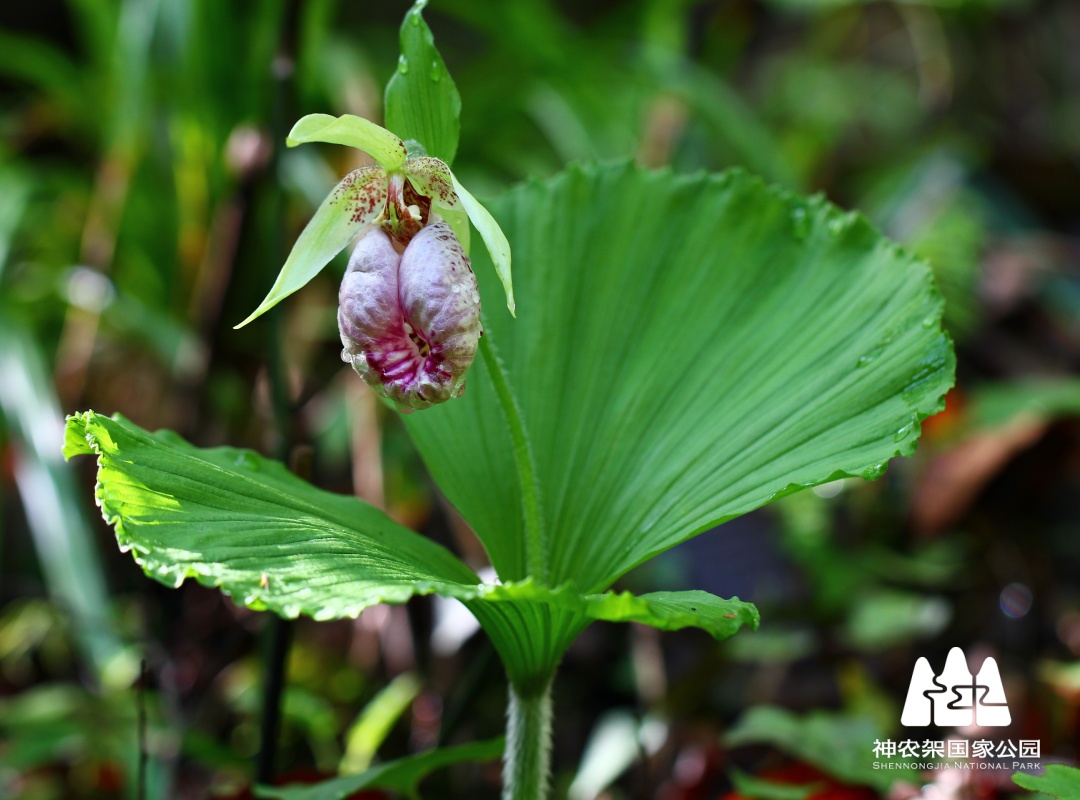
Amid this vibrant and bustling season, a rare and precious plant awakens from the fallen leaves. Its leaves are broad and rounded, spread openly, with fan-like veins running through them. Tall and graceful, it rises elegantly above the bustling floral crowd, bearing a singular and peculiar flower at the top of a slender, downy stem. This is Cypripedium japonicum—an extraordinary orchid dwelling deep in the remote forests.
It is no exaggeration to call it extraordinary. Orchids as a family are already unique among flowering plants, and the Cypripedium genus to which it belongs takes floral intricacy to another level. The flower of Cypripedium japonicum does not resemble a typical blossom with spreading sepals, petals, and reproductive organs. Instead, it has evolved a highly specialized form adapted to a specific pollination strategy. The flower is relatively large, dominated by a pale pink, pouch-like labellum. The green lateral petals and sepals are narrow and gracefully draped, like a soft hand sheltering the pendant lip from wind and rain. Even among its Cypripedium relatives, this species stands out. Most Cypripedium species have a lip similar in color to other floral segments, forming an upright, slipper-like pouch with an upward-facing entrance—guiding wandering pollinator insects inside to pick up sticky pollen. In contrast, Cypripedium japonicum’s pouch appears softer and more relaxed, hanging limply from the stalk. Its entrance faces forward, rimmed with a striking red lip that contrasts vividly with the pale pink pouch. The lateral petals and sepals match the pale green bracts in color—slender and delicate, with only faint markings at the base, as if cradling the large, delicate pouch like a pair of gentle arms.
Like many Cypripedium species, the Cypripedium japonicum’s unique floral structure serves to deceive specific insect pollinators. In the sun-dappled under story of spring, newly awakened insects forage eagerly to replenish energy lost during winter dormancy. Hungry and indiscriminate, they seek nectar and pollen from early flowers—which in turn depend on these insects for pollination. Among the most abundant spring bloomers here are various Corydalis species, whose long spurs store sweet nectar. But not every insect can access it—the intricate floral structure of Corydalis ensures that only robust bumblebees can effectively pollinate them. Cypripedium japonicum also targets bumblebees. Its forward-drooping lip and brightly colored pouch entrance are designed to attract them. However, it offers no nectar. A bumblebee, finding the pouch empty, must squeeze out through a small opening near the base of the lip—and in doing so, brushes against Cypripedium japonicum’s cunningly placed pollinia, which stick firmly to its body.
Though the pollination mechanism is exquisitely precise, bumblebees are clever. After being tricked a few times, they learn to avoid this deceptive plant. As more flowers bloom and the forest canopy closes, blocking the warmth of the sun, bumblebees cease visiting Cypripedium japonicum. It seems this opportunistic Cypripedium japonicum can no longer succeed—but not to worry. By the time spring draws to a close, the fruits of those successfully pollinated Cypripedium japonicum have already begun to swell.
Written by: Fang Jie
Reviewed by: Jiang Mingxi
Photography by: Jiang Zhiguo
Species Profile:
Cypripedium japonicum
Order: Asparagales
Family: Orchidaceae
Genus: Cypripedium
Key Identification Features:
Plant 35–55 cm tall; stem erect, covered with brown villi, sheathed at base, bearing leaves at apex. Leaves usually 2, nearly opposite, fan-shaped. Inflorescence terminal, single-flowered; flower pendulous; sepals and petals pale yellow-green, often with purple spots at base; capsule nearly spindle-shaped, sparsely pubescent. Flowering April–May, fruiting June–October.
Distribution in China:
Southern Shaanxi, southern Gansu, Anhui, Zhejiang, Jiangxi, Hubei, Hunan, Sichuan, Guizhou.

Copyright Shennongjia National Park
Address:36 Chulin Road, Muyu Town, Shennongjia Forestry District, Hubei Province 鄂ICP备18005077号-3
Address:36 Chulin Road, Muyu Town, Shennongjia Forestry District, Hubei Province 鄂ICP备18005077号-3
Email:2673990569@qq.com
Phone:0719-3453368
Phone:0719-3453368


TOP