
Paris polyphylla: The Deep Sleeper of the Plant World
Updated:2026-02-25 Source:神农架国家公园管理局
The seeds of Paris polyphylla love to sleep—so much so that, left undisturbed in nature, they can remain dormant for two full winters. Even if awakened, they often drift back into slumber.
In botanical terms, this is known as seed dormancy. Moreover, the seed embryo of Paris polyphylla may exhibit double dormancy.
Seed dormancy is a survival strategy for plants, particularly in regions with alternating dry-wet or cold-warm seasons. Their seeds sleep on and on, as if asking: Is the outside world safe? Is the sunlight gentle? Is the air moist? Is there enough water? Is the temperature just right? Maybe a little more sleep… Dormancy allows seeds to buy time for dispersal, regulating when and where germination occurs—truly not laziness, but a strategy to ensure a better chance at life.
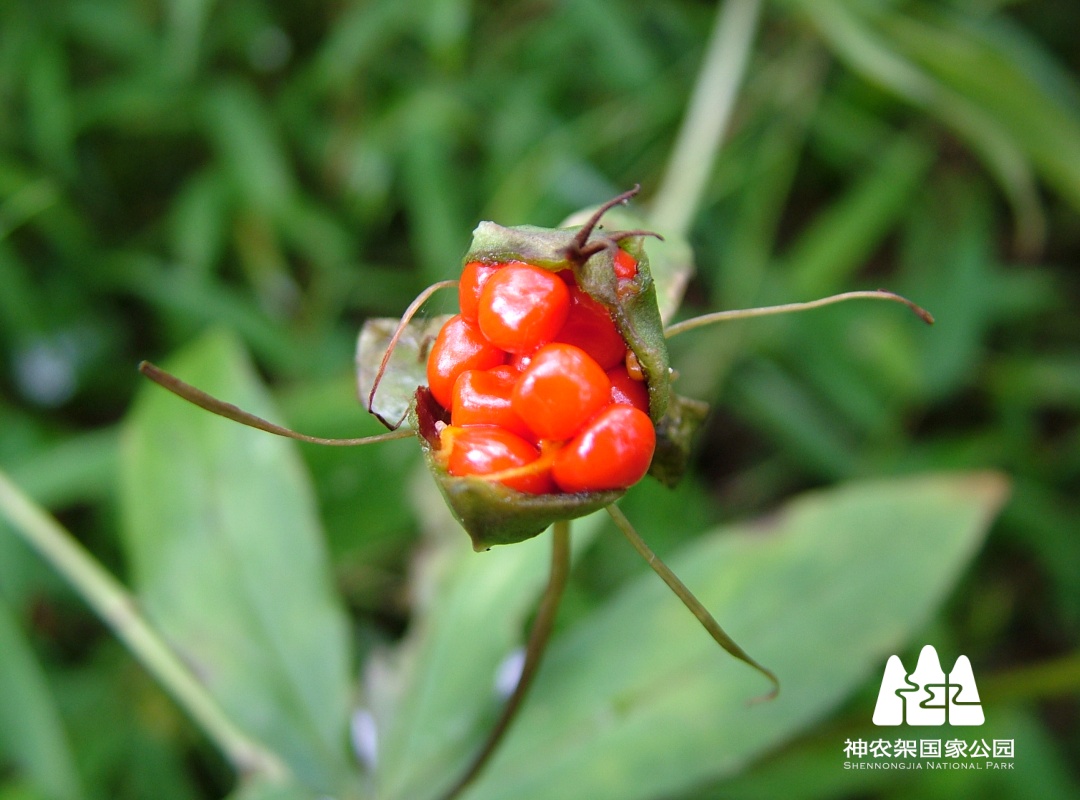
Seed dormancy arises mainly for two causes: First, seed coat barriers: Some seed coats are thick and hard, or coated with waxy or cuticular layers that block water and air, mechanically restricting the embryo. Second, internal germination inhibitors: Certain fruits or seeds contain substances that chemically suppress sprouting. Yes, Paris polyphylla seeds contain such inhibitors. Sadly, wild populations of this plant are becoming increasingly rare.
I’m gonna wake up. Oh—what’s happening? What’s holding me back? Have I been trapped? Drugged? Humans, help me! For Paris polyphylla, dormancy can be broken using a combination of warm-cold stratification and phytohormone treatment.
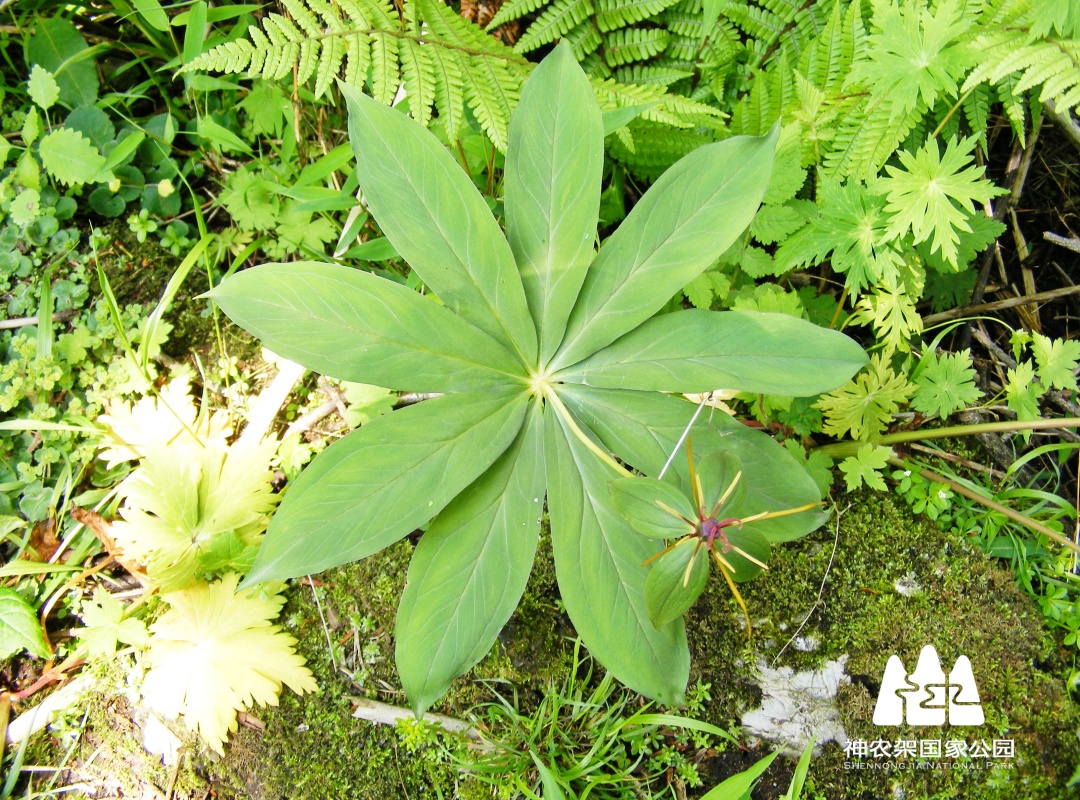
Repeat“Paris polyphylla” several times, and it starts to feel a bit frivolous. Call it “Chonglou” (meaning “multi-storied tower”), and it sounds more dignified. Both names refer to its structure: the whorled floral parts and protruding pistils form what looks like multiple tiers—two, three, or even four layers—hence “Chonglou.” As for “Paris polyphylla,”its scientific name, also comes from its appearance: typically seven leaves (though sometimes five, six, eight, nine, or even up to fourteen) arranged in a whorl, crowned by a single flower. The leaves resemble petals, and the flower resembles foliage—elegantly poised in the wind. By the way, it’s also called “Seven-leaf Lotus.”
Paris polyphylla has long been used in traditional medicine, particularly for treating snakebites and inflammatory sores.
It grows in high-altitude forests between 1,800–3,200 meters, occurring in Bhutan, Vietnam, Sikkim, Nepal, and Chinese regions such as Guizhou, Yunnan, Tibet, Sichuan, and Taiwan. In Shennongjia, it can be found in Guanmenshan, Jinhouling, and Qianjiaping.
Locals speak of the “Four Treasures of Shennongjia”: Paris polyphylla, Diphylleia sinensis, Trillium tschonoskii, and Balanophora involucrata.
In the spring of Shennongjia, the seeds of Paris polyphylla are stretching softly, whispering: I’m waking up.(Written by Shui Yi Reviewed by Jiang Mingxi Photography by Yang Jingyuan)
Species Profile:
Name: Paris polyphylla
Order: Liliales
Family: Liliaceae
Genus: Paris
Key Identification Features:
Perennial herb, 35–100 cm tall. Thick rhizome densely covered with numerous nodes and many fibrous roots. Leaves oblong, obovate-oblong, or oblanceolate. Flower structure distinct, consisting of outer and inner whorls; outer whorl resembles foliage. Fruit purple; seeds numerous, ovoid, with bright red arils. Flowering period April–June, fruiting period: October–November.
Distribution in China:
Tibet (southeastern region), Yunnan, Sichuan, Guizhou.

Copyright Shennongjia National Park
Address:36 Chulin Road, Muyu Town, Shennongjia Forestry District, Hubei Province 鄂ICP备18005077号-3
Address:36 Chulin Road, Muyu Town, Shennongjia Forestry District, Hubei Province 鄂ICP备18005077号-3
Email:2673990569@qq.com
Phone:0719-3453368
Phone:0719-3453368


TOP