Zhengyia shennongensis: A Toxic New Discovery
Updated:2025-11-12 Source:Shennongjia National Park
The Shennongjia region, with its towering mountains, deep valleys, and lush vegetation, has long been regarded as a mysterious and magical place. Legend has it that Shennong (Emperor Yan), the forefather of Chinese civilization, once built a wooden ladder here to gather and taste hundreds of herbs, cure diseases, and teach farming, hence the name “Shennongjia” (Shennong’s Ladder). Rich in biological resources, it serves as a “treasure chest” for many endemic species.
In 2011, during a comprehensive survey of Shennongjia’s natural resources, Zhengyia shennongensis was discovered for the first time in the Wushan Lake area of Yangri Town, at an altitude of 600 meters. Research confirmed it as a new genus (Zhengyia) and a new species. Among the over 3,000 plant species identified in Shennongjia, it is the only endemic genus, making it unique worldwide.
Zhengyia shennongensis is not only unique but also toxic. As a perennial herb of the Urticaceae family, it can grow up to 3 meters tall, with long and dense stinging hairs on its stems, leaves, and petioles. At close range, it resembles a green “monster” bristling with silver needles. If one happens to touch these “needles,” the resulting pain, soreness, itching, and numbness can be quite unbearable.
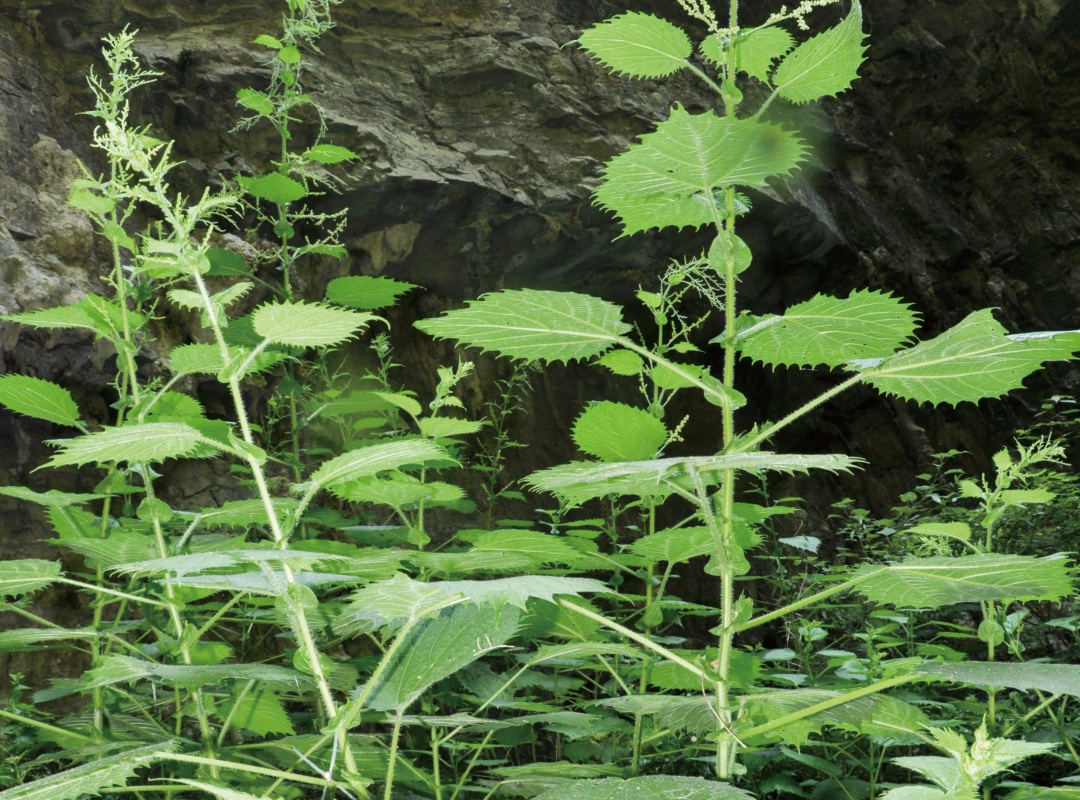
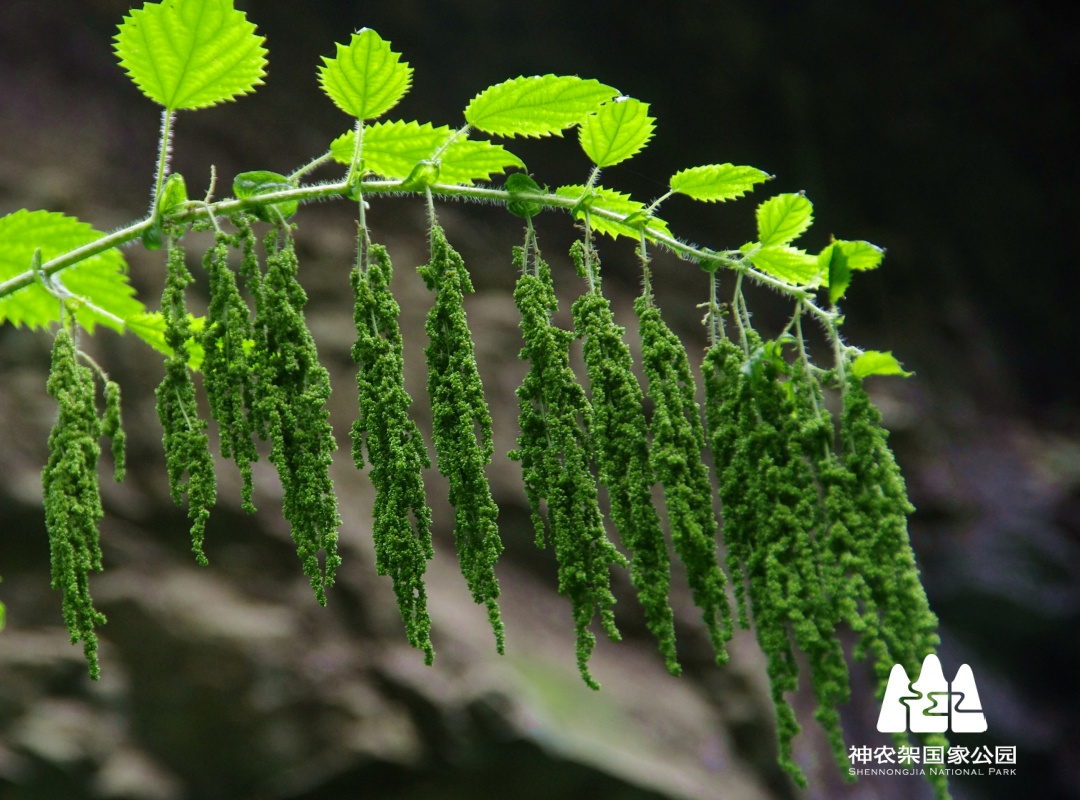
For those familiar with the Urticaceae family, this comes as no surprise. Many species in this family possess toxic stinging hairs. When humans or animals come into contact with them, skin redness, intense itching, and pain will occur; in severe cases, it can even cause death in children and young animals. These toxic hairs are specialized epidermal glandular hairs containing complex toxins. If stung, washing the affected area promptly with diluted soapy water or an alkaline solution such as ammonia can help neutralize the toxins.
Despite its initial impression of being “ruthlessly toxic”, Zhengyia shennongensis should not be dismissed outright. Many related species are valuable resources with medicinal properties or other uses. For instance, some provide high-quality fiber for textiles and industry, some yield oil from their seeds, some serve as forage, and certain ornamental species are even cultivated to beautify landscapes. Medicinally, such plants may embody the principle of “fighting poison with poison.” Whether Zhengyia shennongensis holds hidden value beyond its toxicity requires further study.
Its late discovery may be due to its habitat. It is restricted to shaded streamsides, moist valleys, and dripping cliffs—environments where reproduction and dispersal by seeds or fruits are highly difficult.
Fortunately, “when one door closes, another opens.” While its environment restricts seed reproduction, Zhengyia shennongensis has developed an alternative strategy: bulbils. These are small, woody, spherical or ovoid structures, pale yellow-brown in color, 3–6 mm in diameter, found in the axils of sterile leaves, usually 1–3 per leaf, often bearing adventitious roots. Through bulbils, Zhengyia shennongensis can reproduce asexually—a triumph of evolution proving it to be a survivor and adaptor.
However, with only a few hundred individuals remaining, Zhengyia shennongensis is still critically endangered, requiring long-term attention and conservation.
To honor this discovery, researchers named the new genus and species after Wu Zhengyi, a renowned Chinese botanist and academician of the Chinese Academy of Sciences. Similarly, two other Chinese endemic plants, “Ilex wuana T. R. Dudley” (Zhengyi Dongqing) and “Euonymus wui J.S. Ma” (Zhengyi Weimao), found in Yunnan’s mountains areas, were also named after him and recorded in Flora of China.
“To unveil the origins of mountains and rivers, and to grasp the true nature and names of plants.” This motto of Wu Zhengyi reflects his lifelong pursuit. By naming plants after him, we pay tribute to his seven-decade contributions to plant taxonomy, phytogeography and other fields in China.
As a line of poetry goes: “Though I never studied Sun Wu’s art of war, I have come to the frontier of nettles.” Unlike many widespread members of Urticaceae, Zhengyia shennongensis may not witness the world’s vast changes. Yet in its secluded forest habitat, it quietly absorbs the essence of nature, displaying its colors and telling its story, waiting patiently for people to discover and listen.(Text by Zhou Yang Reviewed by Jiang Mingxi Photo by Jiang Mingxi)
Species Profile:
Name: Zhengyia shennongensis
Order: Rosales
Family: Urticaceae
Genus: Zhengyia
Identification
Tall perennial herb, 1-3m in height. It has long stinging hairs and soft white hairs, densely covering the upper stem and petioles. Leaves alternate, leave blades are broad, shape broadly ovate with serrated edges. The stipules are green, leaf-like, persistent, solitary in leaf axils, fused at the base with the stem. The inflorescenes are unisexual, paired in leaf axils, often long-branched into a conical shape. Male flowers 1.5mm, short-stalked or nearly sessile. Female flowers 1.3 mm, nearly sessile. Perianth composed of 4 parts, fused at the base, with the dorsal and ventral lobes larger than the others. Achenes are yellow-green, cuboid-spherical or spherical. Flowering occurs in September, fruiting from October to November.
Distribution in China
Shennongjia Forestry District in the west of Hubei.

Address:36 Chulin Road, Muyu Town, Shennongjia Forestry District, Hubei Province 鄂ICP备18005077号-3
Phone:0719-3453368