Helwingia japonica: The Flower That Blooms on Leaves
Updated:2025-11-12 Source:Shennongjia National Park
From biology textbooks, we learn that flowers typically emerge from leaf axils or stem tips—meaning blossoms usually sprout either at the base of a petiole or the end of a branch. Common flowers like peach, plum, cherry, rose, peony, and azalea all follow this rule, with their leaves and blooms growing separately. But have you ever encountered something as unconventional as Helwingia japonica, which boldly fuses its flowers directly onto its leaves?
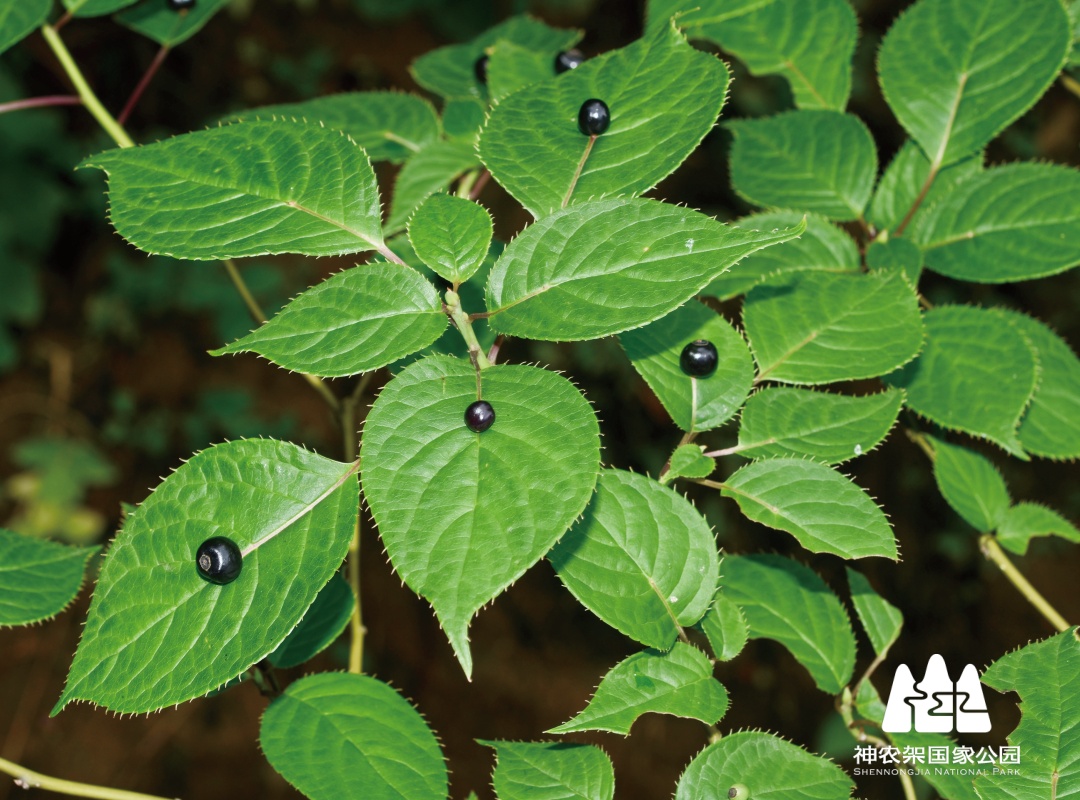
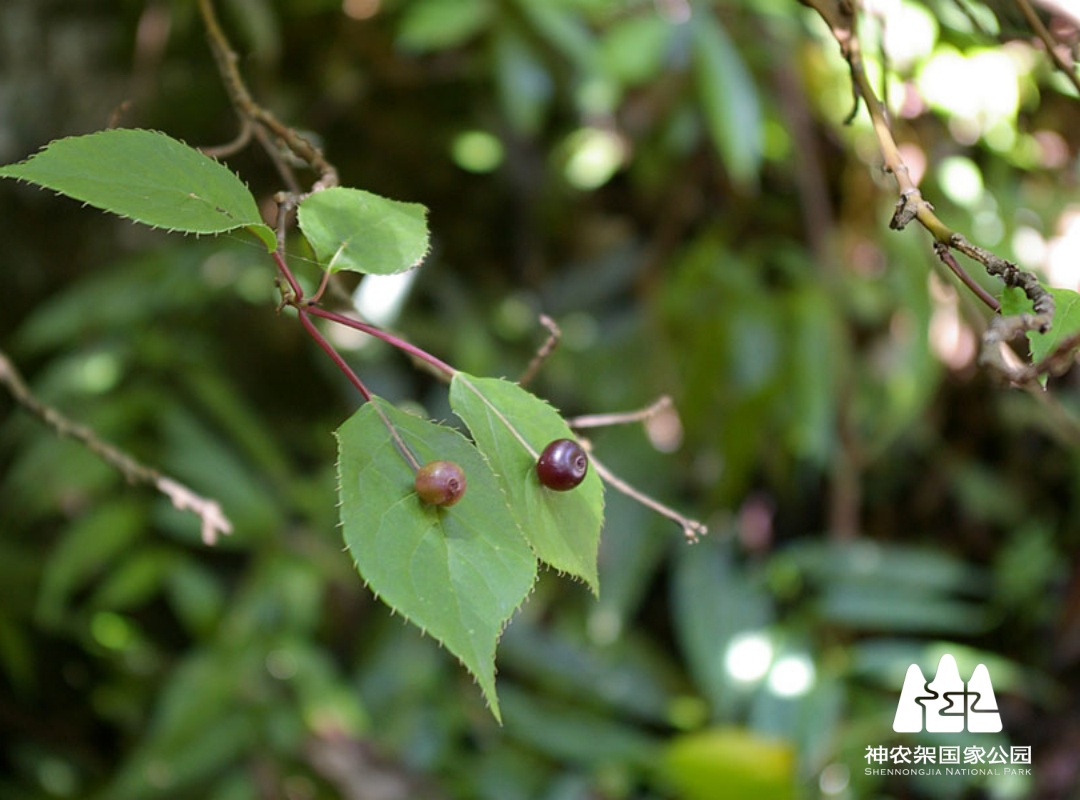
Why does Helwingia japonica defy convention and place its flowers on its foliage? Let’s uncover the secret.
Its tiny flowers are gender-specific: clusters of 1–3 pistillate or 4–12 staminate flowers grow along the midvein of the leaf. The pale green petals measure just 1–2 mm, with stalks 1–5 mm long. After blooming, the fertilized flowers develop into small, spherical berries right on the leaf surface—first green, then turning glossy black when ripe. At a glance, the leaves appear to cradle delicate onyx beads, earning this plant the poetic name “Pearl-on-Leaf.”
A closer look reveals the trick behind this floral-leaf fusion. Comparing a flowering leaf to a normal one, you’ll notice the midvein between the flower and petiole is noticeably thicker and often reddish, while the section from flower to leaf tip remains slender and green, just like an ordinary leaf. Botanically speaking, this occurs because Helwingia japonica’s flower stalk merges with its leaf stalk, and the elongated portion of the flower stalk fuses further with the leaf’s midvein, allowing the bloom to erupt directly from the blade. Amid Earth’s bizarre botanical diversity, this “flower-leaf fusion” remains a rare spectacle. So if you’re lucky enough to spot Helwingia japonica in Shennongjia’s Guanmenshan, Xiaolongtan, or Dalongtan, take a moment to marvel at its ingenuity.
Why Would a Plant Grow Flowers on Its Leaves?
While we may never fully understand the evolutionary reasoning behind this peculiar adaptation, Helwingia japonica’s leaf-blossoming trick makes perfect sense when we consider its living conditions. This plant blooms in mid-spring, by which time the towering forest canopy above has already leafed out, blocking much of the sunlight. As an understory shrub, Helwingia japonica is naturally short-statured, and its ancestral traits dictate that it produces tiny, leaf-colored flowers. Had it followed convention and placed its blooms on branches, its modest flowers might go unnoticed by pollinators under the thick greenery. Thus, through relentless natural selection, Helwingia japonica evolved its eccentric workaround: embedding flowers onto its leaves. This subtle adaptation likely boosted its chances of attracting insects, ensuring pollination and survival.
Helwingia japonica belongs to the Helwingiaceae family and thrives across southern China. It has three close relatives—Helwingia chinensis, Helwingia omeiensis, and Helwingia himalaica—all inheriting the family’s signature leaf-flowering flair, quietly awaiting admirers who’ll pause to appreciate their quiet rebellion.(Text by Chen Yingting Reviewed by Jiang Mingxi Photog by Chen Binghua)
Species Profile:
Helwingia japonica
Order: Aquifoliales
Family: Helwingiaceae
Genus: Helwingia
Key Identification Features:
Deciduous shrub, up to 2 meters tall. Leaves papery, ovate, broadly ovate, rarely elliptic; apex acuminate, very rarely caudate-acuminate; base broadly cuneate or nearly rounded; margin with spiny serrations. Flowers in early summer, dioecious, small, yellow-green, borne on the midrib in the center of the leaf blade. Drupe spherical, black. Flowering period: April-May. Fruiting period: July-September.
Distribution in China: Widely distributed in provinces and regions south of the Yellow River basin.

Address:36 Chulin Road, Muyu Town, Shennongjia Forestry District, Hubei Province 鄂ICP备18005077号-3
Phone:0719-3453368