
Rare Species Berberis pubescens Rediscovered in Shennongjia After a Century
Updated:2026-06-18 Source:Shennongjia National Park
Recently, a new discovery was made during the comprehensive survey of wild plants conducted by Shennongjia National Park: the research team found the rare plant Berberis pubescens Pamp. in a hillside shrubland. This species had not been recorded in the wild for more than a century. The specimen (C. Silvestri 718) was first collected in northwestern Hubei Province in July 1907, and no wild records of the species had been reported since then.
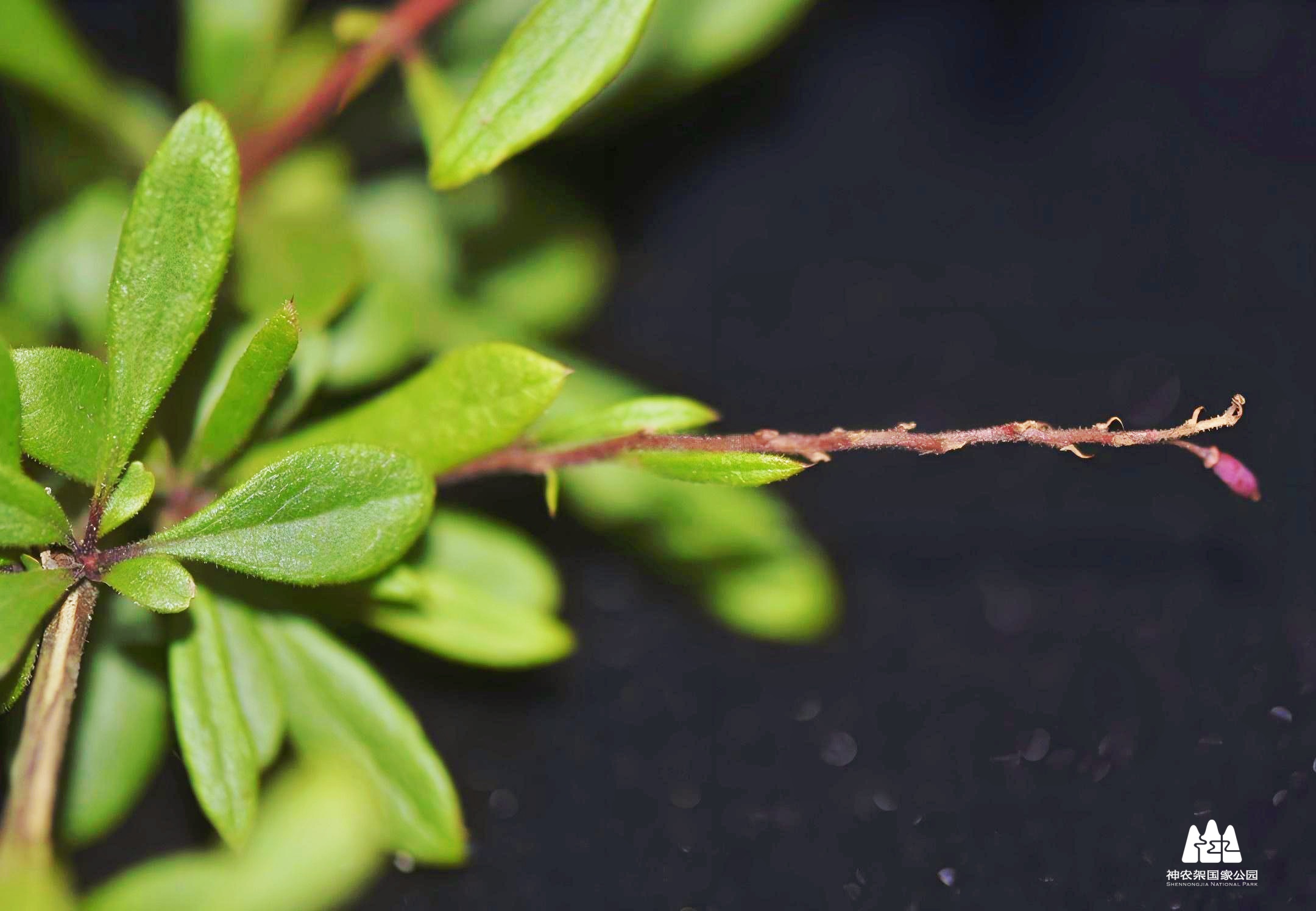
The collector, Rev. Cipriano Silvestri, was an Italian missionary and amateur plant collector who collected vascular plants in northwestern Hubei from 1904 to 1907. He sent the specimen to Italian botanist Renato Pampanini, who formally described and published the species in Nuovo Giornale Botanico Italiano in 1910. Berberis pubescens is a deciduous shrub belonging to the genus Berberis, distributed in the Qinling-Daba Mountains region along the border between Hubei and Shaanxi provinces. For more than a century afterward, no wild populations were found, and botanists could only study the species based on the preserved type specimen.
The newly discovered population was found in a limestone hillside shrubland at an elevation of 1,600 meters in Shennongjia. Associated species include Exochorda giraldii, Euonymus giraldii, Rhododendron hypoglaucum, and Acer tenellum. During the field survey, researchers noticed a distinctive Berberis plant characterized by reddish young branches, densely pubescent branches and leaves, solitary spines, obovate leaves, and oblong berries. As they had never encountered such a distinctive Berberis species before, they collected specimens for further study. Through comparative analysis and identification, the plant was confirmed to be Berberis pubescens, a species that had not been recorded in the wild for a century.
The plant grows to approximately 1 meter in height. Its densely pubescent young branches and leaves, solitary spines, and narrowly spatulate leaves are key diagnostic characteristics for species identification. Its root bark is rich in berberine, giving the species both medicinal and scientific research value. The rediscovery of this rare species after a century provides a new target species for the conservation of wild plants with extremely small populations. In the future, continuous monitoring and research will be conducted on the wild population of Berberis pubescens to assess its conservation status and develop targeted conservation measures. (Text by Yang Linsen Translated by Mu Yujia)

Copyright Shennongjia National Park
Address:36 Chulin Road, Muyu Town, Shennongjia Forestry District, Hubei Province 鄂ICP备18005077号-3
Address:36 Chulin Road, Muyu Town, Shennongjia Forestry District, Hubei Province 鄂ICP备18005077号-3
Email:2673990569@qq.com
Phone:0719-3453368
Phone:0719-3453368


TOP