Protecting the Wetland is a Sacred Duty Entrusted to Shennongjia National Park by the Nation— The Guardianship and Rebirth of the Dajiuhu Wetland in Shennongjia
Updated:2026-02-02 Source:神农架国家公园管理局
In the depths of winter, three consecutive days of snow blanketed the Dajiuhu Wetland in Shennongjia completely. Snow in the forests piled up dozens of centimeters thick, while on the lake surface, the ice layer was solid enough for waterbirds to walk upon. Eager to see how sphagnum moss survives in such icy conditions, we drove from Muyu Town straight to Dajiuhu to find out.
Under the grip of a powerful cold wave, Dajiuhu remained shrouded in dark, overcast skies for three straight days. We pressed on through the morning mist amidst scattered, dancing snowflakes. The road was covered by a thick layer of ice and snow, with the mounds shoveled to the sides nearly burying the entire front bumper of our vehicle. Rime-coated trees across the mountains silently caught the falling snow. With the weak light, we couldn’t see the crystal-clear glow typically emitted by the frosted branches.
The journey from Muyu to Dajiuhu usually takes two and a half hours; in this heavy snow, we had to slow down even more for safety. Sitting in the car, I reflected on how the Shennongjia National Park is truly a uniquely endowed protected area. It boasts not only exceptionally rich biodiversity and abundant geological relics but also harbors the rare subalpine wetland of Dajiuhu, making it remarkably complete perfect.
This subalpine wetland, situated at 1,700 meters above sea level and spanning 1,645 hectares, is not only the largest and highest-altitude sphagnum peat bog wetland in central China but also a crucial water conservation zone for the central route of the South-to-North Water Diversion Project.
Over the past decade, the landscape here has undergone a historic shift from “human advancement, lake retreat, and birds fleeing” to “human retreat, lake advancement, and birds returning”. Having reported on Dajiuhu many times, the dramatic transformations it has experienced constantly replay in my mind.
The Weight of the Wetland’s Mission
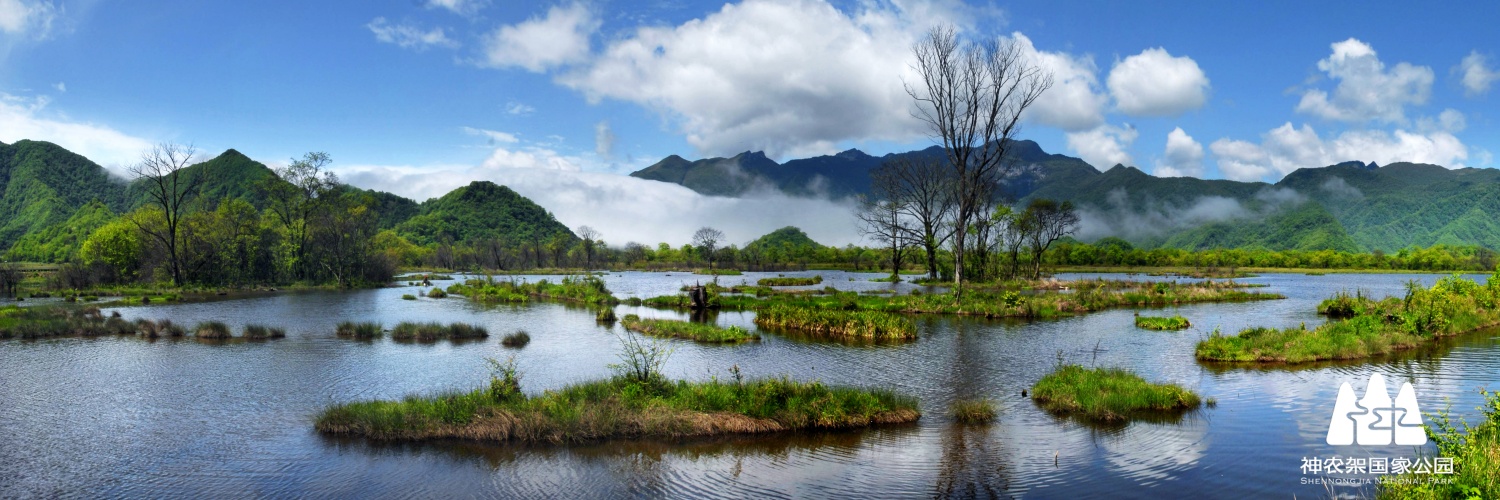 On October 16, 2013, Dajiuhu Wetland was added to the list of Wetlands of International Importance. Covering an area of 9,320 hectares, it is a rare representative of typical subalpine Sphagnum palustre L. wetlands. (Photo by Sun Gehui)
World Wetlands Day, observed annually on February 2, is not only an opportunity for global focus on the importance of wetland ecosystems but also a reminder of the duty and mission of wetland protectors.
Protecting the wetland is a sacred duty of the managers and rangers of Shennongjia National Park, a responsibility directly tied to regional ecological security and sustainable development. The conservation efforts at Dajiuhu Wetland represent the implementation of national ecological security strategies.
This wetland possesses a unique dual geographical character: located at the junction of six counties in three provinces, its position is special. It serves as both a significant ecological barrier for China and a critical biological habitat.
This special regional location and ecosystem function endow Dajiuhu's wetland protection with significance that transcends its immediate geography.
A little past noon, our group finally arrived at Pingqian. After a quick bite, we hurried towards Dajiuhu Wetland, 25 kilometers away, to make the most of our time. We needed to return to Muyu by evening, as the risks of ice and snow become less predictable later, and it's safer to travel before dark.
Dajiuhu Wetland is a typical, special, and rare subalpine sphagnum marsh wetland in the Earth’s mid-to-low latitude zone. Its formation dates back to the late Pleistocene, around 15,000 to 20,000 years ago, shaped by glacial activity.
The most notable feature of this wetland is its enclosed basin structure, surrounded by mountains ranging from 2,200 to 2,600 meters above sea level.
This unique geological formation has made Dajiuhu an isolated island and treasure trove of biodiversity.
A total of 984 species of higher plants have been recorded in the wetland, including Ranunculus natans (floating buttercup) and Drosera rotundifolia (round-leaved sundew), which are newly recorded species in Hubei Province. It is also home to a great number of rare animals, such as the white stork, oriental black stork and golden eagle, all under first-class national protection in China.
The Sphagnum communities in the Dajiuhu Wetland are particularly precious, known as the “Soul of the Wetland”. Their ecological value is reflected in their carbon sequestration capacity and water conservation functions, which are crucial for maintaining the water balance across central China.
Our visit aimed to observe the survival state of this species. We parked near Lake No. 4 and walked along the boardwalk searching for traces of sphagnum. We stopped at what looked like a mudflat. “Goodness, with snow this thick, how do we find the sphagnum?” a colleague wondered, perplexed. A staff member from the national park immediately started digging with his hands. Soon, he uncovered something yellowish-green mixed with snow—granular, like sand particles. He said to me, “This is sphagnum moss. The large amount of water in their bodies has already replenished the relatively water-scarce lakes in autumn.”
We felt some regret at not getting a clear photo of the sphagnum in its winter state. However, from the volume of the granular material dug up, I at least understood why it's said that sphagnum can hold up to 25 times its own volume in water.
The Tortuous Path of Transformation
Before the 1970s, Dajiuhu maintained a relatively pristine state with a healthy wetland ecosystem.
A turning point came in the mid-1980s. To develop animal husbandry and grow high-altitude vegetables, irrigation and drainage systems were constructed, leading to a sharp reduction in wetland area. Following the logging of the 1960s and 70s, the 1990s saw another wave of large-scale deforestation in Dajiuhu, compounded by severe illegal logging. Within seven years, over 600,000 cubic meters of commercial timber were removed, causing the forest coverage rate to plummet by nearly 20 percentage points.
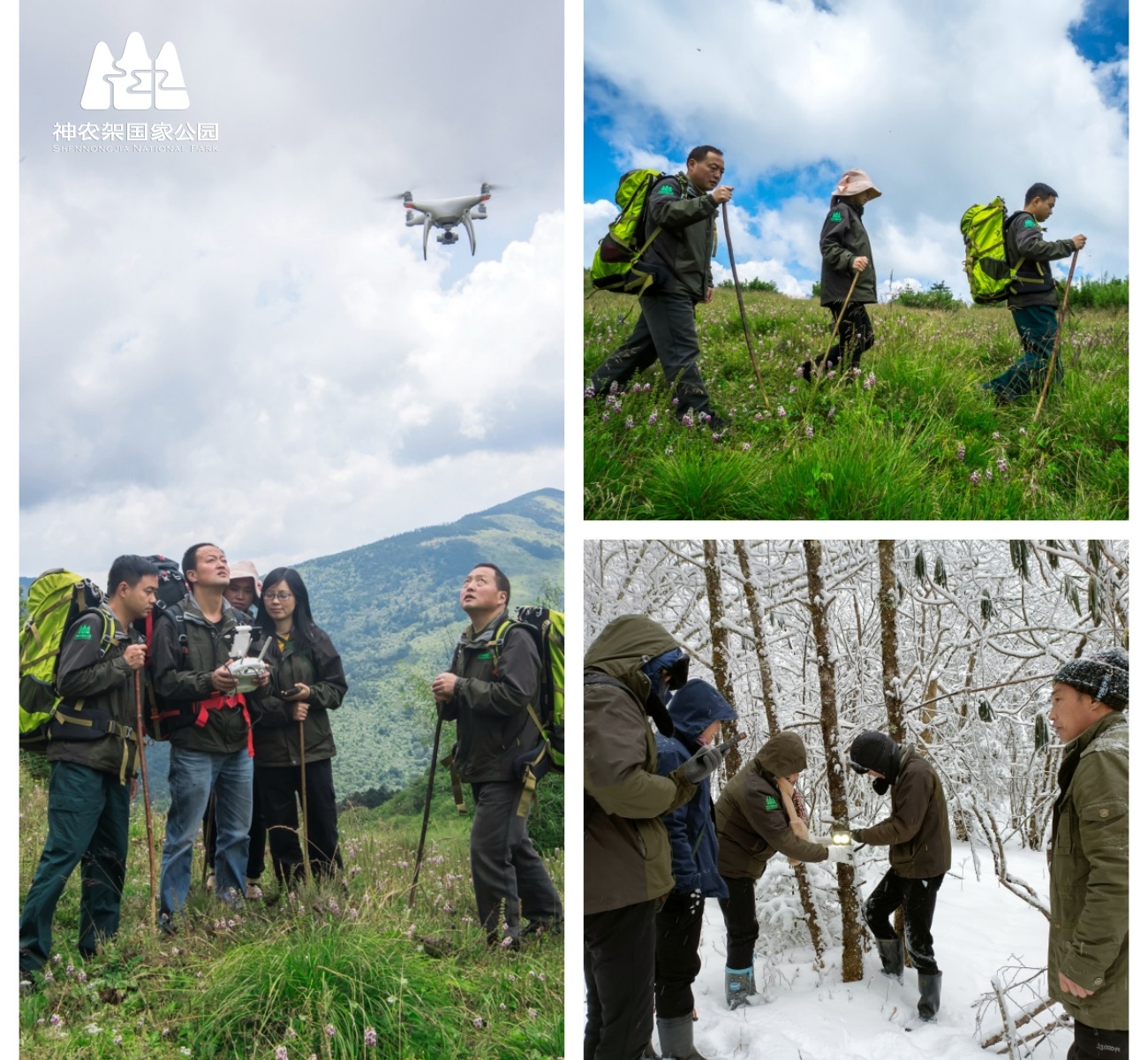 The patrol team provides comprehensive, round-the-clock protection for the Dajiuhu Wetland. (Courtesy of Publicity and Education Center)
This development model led to severe consequences: falling groundwater levels, sphagnum die-off, frequent droughts and floods, worsening water pollution, and sharp declines in fish and shrimp populations. The former ecological balance was severely disrupted.
The ecological decline was most evident in changes to bird populations. By the early 2000s, only around 20 bird species were recorded at Dajiuhu, a stark contrast to the over 300 species found today.
Dajiuhu’s ecological environment quality index hit a low of 0.473 in 2002, significantly lower than the 0.601 level in 1963. The ecological alarm bell was ringing. Around 2000, the state launched the Natural Forest Protection Program (NFPP), and natural resource conservation gained increasing national attention, eventually leading to protective legislation.
Scientific Protection in Practice
2006 marked a turning point for Dajiuhu's protection, as it was approved as China's fourth national wetland park. Subsequently, it was listed as a Wetland of International Importance (Ramsar Site) in 2013, and its entire area was incorporated into the strictly protected zone of the national park in 2016.
Key measures for Dajiuhu Wetland protection include:
· Strict Protection: The wetland is under closed management, prohibiting all commercial activities. Simultaneously, farming and grazing in the lake area are explicitly banned. People voluntarily removed lake embankments, implementing programs to return farmland to lake and restore wetlands.
· Scientific Restoration: Sphagnum communities are artificially cultivated and restored. Bird habitat islands and shallows covering over 70,000 square meters have been constructed, providing ideal feeding and breeding grounds for waterbirds.
· Technological Monitoring: In early 2026, automated plankton monitoring equipment integrating artificial intelligence was officially deployed. It can identify over 400 species of phytoplankton, with an accuracy rate exceeding 90% for common species, greatly enhancing the efficiency and precision of wetland ecological monitoring.
· Innovative Management: Hubei's first “All-Electric Green Scenic Area” was established, significantly reducing carbon emissions. During the 2023 National Day holiday, Dajiuhu's “Carbon Credit” exchange supermarket officially opened, innovatively guiding public participation in ecological protection.
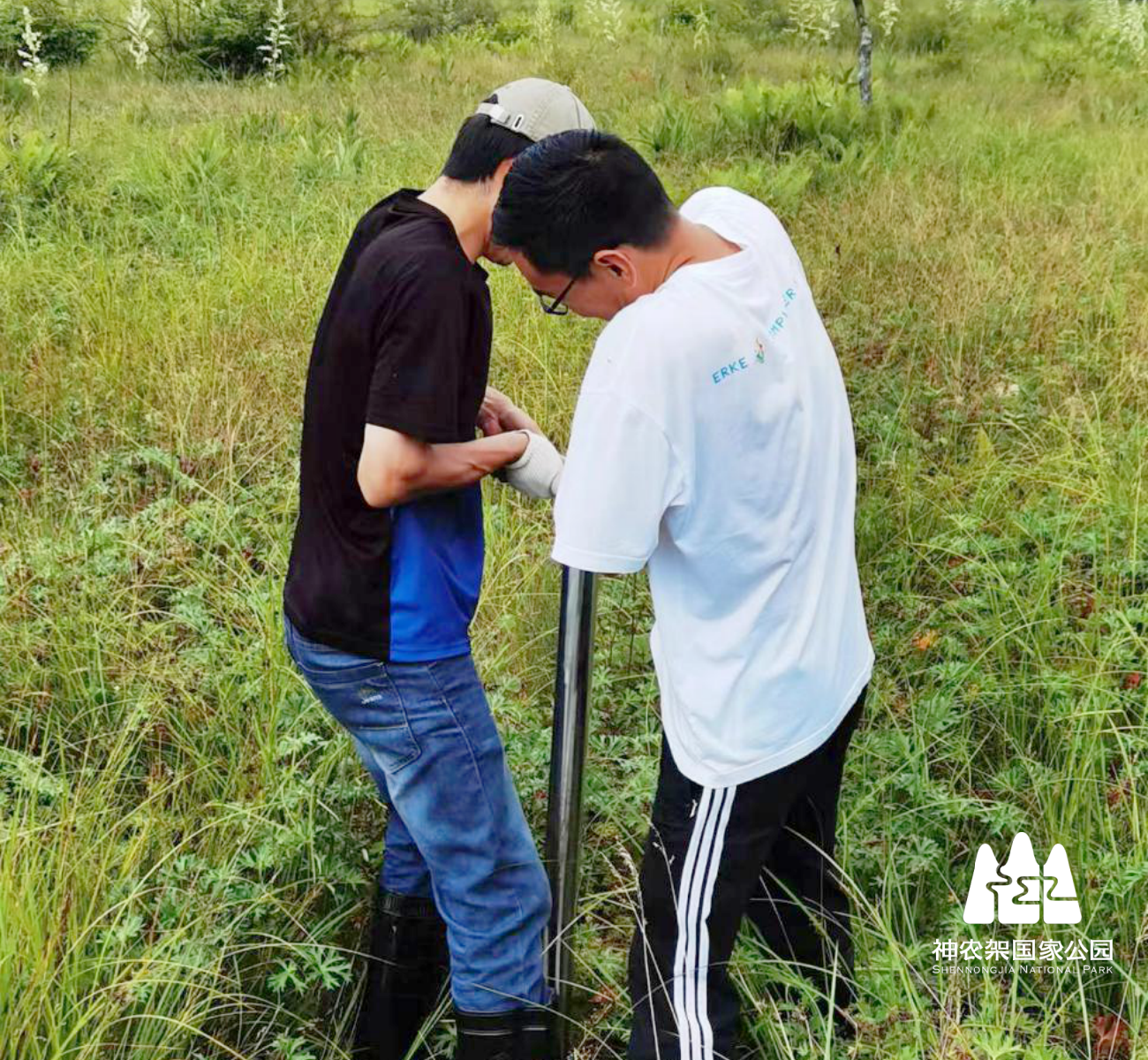 Researchers Ma Guofei and Mo Jiayong at Scientific Research Institute of the Shennongjia National Park Candidate Area, conduct a sphagnum layer survey at Dajiuhu Lake. (Photo by Jose)
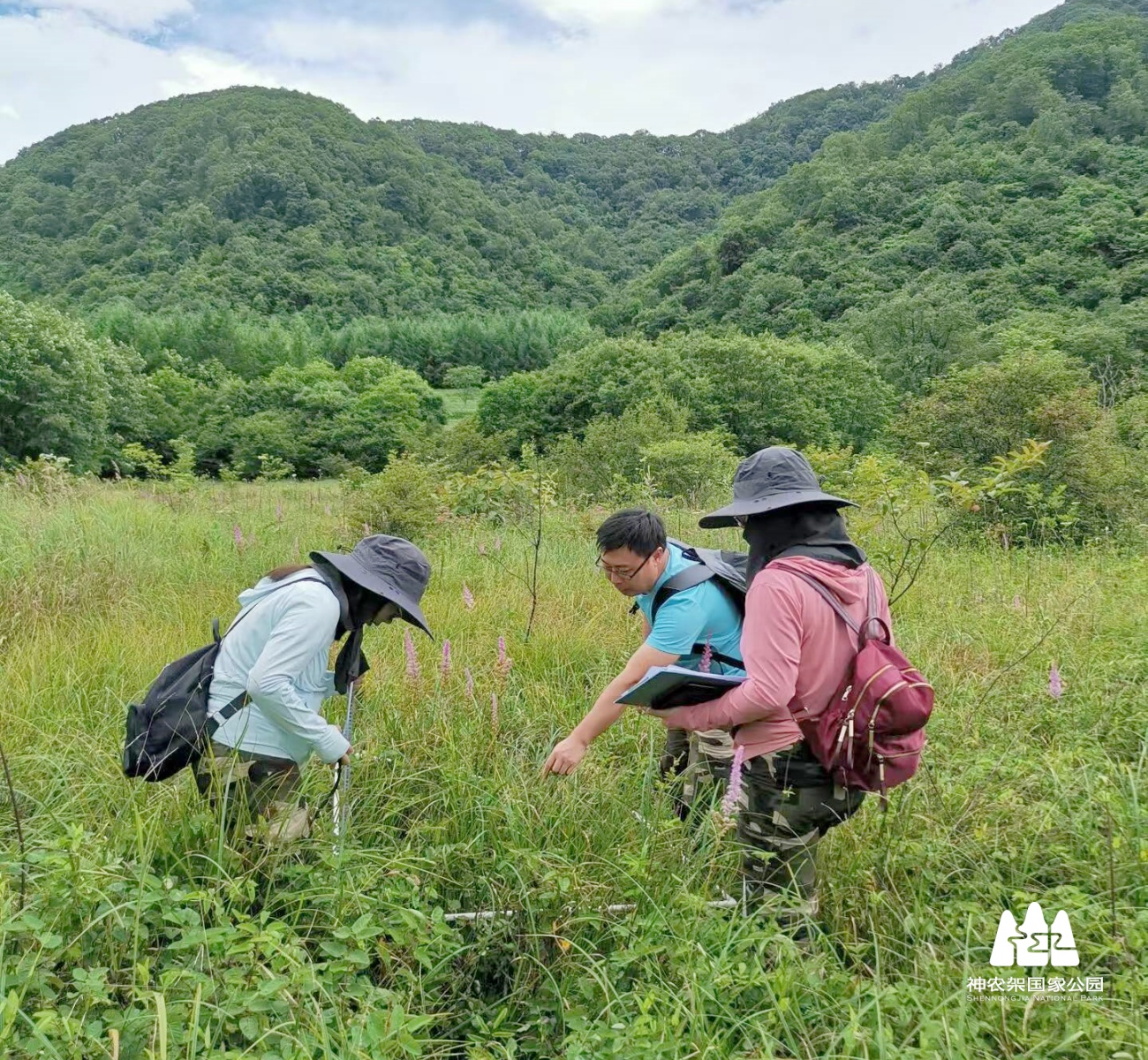 A plant research team led by Jiang Zhiguo from the Scientific Research Institute of Shennongjia National Park Candidate Area conducted a wild plant survey at Dajiuhu. (Photo by Jose)
Substantial Results Evident
Nearly two decades of conservation efforts have brought about significant ecological recovery for Dajiuhu. The ecological environment quality index rose from 0.473 in 2002 to 0.651 in 2021, exceeding pre-development levels.
The wetland area gradually recovered from a low of less than 0.6 square kilometers and stabilized around 1.15 square kilometers, nearly doubling over ten years. Concurrently, bird species have shown a continuous upward trend.
· Around 2010: 52 species
· Around 2015: 136 species
· Around 2020: 167 species
· 2025: 304 species
In the latest comprehensive survey, 11 new plant species and 27 new records for China were discovered in the Shennongjia National Park candidate area, along with 27 new insect species and 117 new records for China. These figures directly reflect the effectiveness of the protection measures.
Meanwhile, the number of wintering birds has reached a record high. According to statistics by Ma Guofei, a bird researcher at the national park, a total of 261 individuals from 9 species of overwintering waterbirds were recorded this year. These included species rarely seen in Dajiuhu or even the entire Shennongjia area, such as the Tundra Bean Goose (Anser serrirostris) and the Bar-headed Goose (Anser indicus). “As a vital stopover on the central flyway for China's migratory birds, the ecological value of Dajiuhu Wetland far exceeds its geographical boundaries. It functions like a ‘Cloud Airport’, providing crucial refueling and resting spots for birds on long journeys. The return of winter visitors like the Tundra Bean Goose and Bar-headed Goose is the best proof that this lifeline remains vibrant,” Ma Guofei said excitedly.
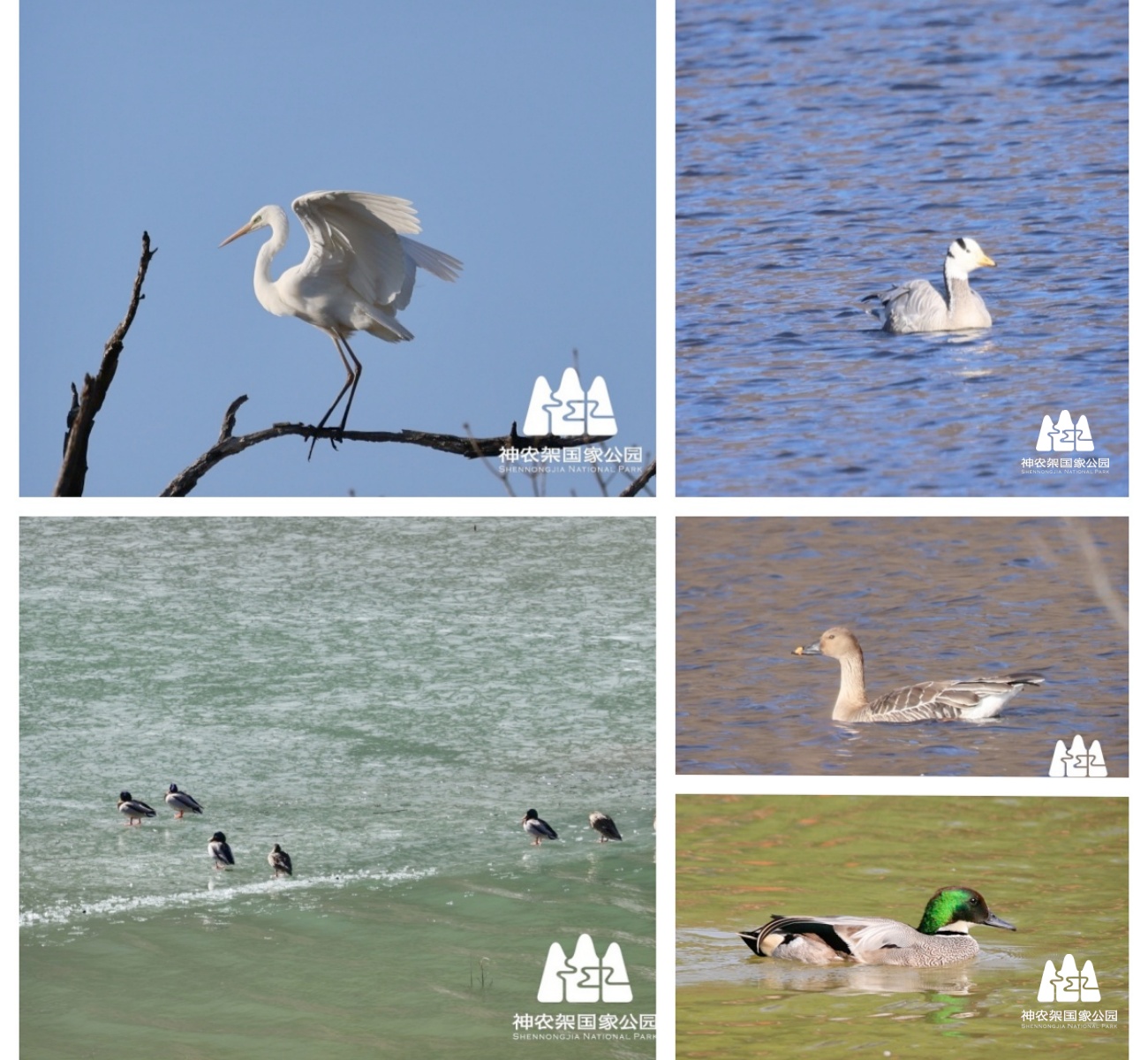 Species of birds in Dajiuhu Wetland increasing gradually.(Photo by Ma Guofei)
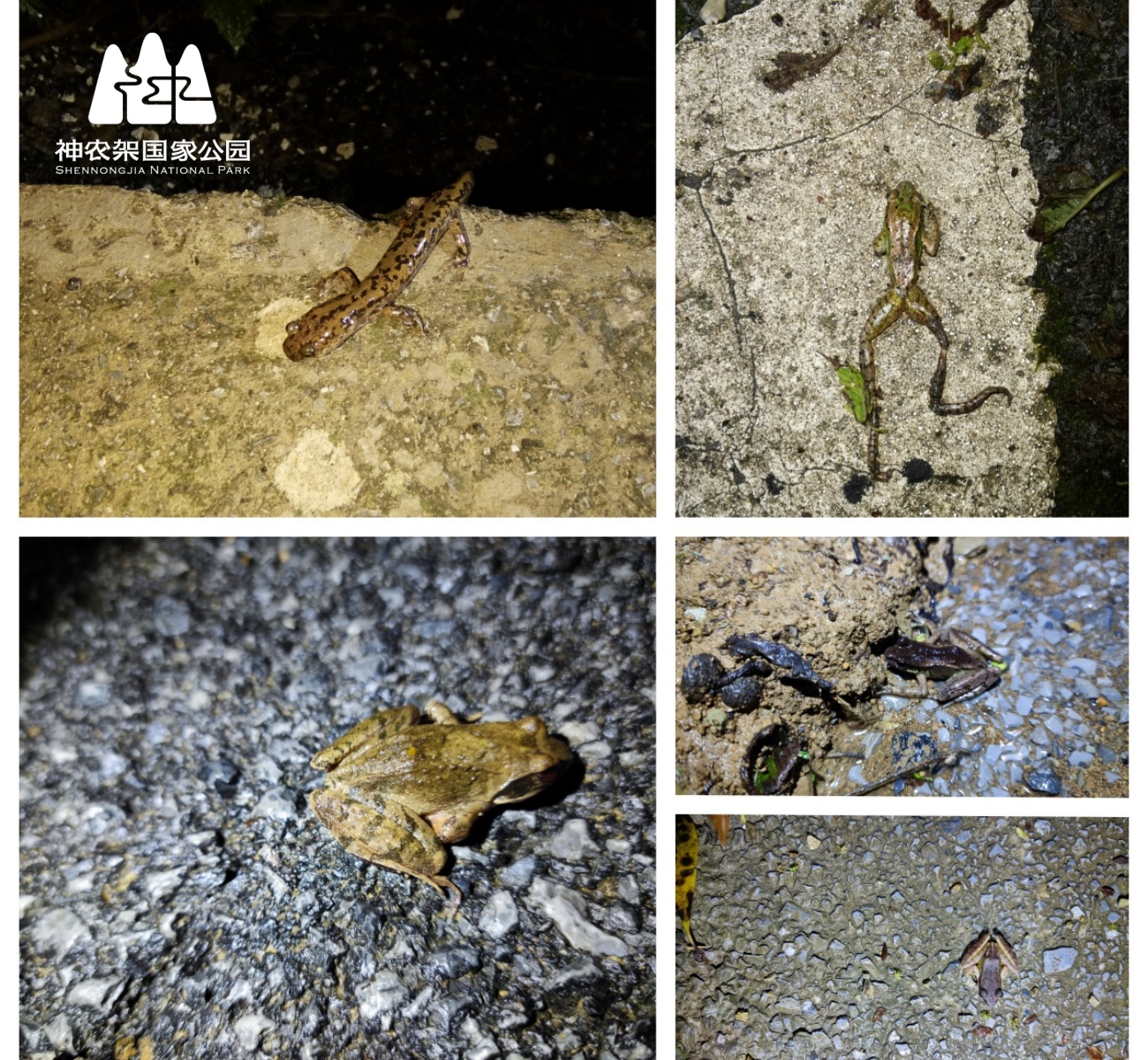 Various wetland frogs living in Dajiuhu Wetland.
Harmonious Coexistence Between People and Environment
The successful protection of Dajiuhu Wetland represents not only the restoration of an ecosystem but also a reshaping of the relationship between humans and nature.
The rise of ecotourism has seen Dajiuhu's annual tourist visits exceed 600,000, with daily peaks surpassing 10,000 in summer. The number of homestays and hotels in Pingqian Town has grown from the initial 20-30 to over 500, providing 12,000 beds. Lucid waters and lush mountains have truly become invaluable assets.
Community residents have transformed from beneficiaries of ecology into conscious protectors. Today, people from Dajiuhu carry trash bags when entering the lake area for photography, can accurately identify over 30 bird species, and actively educate tourists about the ecological secrets of sphagnum moss.
The protection journey of Dajiuhu Wetland reflects the core shift in the philosophy of China's ecological civilization construction—from “conquest and extraction” to “active retreat”, and then to “meticulous care”. A clear path is being practiced here: using determination to alleviate the pressure of excessive human activity on natural ecology, restoring ecosystem integrity and vitality through scientific rehabilitation, and then developing green industries based on the restored, high-quality ecology, achieving a virtuous cycle of ecological protection and improvement of people's livelihoods.
Along the boardwalk, detailed interpretation panels are placed for each plant species, allowing visitors to learn the stories of these wetland inhabitants. Dajiuhu is becoming a living natural classroom and a model for ecological protection.
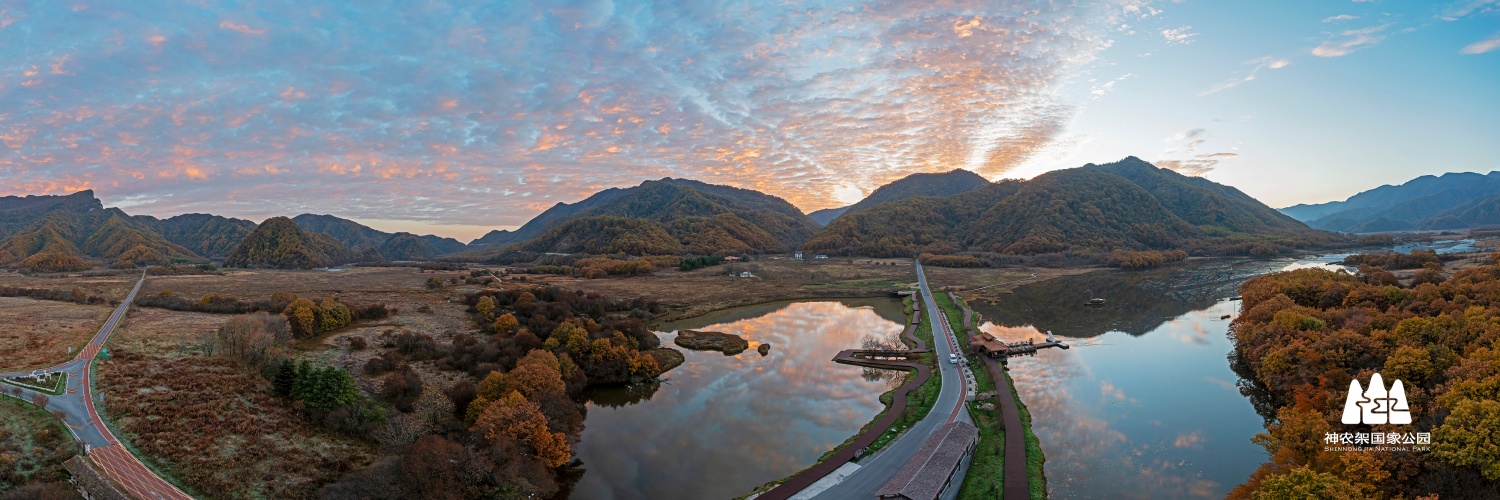 The Dajiuhu Wetland has been revitalized after restoration and protection. (Photo by Mei Tao)
Ma Guofei used a set of data to powerfully demonstrate the current state of Dajiuhu's wetland function restoration: “Compared to the 233 and 224 individuals recorded in 2023 and 2024 respectively, the total number this year achieved a significant breakthrough, even though the number of species wasn't the highest. The recovery trends of certain key species populations are even more convincing. For instance, the number of Little Grebes (Tachybaptus ruficollis) surged from 16 last year to 85 this year, and Green-winged Teal (Anas crecca) increased from 6 to 34. These changes are not accidental; they serve as a mirror, reflecting the overall improving health of the Dajiuhu wetland ecosystem. Birds are the most sensitive environmental indicators. The fact that more and more waterbirds choose to stay or winter here is undoubtedly a ‘vote of confidence’ cast with their wings.”
From a “High Mountain Plain” to a degraded marsh, and back to a “Paradise for Ten Thousand Birds”, the fateful transformation of Dajiuhu Wetland confirms a simple truth: when humans learn to retreat humbly, nature generously gives back in return. (By He Sai, Du Hua, Shen Mengmeng)

Address:36 Chulin Road, Muyu Town, Shennongjia Forestry District, Hubei Province 鄂ICP备18005077号-3
Phone:0719-3453368