Azemiops feae: an ancient legend
Updated:2026-01-07 Source:Shennongjia National Park
Most of what people know about the Azemiops feae comes from online legends and grainy photographs. The common myth is that these snakes are confined to the most isolated reaches of the Himalayas. But the truth is, this ancient viper is far more widespread than its black-headed close relative. In Shennongjia, the forest with untamed wilderness offers us a rare chance to lay eyes on this magnificent and secretive animal.
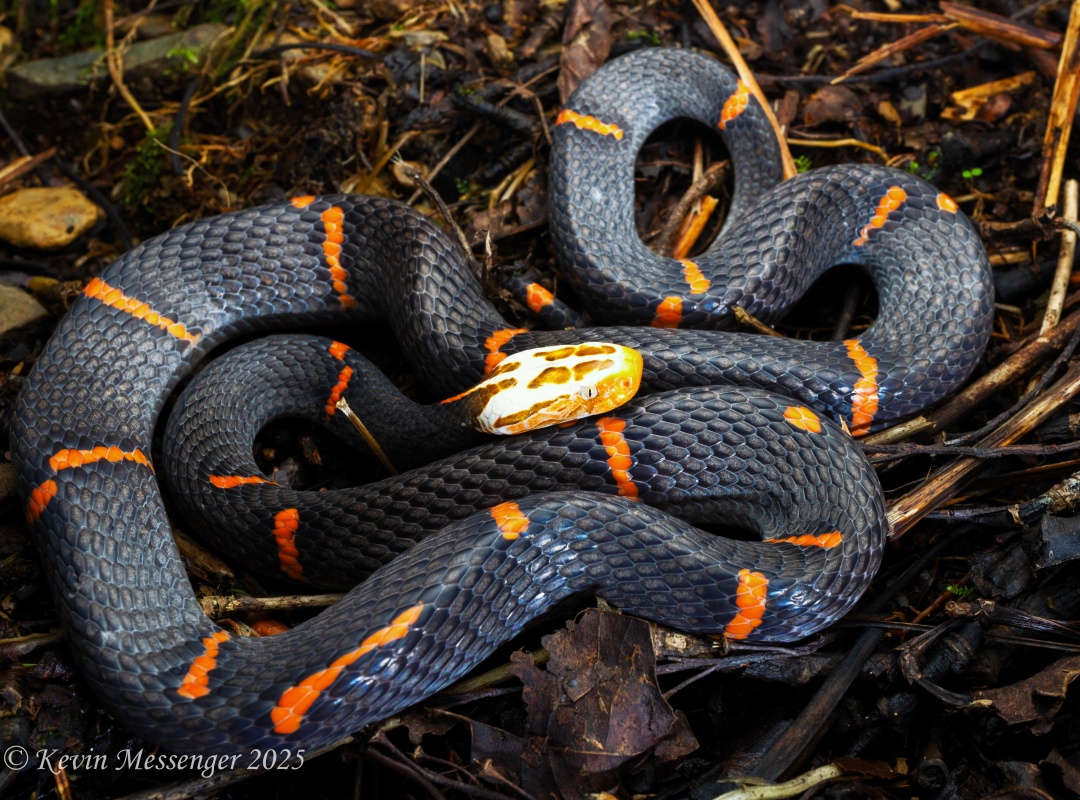
The lifestyle and habits of the Azemiops feae remain largely a mystery to science. Its rise to fame, however, can be credited to its extraordinary color scheme: a pale, ash-white head atop a body of black adorned with russet patterns. Sometimes, intricate orange markings grace its head, resembling a skull at a glance.
While this palette is both classic and striking, it falls victim to the old folk belief that “the more vibrant and unique a snake’ patterns, the more potent its venom.” Consequently, whenever these vipers are spotted by people, they barely survive.
The reality is far less dramatic. Although the Azemiops feae is a venomous species indeed, it poses virtually no threat to humanity. Their populations are quite scarce, and they inhabit dense, high-altitude mountain forests—environments where a chance encounter with a human is exceedingly rare. Speaking of its venom, the limited medical records available suggest its potency is nowhere near as extreme as popular imagination would have us believe. For all these reasons, its fearsome reputation is largely mythical.
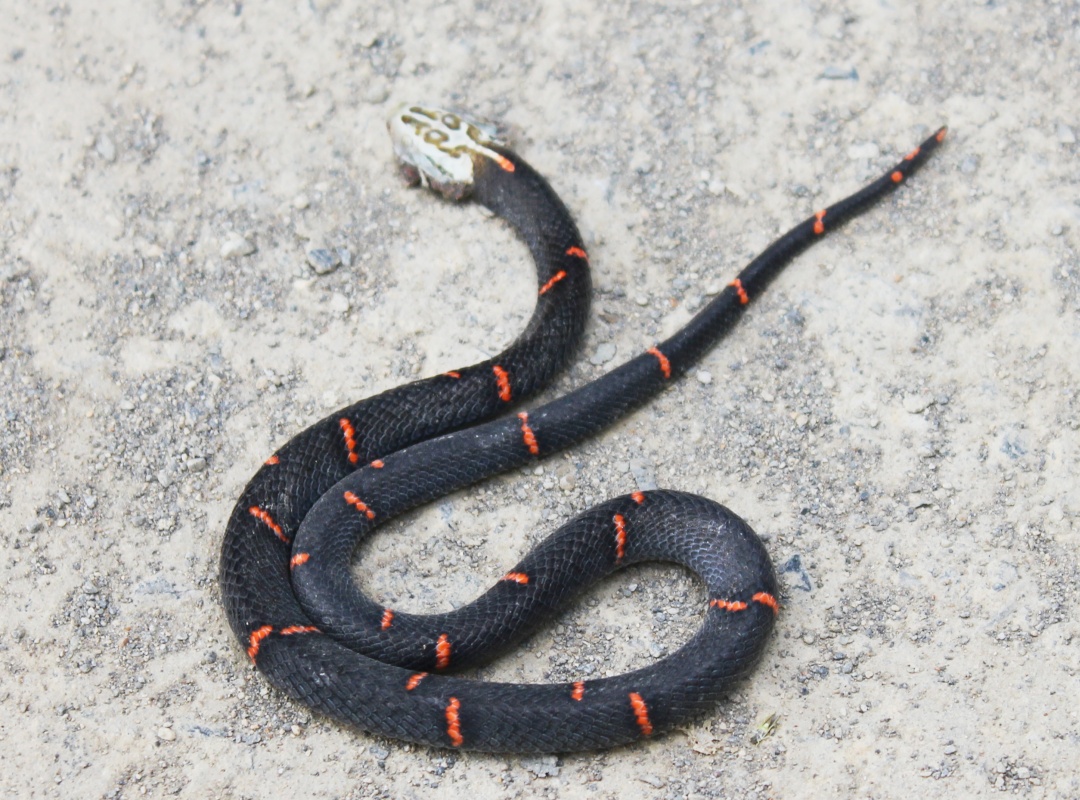
The Azemiops feae is incredibly particular about its habitat. Pristine, dense mountain forests are required to provide ideal cover, along with a plentiful water source and a cool, shaded environment. Contrary to popular belief, this snake actually prefers a cool, even chilly climate despite being poikilothermal. They are almost never seen during the day unless startled or disoriented. The lush, thriving wilderness of Shennongjia—with its deep ravines and unique, isolated climate—perfectly meets these specific demands.
In the world of vipers, the Azemiops feae is the delicate miniature next to its brawnier relatives, rarely exceeding 70 centimeters even in adulthood. It is an ambush expert specialize in hunting small rodents in the dense carpet of the forest floor. If you happen to spot one of these elusive, ancient creatures during your camping trip in Shennongjia, take a moment. Marvel at its delicate beauty—proof of nature’s incredible skill. Written byWang Shaojun; Photo by Kevin Messenger
Profile:
Scientific Name: Azemiops feae
Order: Squamata
Family: Viperidae
Genus: Azemiops
Key Identifiers:
Head: Slightly flattened, pale greyish-white, with two light tan stripes running lengthwise down the top.
Body: The base color is dark brownish-black, overlaid with light tan markings.
Pattern: Along the purplish-brown back and tail runs a series of narrow, crimson-red bands.
Range in China:
Zhejiang, Anhui, Fujian, Jiangxi, Guangxi, Sichuan, Guizhou, Yunnan, Xizang, Shaanxi, Hubei, and Gansu.

Address:36 Chulin Road, Muyu Town, Shennongjia Forestry District, Hubei Province 鄂ICP备18005077号-3
Phone:0719-3453368