A Warmhearted Effort to Save a Black Bittern in Shennongjia
Updated:2025-10-31 Source:Shennongjia National Park
In late autumn, the mountains of Shennongjia blaze with color. By the banks of the Xiangxi River in Muyu Town, a lone Black Bittern lingers, glancing back again and again as if reluctant to leave. Few would have imagined that just three days earlier, it had been found curled up in the roadside grass, barely breathing. The turn in this migratory bird’s fate began with an unexpected encounter.
At 2:47 p.m. on October 24, Li Ping, a part-time ranger from Qingfeng Village in Muyu Town, was making his patrol when he noticed something unusual among the shrubs — a patch of grass trembling oddly. Approaching cautiously, he discovered a bird with a long pointed beak and dark brown plumage lying weakly on the ground. It tried to flap its wings but could not lift itself, its eyes filled with fear and helplessness.
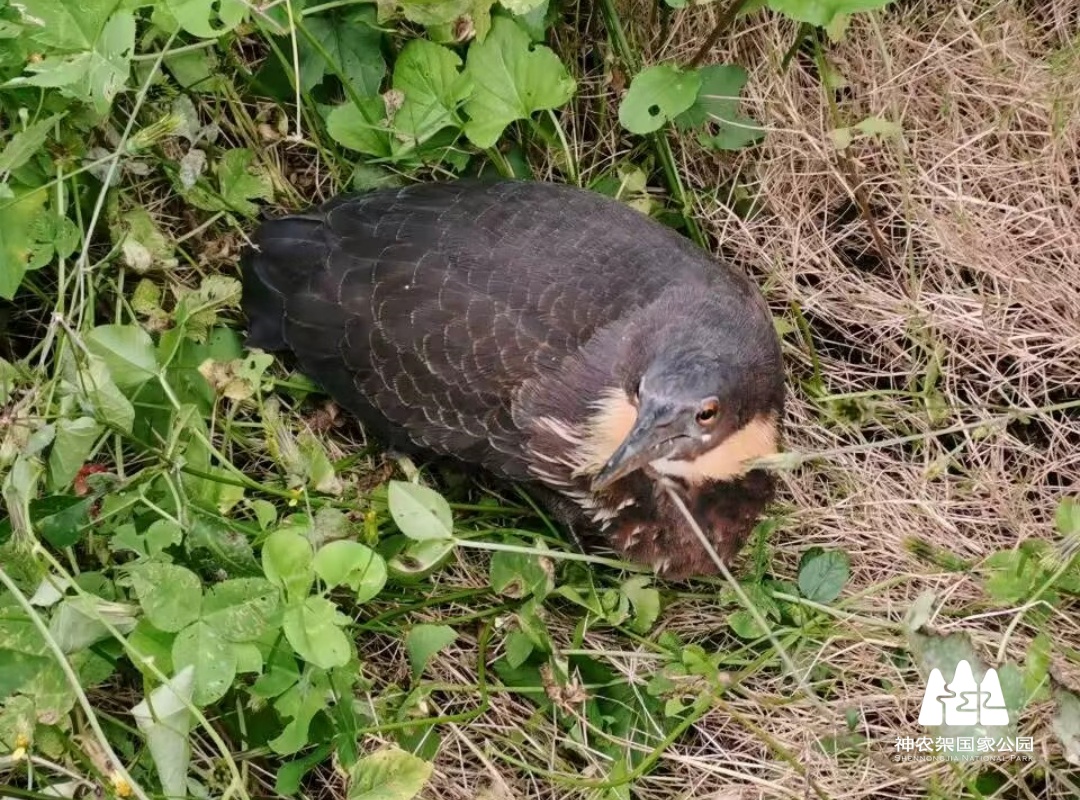
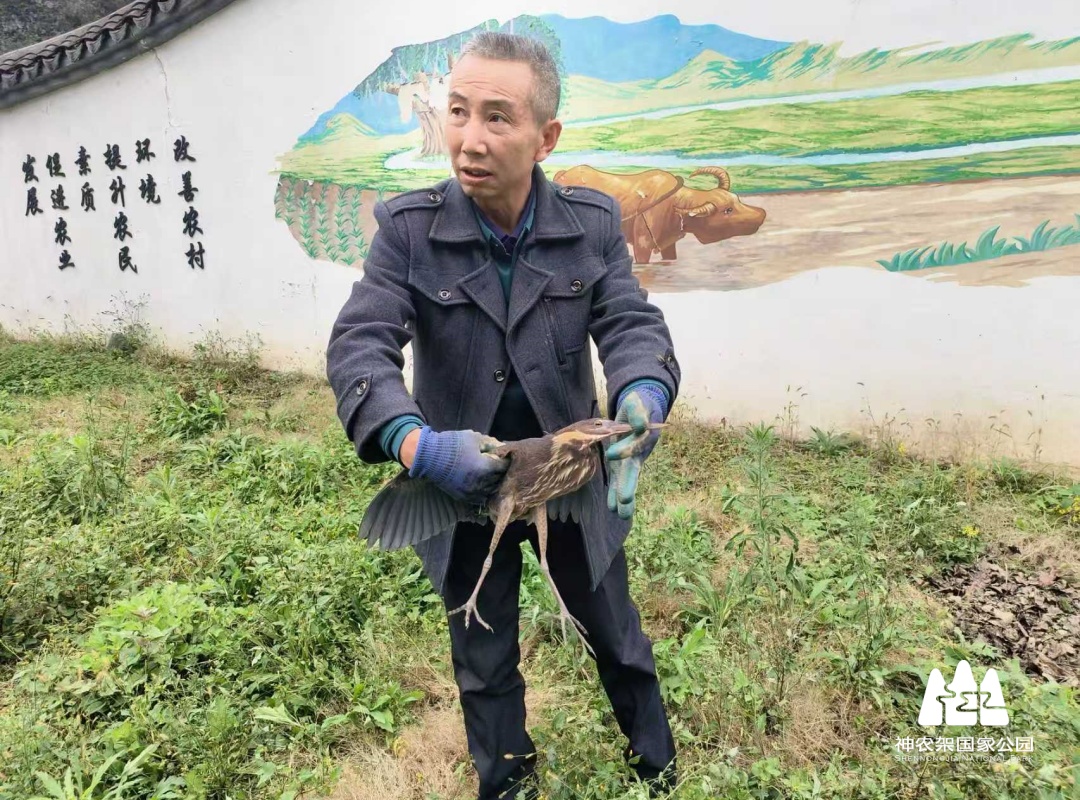
“This isn’t a bird we usually see around here,” Li thought. Drawing on his training and experience in wildlife protection, he realized it was likely a rare migratory bird that had fallen behind on its journey south.
He didn’t rush forward. Instead, he stepped back to a safe distance and immediately called the Muyu Conservation and Management Center. “I’ve found a bird I don’t recognize — it needs professional care,” he reported. After hanging up, Li remained quietly on guard, standing watch like a sentinel over the fragile life before him.
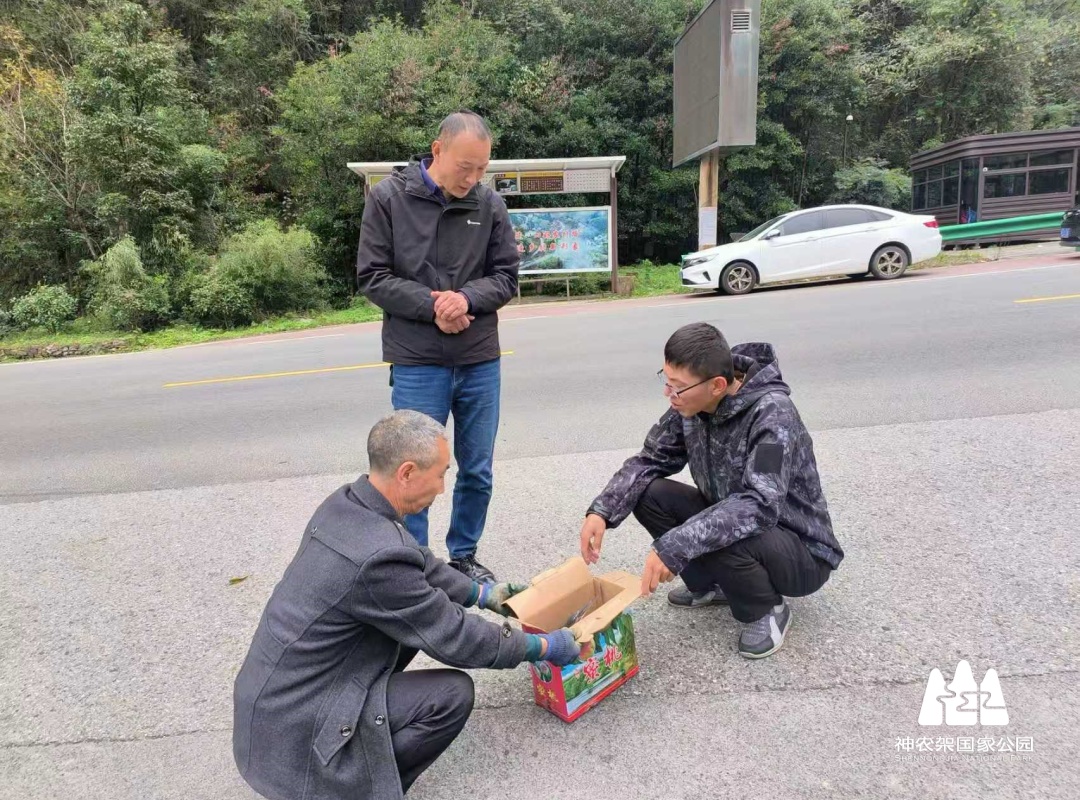
Upon receiving the report, Wang Hong, head of the Muyu Conservation and Management Center, promptly activated the emergency rescue protocol for wild animals. Carrying a transport box, the team set out at once and connected via video call with ornithologists from the Science Research Institute of Shennongjia National Park (Candidate). “Judging by the beak and body shape, this is most likely a Black Bittern — a rare sight in Shennongjia!” said Ma Guofei, the expert on the other end of the call, identifying the species at a glance.
A preliminary examination at the site showed that the adult Black Bittern was significantly underweight. Its wings were intact but too weak for flight. Wang Hong and his colleagues gently placed it into a transport box lined with soft cloth, leaving small openings for ventilation to minimize stress during the journey.
At the Science Research Institute, Ma Guofei carefully received the transport box. At that moment, he was busy coordinating the 6th “Shennongjia Cup” Birdwatching Event — but for him, saving a life always came first.
After a careful examination, Ma Guofei found no visible injuries on the Black Bittern. “It must have fallen behind during its long migration due to exhaustion,” he concluded. To help the weary traveler regain its strength, Ma used his own money to buy small fish and shrimp, and for the next three days he cared for it with quiet dedication — even as he juggled the busy schedule of the birdwatching event. Each time he fed the bird, he watched closely to see how it ate, moving slowly and gently so as not to startle his sensitive little patient.
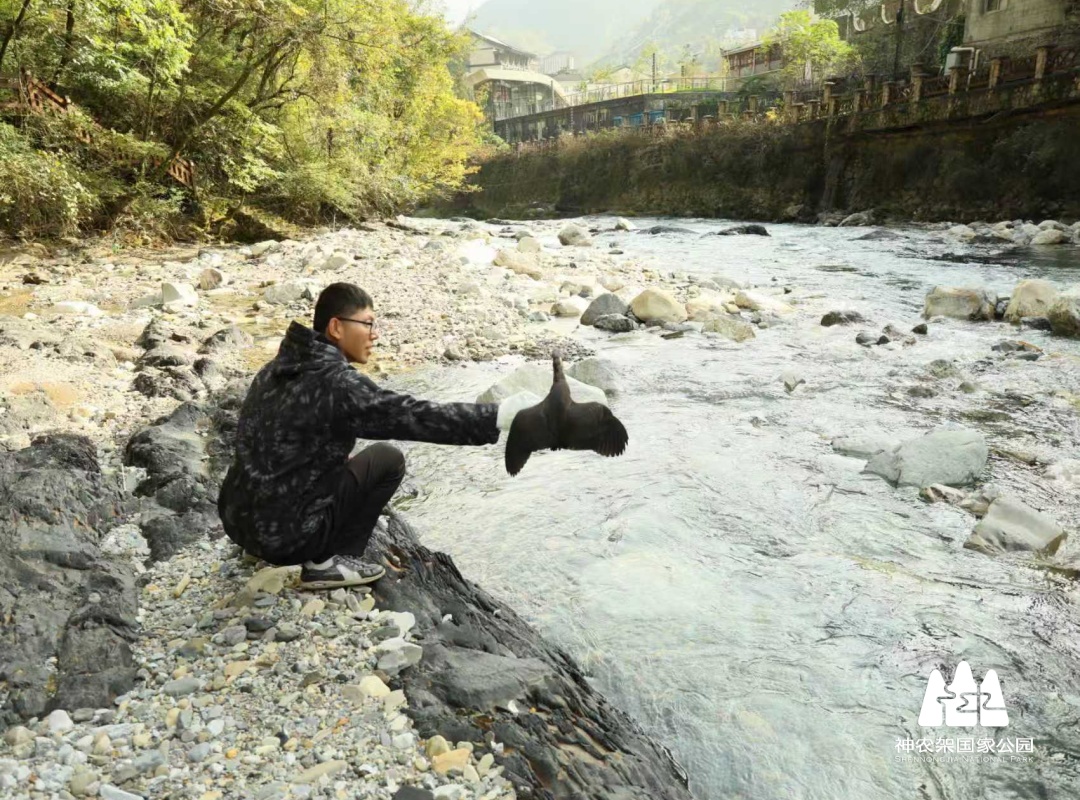
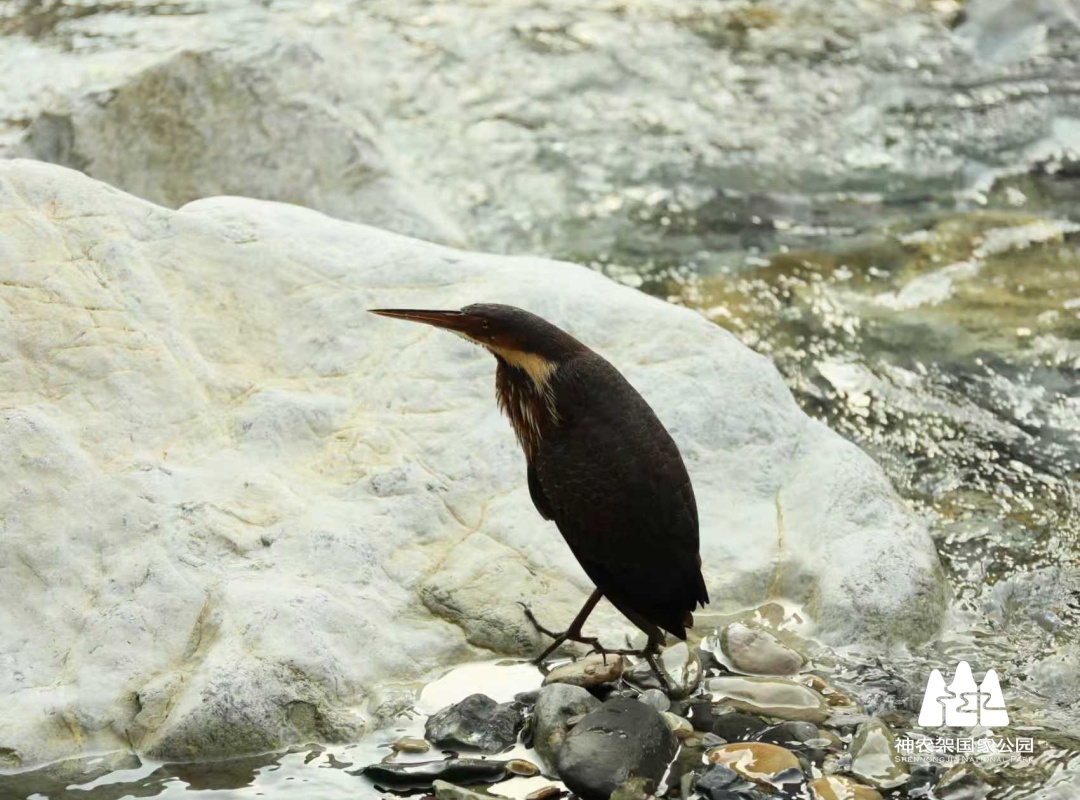
Under careful and compassionate care, the Black Bittern’s eyes soon regained their brightness, and its feeding movements became quick and assured once more. On the afternoon of October 27,with sunlight streaming gently across the courtyard, Ma Guofei opened the transport box and lifted the now fully recovered bird in his hands. With a sudden beat of its wings, the Black Bittern took off into the air — but it didn’t fly away immediately. For a moment, it lingered, turning back as if to look at its rescuers in quiet gratitude. Only after the team had left did they see, from across the river, the bird slip into the reeds and disappear, returning at last to the wild.
“From the initial discovery and reporting to the professional rescue and treatment, every step matters,” said an official from the Administration of Shennongjia National Park. “Rangers serve as our frontline sentinels, researchers provide the technical support, and local residents remain our most reliable strength.”
As autumn deepens, countless migratory birds are crossing the skies over Shennongjia. On this land where people live in harmony with nature, there are always those who quietly watch over the birds — turning care and responsibility into a lifeline that keeps them safe.(Written by Ma Guofei & Jiang Ailin)

Address:36 Chulin Road, Muyu Town, Shennongjia Forestry District, Hubei Province 鄂ICP备18005077号-3
Phone:0719-3453368