National Park System Pilot Implementation Promotes Environmental Protection in Shennongjia
Updated:2022-07-01 Source:Shennongjia National Park
In May 2016, the National Development and Reform Commission approved the Implementation Plan for the National Park System Shennongjia Pilot Area. This fact marked that Shennongjia National Park officially became one of China’s first ten "national park system" pilots.
Since the launch of the pilot, Shennongjia National Park has seen changes from 'logging' to 'legislative protection', from ecological destruction to ecological restoration, and from 'hunting and netting' to 'ecological guarding'. As introduced by Liu Jianxiong, Deputy Director of the Administration of Shennongjia National Park, Shennongjia National Park adheres to the green development path on the basis of implementing the strictest protection rules and regulations, and has coordinated ecological protection with green development and the improvement of people’s welfare.
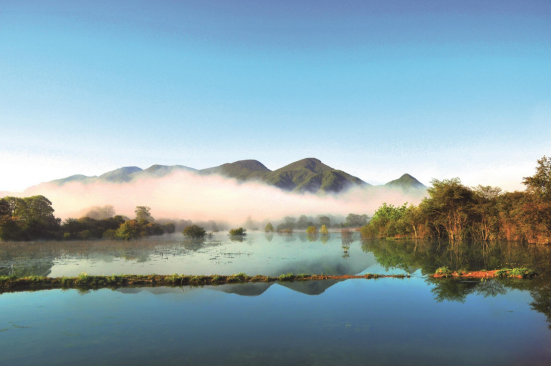 Dajiuhu Wetland
More than 5,000 species of wild animals live in this area, among which the insects, reptiles, birds and beasts account for more than 75%, 64%, 71% and 70% of their respective kind in Hubei Province.
The Golden Snub-nosed Monkey is a flagship species here, with its population increased from over 500 in the 1990s to over 1,470 today, and its habitat area increased from 210 square kilometers to 354 square kilometers.
This is Shennongjia, the "green miracle" at 31 degrees north latitude, the most well-preserved virgin forest in the world's mid-latitudes, the haunt place of the unbelievable "Chinese bigfoot", the habitat of mysterious "albino" animals, and the Noah's Ark in China in the Quaternary Ice Age...

Address:36 Chulin Road, Muyu Town, Shennongjia Forestry District, Hubei Province 鄂ICP备18005077号-3
Phone:0719-3453368