
A Warm Guard Always Exists in the Deep Mountains at Minus 12℃
—A Story of the Golden Snub-nosed Monkey Caretakers at the Shennongjia Golden Snub-nosed Monkey Field Research Base in HubeiUpdated:2026-03-09 Source:荆楚网
On winter nights in Shennongjia, Hubei, the wind cuts like a blade. At six o’clock in the morning, Muyu Town, located at an altitude of 1,200 meters, is still shrouded in ink-black darkness, with only the howling wind swirling and rushing between the mountains.
In the pitch black, car headlights look feeble on the winding mountain roads. Our group is heading to the Dalongtan Golden Snub-nosed Monkey Field Research Base before dawn, where the “monkey nannies” have already started their new day’s work.
The Call at Dawn
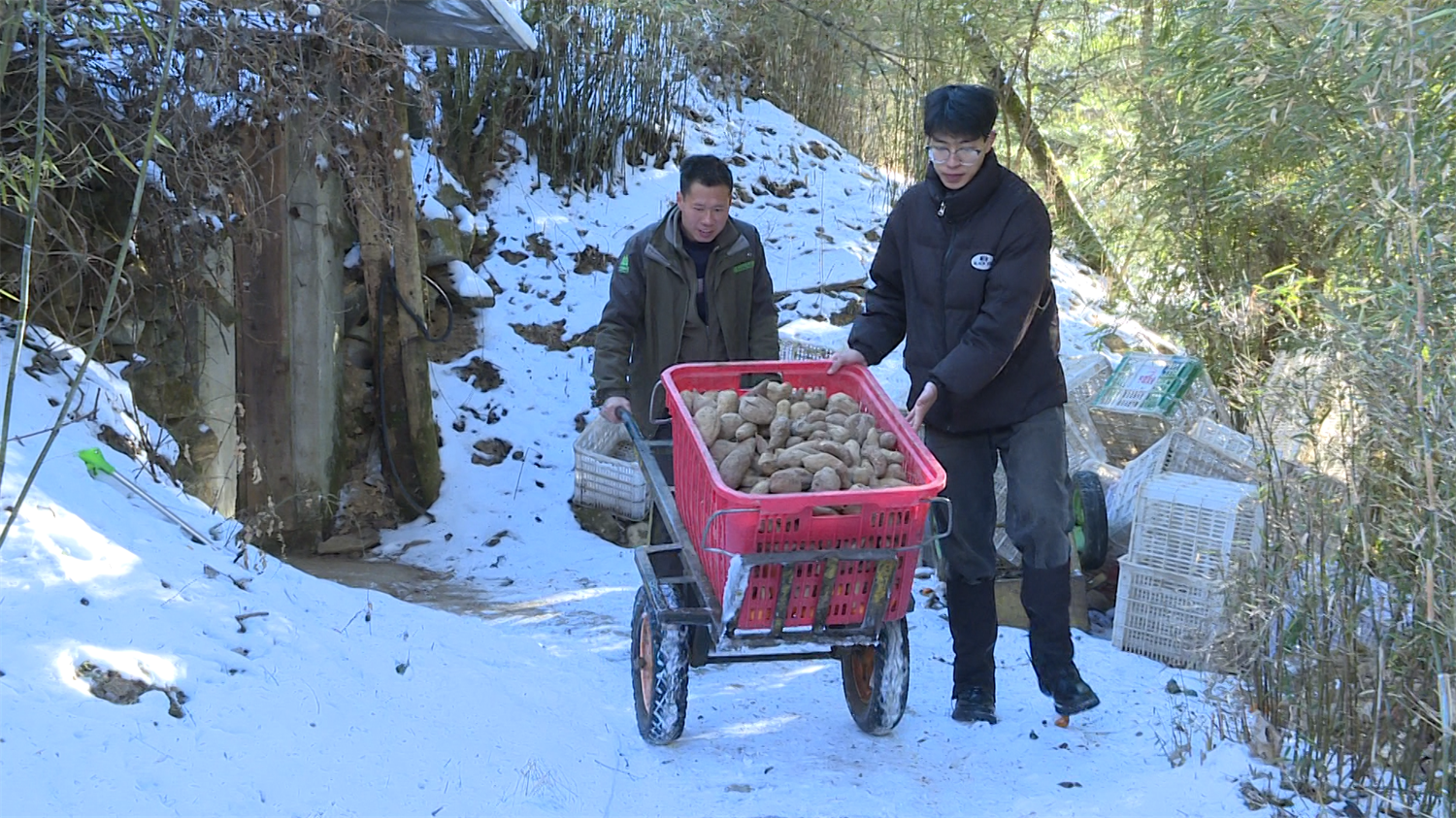
Stepping into the base’s living area, we push open the door and see veteran caretaker Sun Kailin carefully checking his gear: he fastens his snow gaiters tightly and secures the straps of his snow boots firmly. “The snow outside can reach above the ankle. Without proper protection, your feet will freeze stiff after walking just 200 meters,” said the 42-year-old Sun, who has worked here for 13 years. His movements are skillful and his gaze focused, every detail bearing the mark of years spent braving the wind and snow in the deep mountains. The duty roster on the wall shows that he is on the early shift today with 23-year-old Liu Jinghao, who, though still a little inexperienced in his looks, moves with remarkable dexterity when putting on his gear.
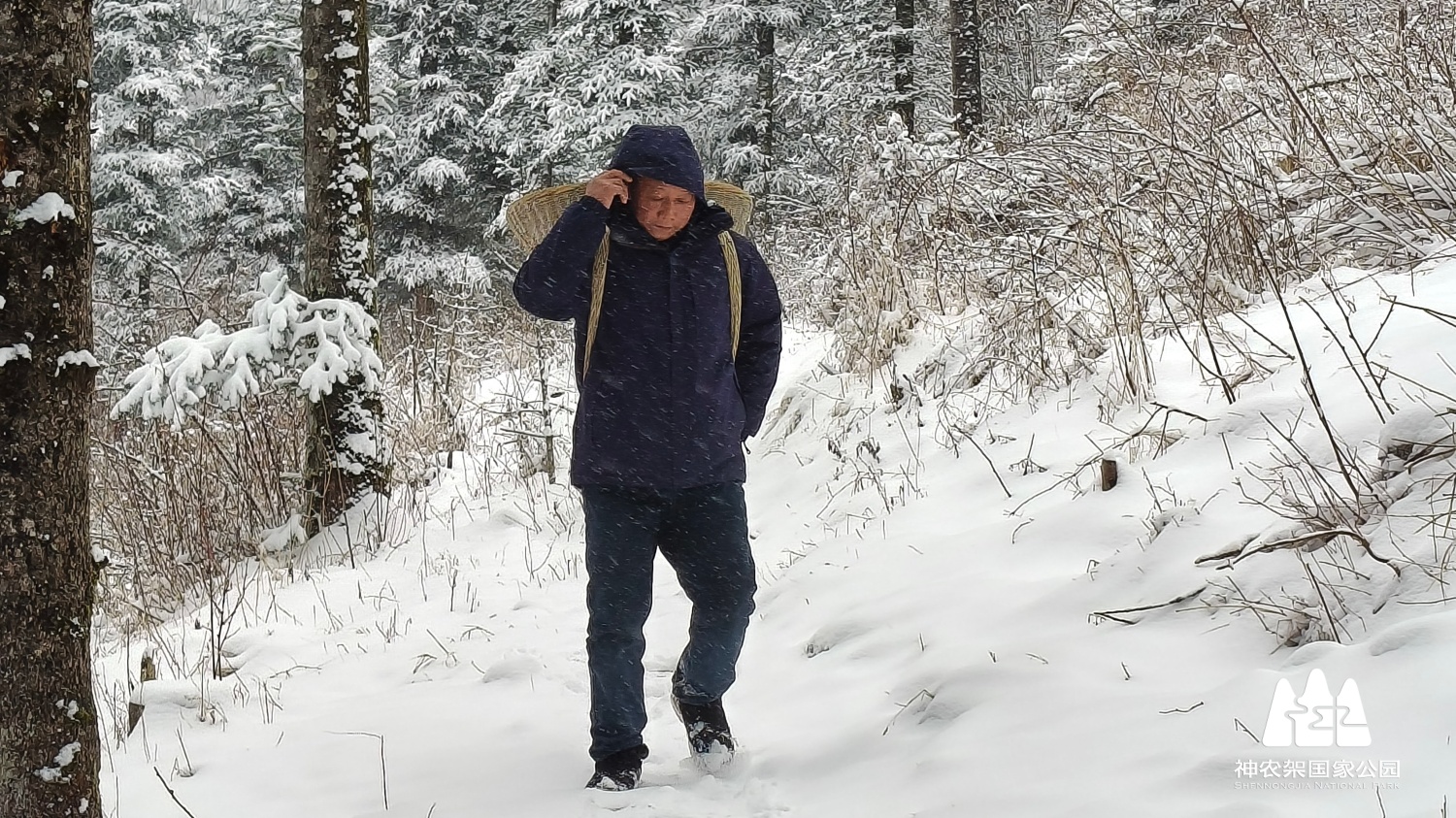
At 6:33, the outdoor temperature reads minus 12 degrees Celsius. The whimper of the cold wind through the bare branches is unsettling. As the two set off, the silent mountain forest is filled with the crunch of snow being trodden on. Looking back, the deep footprints in the snow bring a sense of reassurance.
“Golden Snub-nosed Monkeys follow the sun,” Sun explained as he walked, his white breath fading quickly in the air. “After daybreak, they move towards the direction of sunlight. We have to find them before dawn and lure them within a 3-kilometer radius of the base. This not only ensures the safety of the monkey group but also facilitates observation and research.”
Upon reaching the predetermined spot, Sun took a plastic basin from his backpack and sprinkled peanuts on the ground little by little, calling out as he did so: “Woooh — Woooh —”, imitating the calls of Golden Snub-nosed Monkeys.
The cries faded away in the empty valley, and half an hour later, a faint response came from the distance. Soon, the treetops began to shake, and snow fell rustling down. One, two, three... Golden figures flashed in the dim morning light, leaping over from the trees on the distant mountain peaks with light and elegant movements, drawing flowing golden arcs against the white snow.
Sun counted the number of monkeys skillfully and smiled, saying, “All of them are here.”
Round-the-Clock Vigil in the Dense Forest
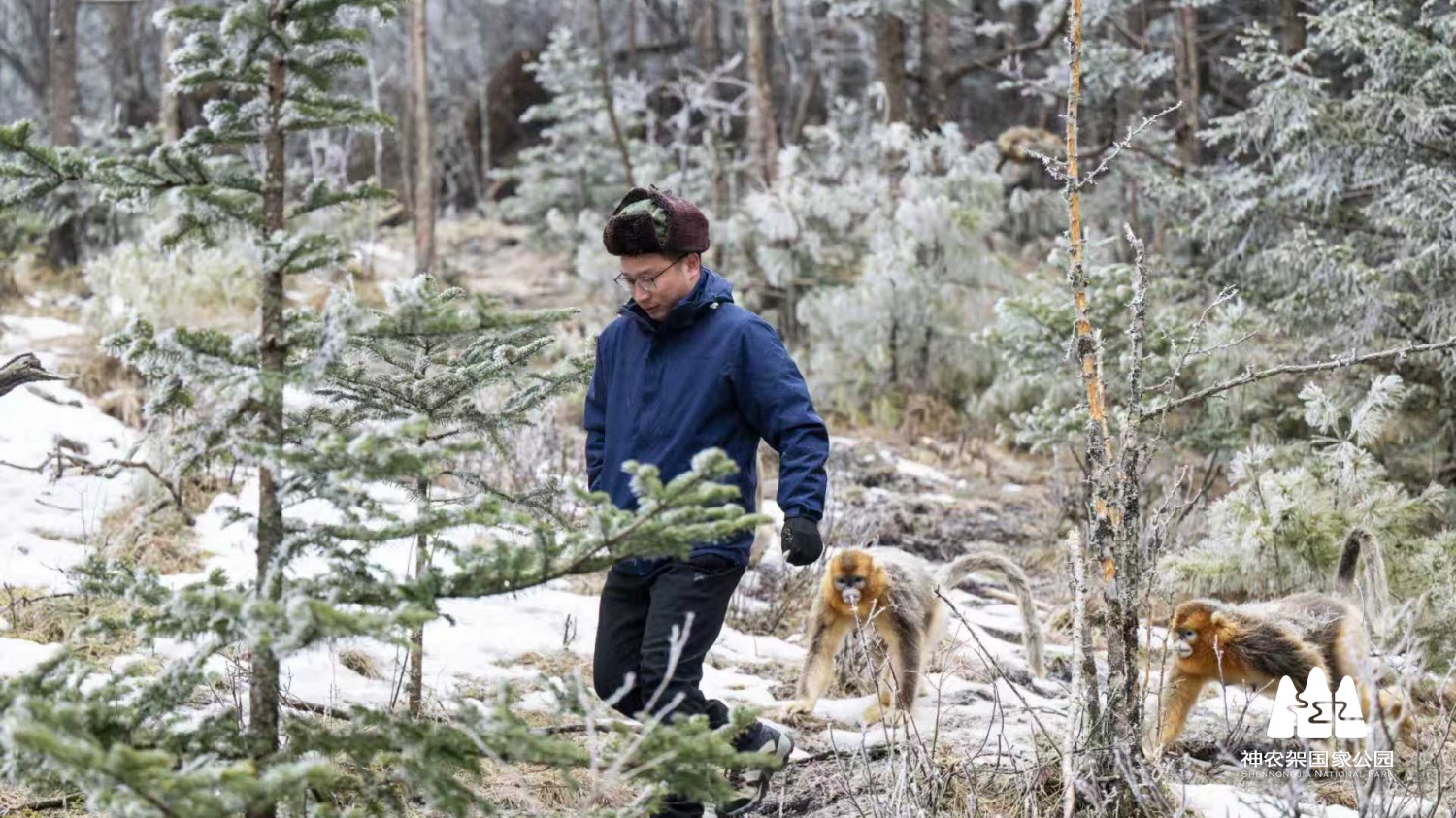
By 8 a.m., the monkey group was successfully led to the observation area, and Sun and Liu set off back to the living area.
Behind the base’s dormitory building, a simple cellar is hidden at the foot of a hillside. Pushing open the heavy wooden plank door, a mixed smell of soil, fruits and vegetables greets the nose. There are no modern constant temperature devices here, only the most primitive wisdom of storage. They cleverly use geothermal temperature and build a shed with thatch and wooden planks, which has become a “granary” for the monkey group to get through the winter.
“Food is scarce in the mountains in winter, especially for pregnant female monkeys and newborn baby monkeys, which need extra nutritional supplements,” Sun said as he picked up a sweet potato and began preparing meals for the monkey group. Beside him, Liu carried the cut sweet potato pieces to the pool, washing them and spreading them on bamboo sieves at the same time.
In the afternoon, as the monkeys played and frolicked in the snow, the “monkey nannies” went to the observation post to start their observation work.
“The hardest time is not winter, but the rainy season,” Sun said in a calm tone. In summer, Shennongjia sees an unimaginably abundant amount of rain, and getting soaked to the skin is a common occurrence.
Rheumatism has become a lasting mark left by this job on many "monkey nannies". Last summer, a week-long rainfall shrouded the base in dampness. Several caretakers caught cold one after another, but none of them asked to go down the mountain to rest. "The monkey group needs guidance and observation every day; not a single day can be missed."
Despite the harsh conditions, their eyes always shine with light when they talk about the monkey group.
“That one with a scar on its face, we call it ‘Scar’,” Liu pointed to a strong male monkey in the distance, his tone filled with affection. “He’s the leader of this group, very responsible, and always stands on the periphery of the group keeping a sharp lookout for danger all around.”
They can call each monkey by name and know their personalities, family relationships and health conditions. This understanding does not come from cold scientific research data, but from day-to-day companionship and observation.
“Walking through the woods with the monkeys every day and watching the baby monkeys learn to leap in the trees, this vivid experience of interacting with wild animals is something you can never get from any other job,” Liu said with a smile. “The mountain wind, the morning mist, the sunset glow, and the warmth of eating around the stove are all the reasons I can't bear to leave.”
Watchful Thoughts in the Dusk
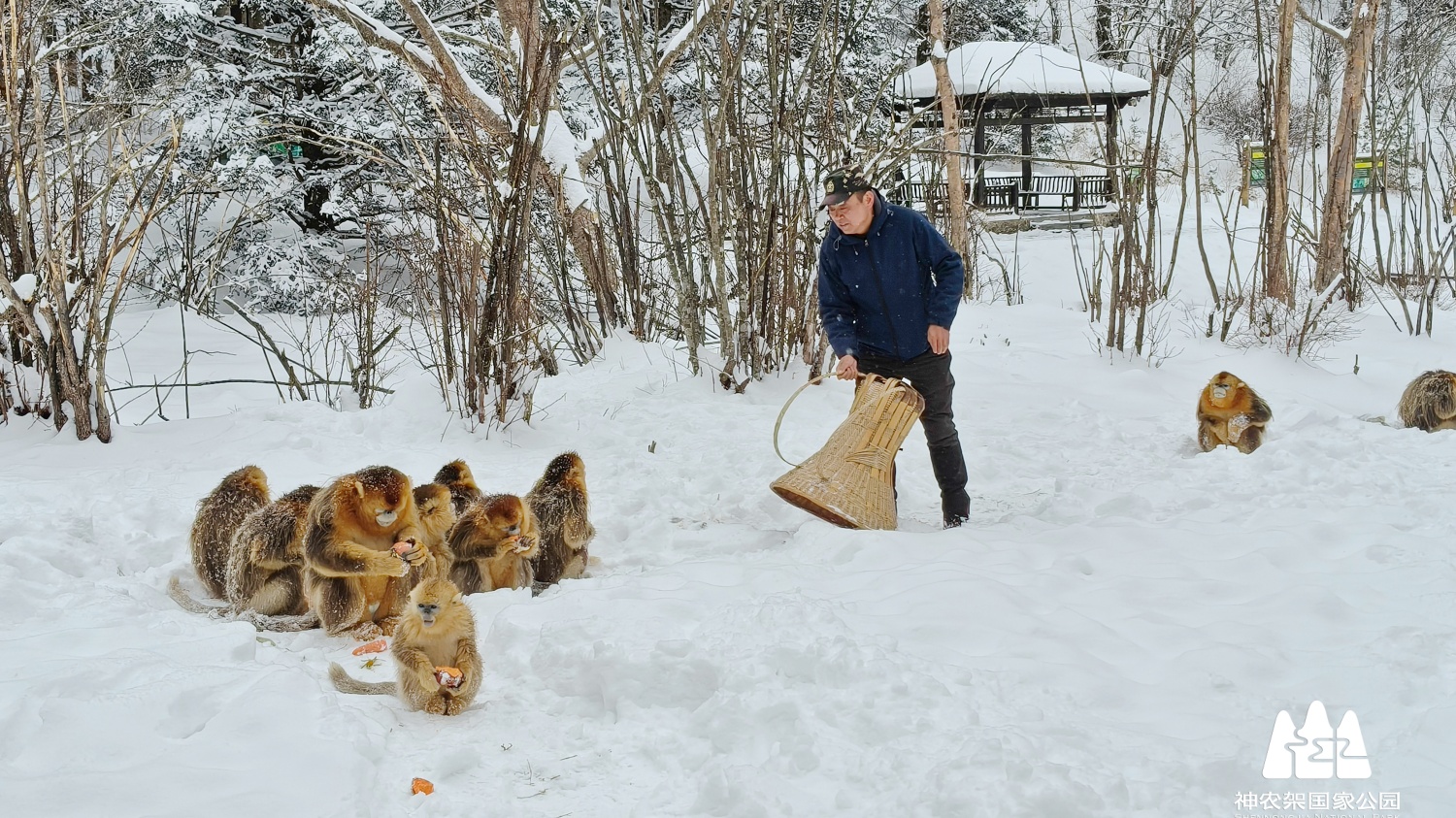
At 5 p.m., the sky dimmed gradually. The mountain forest was engulfed in twilight, and the temperature began to drop sharply.
This is one of the most tense moments of the day for the “monkey nannies”. They have to keep a close eye on the monkey group to make sure they find a safe roosting place for the night, usually the thickest and most windproof treetops.
“Noting down where they sleep tonight allows us to find the group more quickly tomorrow morning,” Sun’s pen moved rapidly on his notebook, recording the location of the monkeys' roost, the characteristics of the trees and the size of the group.
As night fell completely, the monkey group quieted down. Only then did the “monkey nannies” pack up their gear and prepare to go down the mountain, finishing their day’s work.
It has been exactly 20 years since the Golden Snub-nosed Monkey Research Base was built. “The hardest time is the Spring Festival,” said Jiang Jun, the person in charge of the base. When thousands of families are lit up with festive lanterns, someone always has to stay in the mountains. On one New Year’s Eve, a heavy snowstorm blocked all the mountain roads, cutting off the Spring Festival supplies. At that time, the several on-duty “monkey nannies” spent that isolated Spring Festival with the monkey group, relying on the sweet potatoes, potatoes and Chinese cabbages stored in the cellar.
The roots of this perseverance are deeply planted in the most simple reverence for life. In their hearts, every monkey is not a cold number or a research subject, but a vivid individual with a distinct personality like “Scar”, “the Leader” and “Yuanyuan”.
“People often ask me why I can persist in such deep mountains,” Sun looked out the window at the stretching snow-capped mountains, fell silent for a moment, and said he had no grand reasons — it’s just that someone has to do this job.
“Next spring, Yuanyuan’s baby will be able to climb trees on its own,” Liu said, his eyes full of anticipation.
As we went down the mountain, the sunset dyed the snow-covered Shennongjia with a layer of gold, and Dalongtan gradually disappeared from sight. But I know that the next morning, when the first ray of sunlight illuminates the snow peaks of Shennongjia, they will set off on time, heading deep into the mountain forest and making that call that has cut through the wind and snow.
“Woooh — Woooh —” This call has been echoing for 20 years. (By Du Hua & Fang Zeyang) 
Copyright Shennongjia National Park
Address:36 Chulin Road, Muyu Town, Shennongjia Forestry District, Hubei Province 鄂ICP备18005077号-3
Address:36 Chulin Road, Muyu Town, Shennongjia Forestry District, Hubei Province 鄂ICP备18005077号-3
Email:2673990569@qq.com
Phone:0719-3453368
Phone:0719-3453368


TOP