
Dalongtan Golden Snub-nosed Monkey Research Base Welcomes Precious New Arrivals
Updated:2026-03-25 Source:Shennongjia National Park
In March, as winter’s chill lingers but spring warmth begins to stir, beams of sunlight filter through the fir forest at the Dalongtan Golden Snub-nosed Monkey Research Base, part of the Scientific Research Institute of Shennongjia National Park. A newborn monkey’s cry echoes through the trees—fragile, yet brimming with life. As the sun climbs higher and the temperature rises, the troop descends from the branches to bask in the warmth on the forest floor. On the morning of the 12th, at the base of a sturdy pine tree, we spotted a female named “Meili” (Beauty) cradling her newborn. The infant was nestled tightly against her, quietly nursing.
It was clear the little one had only just entered the world. Traces of blood still stained the fur on Meili’s arms, and the infant’s umbilical cord still attached and ending in a small, round disk resembling a fetal membrane—had not yet withered. Its pale, tender face bore reddish eyes, nose, and mouth. The tiny, fragile creature curled up in its mother’s warm embrace. Occasionally, a tiny, translucent red hand would reach out from under the mother’s arm, grasping at the air with a newborn’s curiosity. I watched as Meili gently nuzzled the top of her baby’s head with her chin. Her deep eyes held a mix of tension and exhaustion, but also an irrepressible joy. This is her second child.
Last year, her first baby tragically did not survive. During those dark days, we often saw Meili sitting alone on a branch, clutching the tiny, lifeless body for a long time, unwilling to let go. When the wind blew, she would instinctively pull the body closer; when it rained, she would shield it with her own body. Even as the tiny form dried and shrank into a small, withered shape, she still refused to release it.
Meili was silent for a long time.
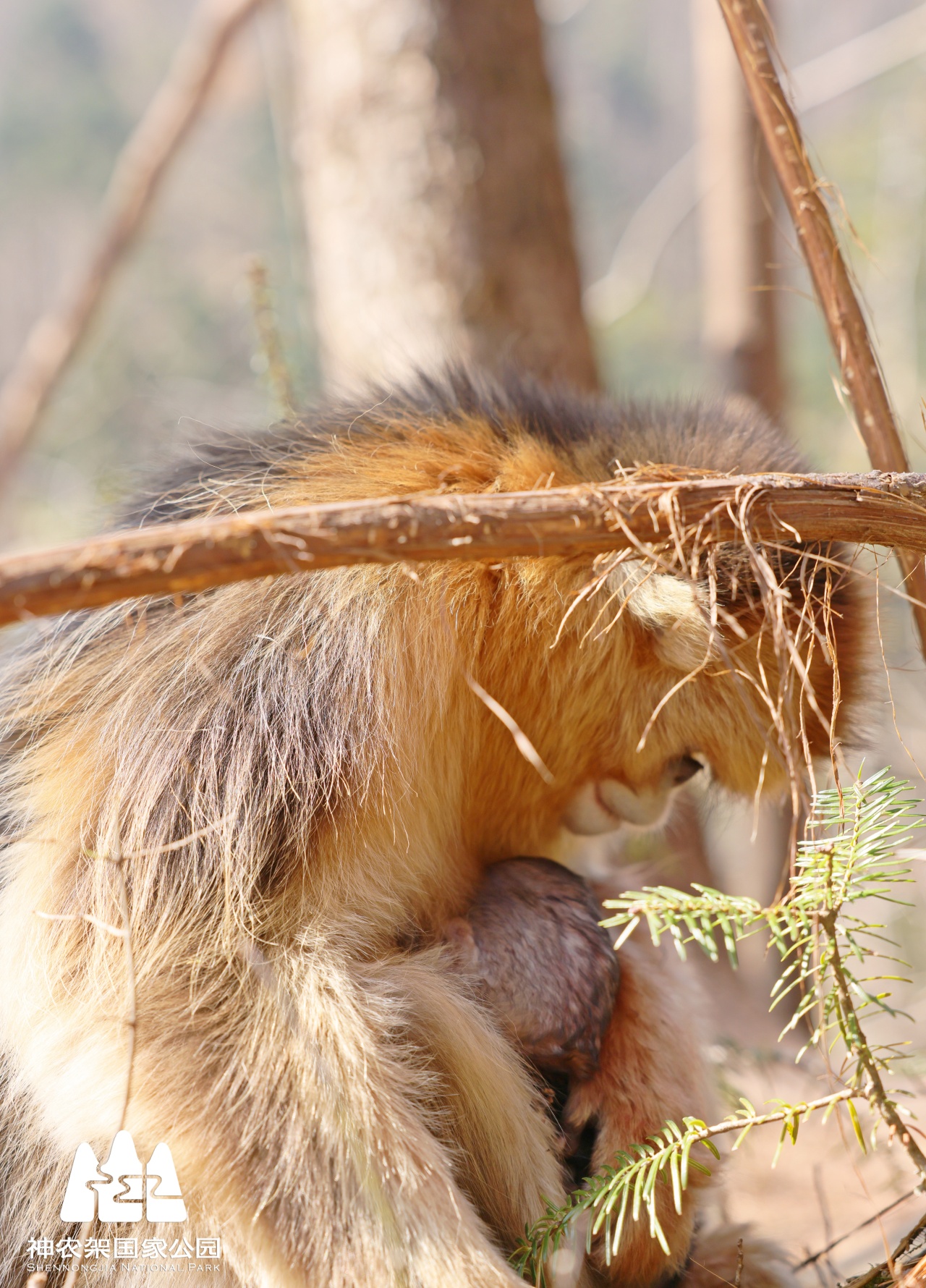
But spring never fails those who wait. This year, she is finally a mother again. Leaning her back against the tree trunk to block the chilly breeze, she shields her infant against her chest. We know that this time, she will give this child everything she has.
Meili’s baby is the third born at the Dalongtan Base this year. Before her, Xiaoqiao gave birth, and Xiaofu as well. After her, Aili delivered the fourth.
Across the eight monkey families at the Dalongtan Research Base, four new infants have already arrived this year. Each one is adorably gray, peacefully asleep in its mother’s arms. Li Shuhang, a researcher at the base, mentioned that more pregnant females are expecting, and more babies are on the way.
The newborns are incredibly endearing. With eyes closed, they instinctively seek their mothers' nipples, their tiny hands gripping fur for security. The mothers are exceptionally patient, cradling them with their forelimbs and licking them frequently, as if whispering, "Don't be afraid, Mama is here."
Golden snub-nosed monkeys do not give birth every year. They typically produce a single offspring every two years. Every birth is a masterpiece of nature. However, birth is only the beginning. The mothers vary in their parenting skills—experienced mothers appear calm and composed, while young first-time mothers often appear flustered. Regardless, instinct drives them all to protect their young. Xiaoqiao’s baby was able to stand and take its first wobbly steps just eight days after birth. While nursing, Xiaoqiao keeps a vigilant eye on her surroundings. At the slightest sign of movement, she pulls her baby tighter and retreats to the higher branches.
The breeding season is the busiest time for the staff. They take on the added role of "nannies." Every morning at dawn, they set out with binoculars, cameras, and notebooks. They visit every family to count the troop, look for newborns, and record the growth of each infant. Sometimes, to avoid startling the monkeys or letting them wander too far, the researchers crouch motionless in the cold wind for hours.
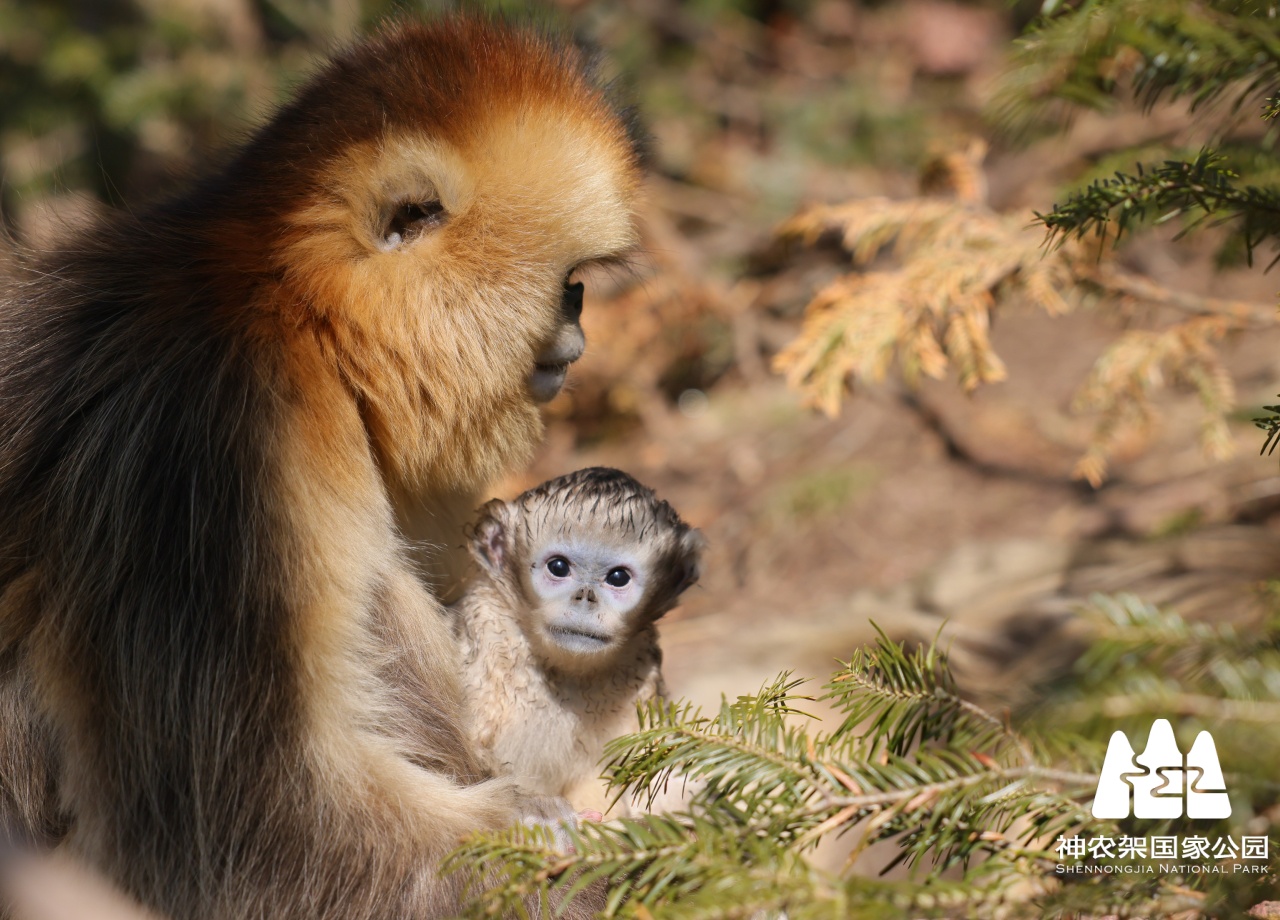
Jiang Jun, the head of the base, explained that they work in shifts to maintain detailed records: which female is pregnant, the estimated due date, and the weight, fur color, and health status of the newborns. Determining the gender of a newborn is no easy task as the mothers keeps her baby tightly tucked against her, making it difficult to get a clear view even after long observation through a camera lens.
“All the newborns are healthy, lively, adorable, and growing strong,” Jiang Jun said, his eyes bright with barely contained joy. For the staff, nothing is more gratifying than seeing the babies born safely and thriving.
This mountain forest wasn't always like this. In the mid-to-late 20th century, over-logging and rampant poaching in Shennongjia caused the golden snub-nosed monkey habitat to shrink and their numbers to plummet. Back then, spring was a desolate, hauntingly quiet season.
Since the turn of the century, the nation has implemented the Natural Forest Protection Project. Every tree and blade of grass in the Shennongjia National Nature Reserve is now strictly protected. Following the pilot program for the Shennongjia National Park, measures like returning farmland to forest, ecological restoration, and scientific monitoring have taken root. The habitat has expanded, food is now abundant, and the population is growing steadily. Researchers at the Dalongtan Base work year-round, observing, recording, and guarding. They have named every monkey, understand the structure of each family, and can even identify a specific monkey’s distress call by sound alone.
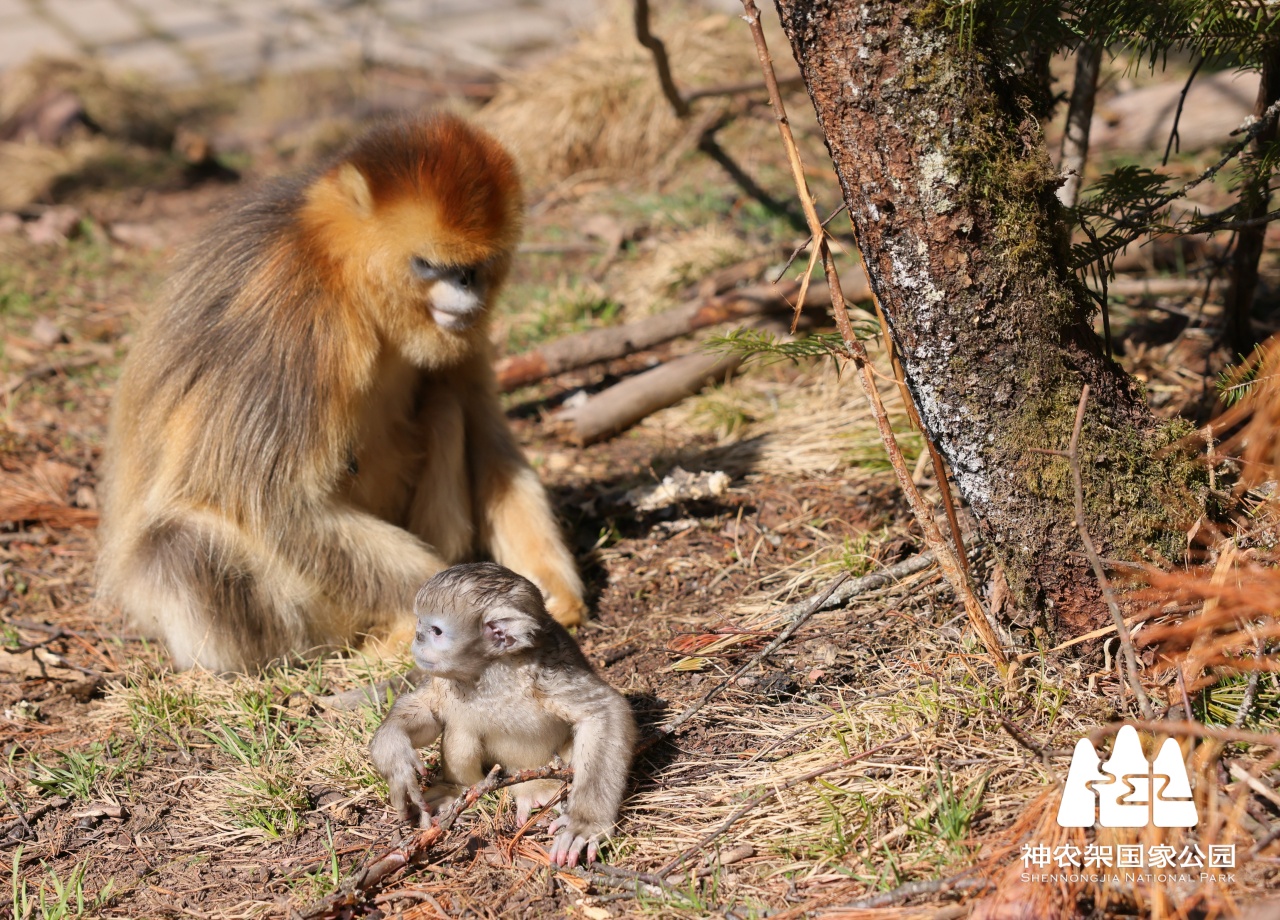
It is this meticulous, day-to-day work that has woven a safety net for the species. Now, the population at Dalongtan is steadily increasing. According to Jiang Jun, the base has seen a significant number of births each year in recent times, and this year is no exception. Every newborn represents proof of the forest’s rejuvenation.
In the afternoon, the warm sunlight bathes Dalongtan in a golden glow. The monkeys take full advantage of the warmth, sprawled out in their most relaxed poses, soaking up the sun.
Meili’s baby stirs slightly, letting out a tiny murmur. Meili immediately looks down with a tender gaze. In that moment, she seems to be telling her child: "This is our home, and here, you are safe."
This is what spring should look like—all things growing, life enduring. The spring breeze carries the cry of the newborn to every corner of the forest, announcing to all living things: This is a cherished home for life.
Spring will continue, and tomorrow brings new hope. More lives will come into the world; more staff will walk into the forest with binoculars, and more people will dedicate themselves to this land.
And I will stay here, witnessing it all in my own way. I will witness the gentle spring breeze sweeping across the miles and the golden monkeys bringing tidings of joy; I will witness the passage of time and the endless cycle of life; and I will witness how a forest, treated with such tenderness, repays all those who guard it in the most beautiful of ways. (Text by: He Sai, Du Hua, Tan Xinyao)

Copyright Shennongjia National Park
Address:36 Chulin Road, Muyu Town, Shennongjia Forestry District, Hubei Province 鄂ICP备18005077号-3
Address:36 Chulin Road, Muyu Town, Shennongjia Forestry District, Hubei Province 鄂ICP备18005077号-3
Email:2673990569@qq.com
Phone:0719-3453368
Phone:0719-3453368


TOP