Dalongtan – A Vivid Symphony of Human and Nature in Harmony
Updated:2026-01-12 Source:Shennongjia National Park
On December 16, under a crystal-clear blue sky, the winter sun in Shennongjia filtered through the towering branches of Bashan fir, Huashan pine, and Japanese larch. Its light fell upon two simple, grey-walled buildings with red-tiled roofs within the Dalongtan Golden Snub-nosed Monkey Research Base of the Shennongjia National Park’s Science Research Institute. These structures serve as both staff quarters and offices for the research team.
While countless places in China share the name “Dalongtan”, the one nestled at the foot of Shennongding in Shennongjia National Park is truly unique and significant. It stands out for several compelling reasons:
Perched at an altitude of over 2,300 meters, it is a genuine highland region.
It is one of the very few places in China where one can observe and study the endangered golden snub-nosed monkey up close, making it a renowned research base that attracts primatologists.
Beyond the golden snub-nosed monkey, which is a national first-class protected animal species, dozens of other protected plant and animal species call this area home.
It lies within the core protected zone of Shennongjia National Park.
A dedicated team has guarded these monkeys and this place with unwavering commitment for decades.
It has also hosted experts and scholars from around the world, including the United Nations.
Here, in this land considered a “true human exclusion zone”, life thrives in its most primal state.
On the lawn before the dormitory, dewdrops adorned patches of green grass. More noticeable were the scattered piles of granular droppings, resembling cryptic codes left by nature. I asked Base Director Jiang Jun, “These droppings look like goat’s. Do you keep goats here? I haven’t seen any.”
“These aren’t from goat. They’re from deer, sika deer,” Jiang Jun clarified, squatting and pointing into the grass. “This lawn attracts them like a magnet. They come at dawn and during the night, sometimes just two or three, sometimes in a whole group.”
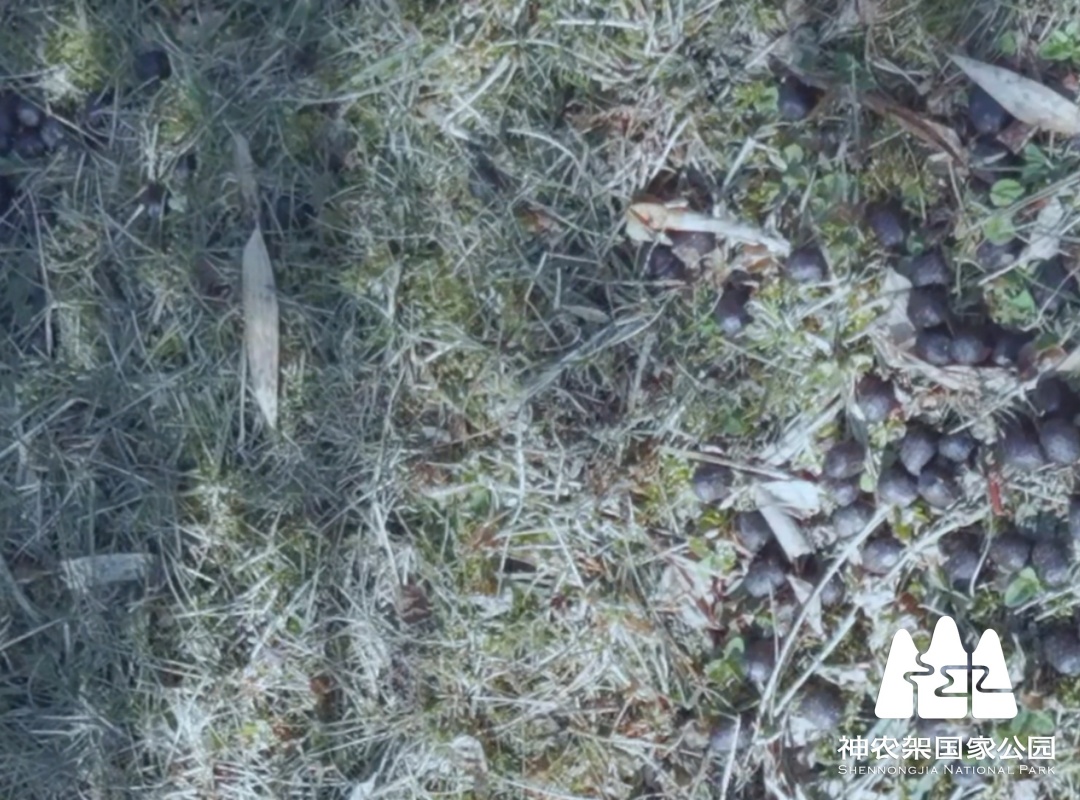 Sika deer waste on the grassland of Dalongtan
Everything here follows nature’s rhythm. Two rows of humble tile-roofed houses are discreetly nestled deep in the mountains. A stream, flowing from afar, babbles year-round. Together with the surrounding high-altitude fir forests and crabapple thickets, they form a secluded yet complete ecosystem.
“Besides the golden snub-nosed monkeys and sika deer, we have many other ‘residents’ here,” added researcher Li Shuhang. Creatures like black bears, tufted deer, Chinese muntjac, gorals, and serows are common sightings. The streams are also home to various high-altitude aquatic species like the Wushan salamander, toads, and small fish. This designated “exclusion zone” is, in reality, teeming with vitality.
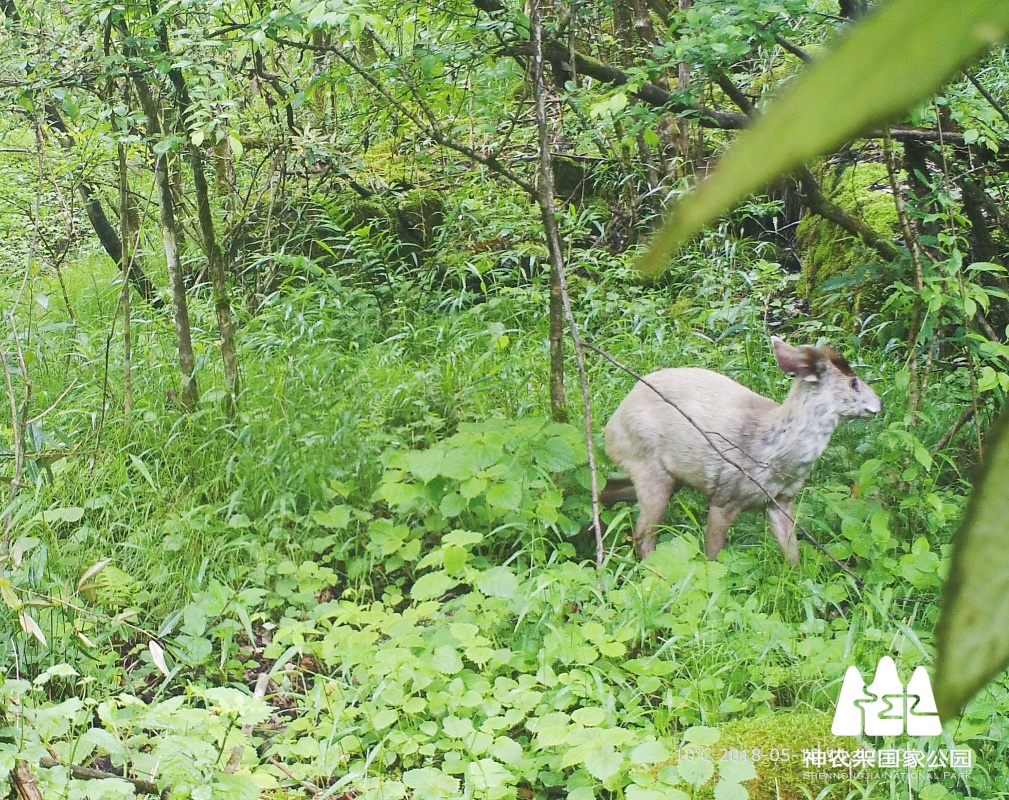 An albino barking deer discovered in Shennongjia National Park
“The sika deer are plentiful. Sometimes they even come to compete with the golden snub-nosed monkeys for food!” shared staff member Sun Kailin with a laugh. “They are nearby; we just don't always see them. The animals here have grown accustomed to our presence and live by their own rhythms.”
An amusing story about the sika deer involves an incident during the 2024 Spring Festival. With most of the research team away for the holiday, Zaman, a Pakistani doctoral student from Central South University of Forestry and Technology, and a few staff members remained. “One night,” Zaman recalled, “I heard knocking on the door. I asked who it was through the door, but got no reply. The knocking grew heavier, even shaking the door. I was terrified, fearing it might be a black bear. So, I tried tapping the door with a stick. It worked. I heard the sound of an animal running off, but it didn't go far. Shining a flashlight through the window, I saw two large sika deer with a fawn.” Zaman guessed that the dark, unlit house emitting warmth might have led the deer to think it was empty, prompting them to try nudging the door open for shelter.
Having visited Dalongtan dozens of times, we’ve seen numerous animal tracks in the forests, by the streams, and on snow, and had noticed these deer droppings. Yet, it never occurred to us that sika deer ventured so close to human dwellings with such nonchalance.
The deer droppings on this lawn speak volumes. They indicate that the team here cherishes and respects nature profoundly, with no intention of harming these deer. In today’s era of strong legal protection, the national park staff exercise strict self-discipline, protecting nature as they would their own eyes. They regard wildlife as friends and kin, coexisting in harmony and allowing natural rhythms to dictate life and reproduction. This philosophy has evolved over more than thirty years—from protecting individual species like the sika deer, to restoring entire ecosystems; from the careful establishment of a single research base, to the systematic development of a national park candidate area.
Over the decades, Dalongtan has been the stage for countless remarkable stories: a golden snub-nosed monkey, sharing a bond with the research team for over ten years, lingering near the dormitory in its final moments; staff encountering and successfully rescuing a golden snub-nosed monkey in difficult labor, saving the mother’s life; Dr. Kevin Messenger, an American researcher, crouching here to gently scoop up a handful of mating toads.
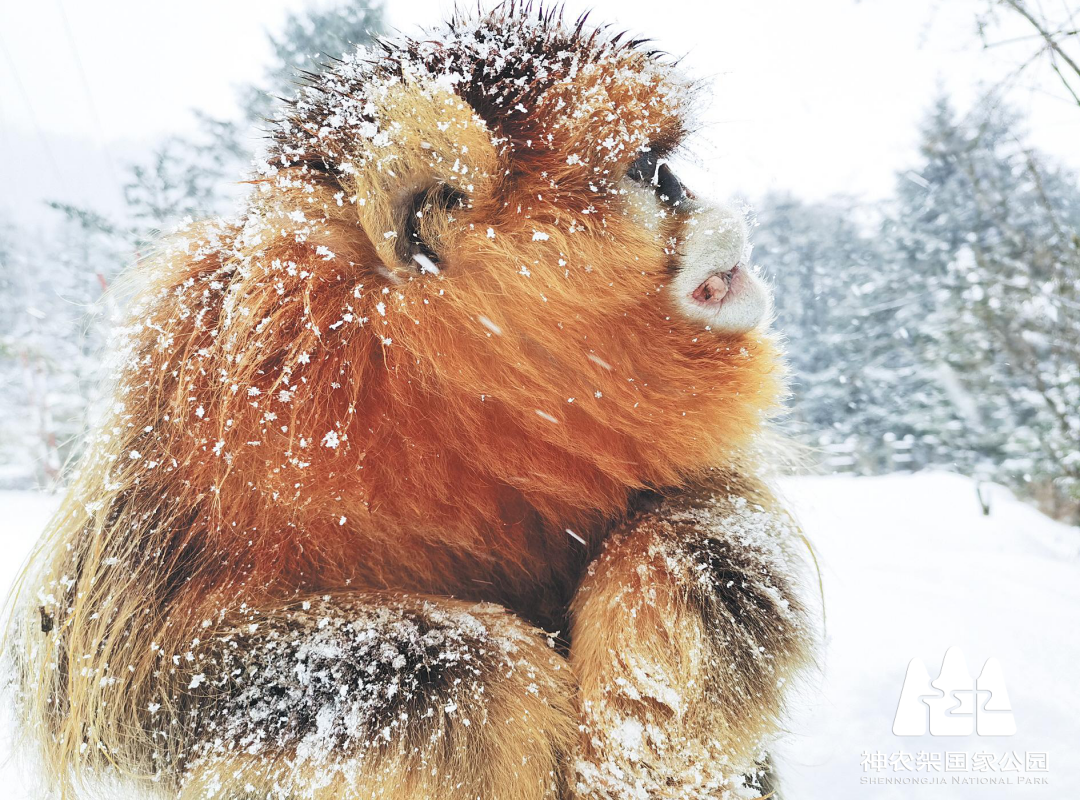 The aged "Dadan" sit at Dalongtan Research Base of Scientific Institute of Shennongjia National Park
Dalongtan has witnessed Shennongjia’s profound transformation from large-scale development to grand conservation. It has been a living chronicle of human-nature harmony, recording humanity’s exploration and achievements in understanding the world of the golden snub-nosed monkey. The transition from a nature reserve to a national park candidate represents far more than a name change. It signifies a comprehensive elevation of conservation philosophy. The national park system emphasizes the protection of integrity and authenticity of ecosystem, moving beyond the previous limitations of administrative boundaries.
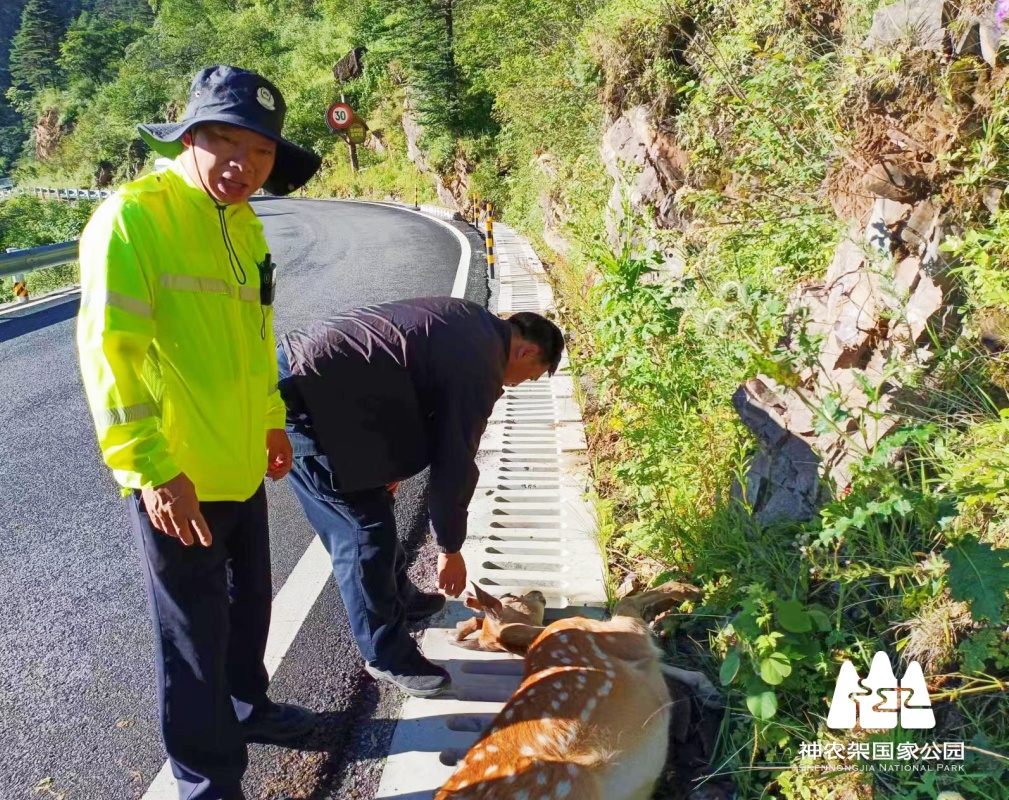 Patrolmen rescued a wounded sika deer
The Dalongtan research base embodies this philosophy. The scale of its buildings is strictly controlled, all wastewater undergoes special treatment, and even the outdoor lighting uses a spectrum designed to minimize impact on wildlife. The staff refer to themselves as “invisible people”—their presence is carefully managed to avoid disturbing the land's original inhabitants.
Within the Shennongjia National Park candidate area, a new protection model is taking shape: the strictest protection is enforced in core zones, completely prohibiting human interference; limited scientific research and ecological experiences are permitted in buffer and experimental zones. This zonal management ensures ecosystem integrity while enabling valuable scientific study.
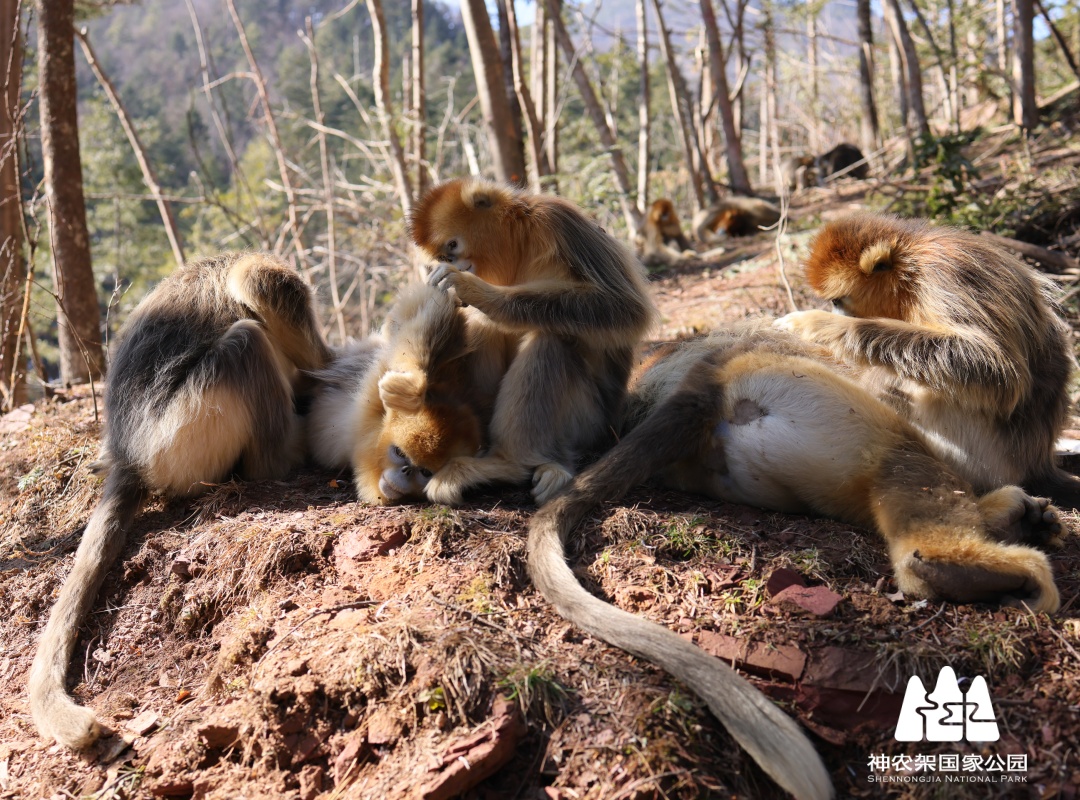 Golden snub-nosed monkeys bathed in the winter sunlight
As the star Sirius appears over Shennongding, faint rustling sounds emerge from the deep forest. A thin mist gradually fills the Dalongtan valley, and the entire natural world, along with the snow, settles into the deep cold of the winter night. It's uncertain if the sika deer will visit tonight. However, one can imagine that once ice and snow blanket the ground, the deer, like all herbivores, search for scarce food. Their memory surely holds this particular grassy lawn. Their very existence stands as powerful testament to a nation’s commitment to ecological protection and a profound interpretation of human-nature harmony.
Here, in this human exclusion zone, every life form tells the same story: when humanity is willing to step back and make space, nature will respond with abundant vitality. The Shennongjia National Park candidate area is precisely the most vivid chapter of this ongoing story. (By He Sai, Du Hua)

Address:36 Chulin Road, Muyu Town, Shennongjia Forestry District, Hubei Province 鄂ICP备18005077号-3
Phone:0719-3453368