
Beautiful China Album | Guarding the “Species Ark” with Technological Strength
Updated:2026-05-10 Source:Shennongjia National Park
Shennongjia, a pristine wilderness nestled in the heart of Central China, is not only one of the 14 globally significant biodiversity research areas, but also bears the vital mission of protecting the ecological barrier of Central China. Home to the most well-preserved subtropical forest ecosystem in the mid-latitudes of the Northern Hemisphere, it provides habitat for more than 70 species of nationally protected wildlife, including the golden snub-nosed monkey (Rhinopithecus roxellana) and the dove tree (Davidia involucrate Baill), earning it the reputation as the “Central China Species Gene Bank.”
Recently, reporters ventured into the candidate area of Shennongjia National Park, to take a closer look at how technology is equipping this “Species Ark” with a smart brain and unlocking a new model for biodiversity conservation.
 Dajiuhu Wetland | Photo by Chen Jinwu
Entering the Information Management Center of the candidate area of Shennongjia National Park, visitors are greeted by a giant LED screen displaying satellite remote-sensing images, real-time monitoring footage, and dynamic data curves woven, together into a comprehensive “digital ecological map” covering the entire region. This newly built integrated information management platform coordinates monitoring from space, air, and ground, establishing an efficient monitoring and response system.
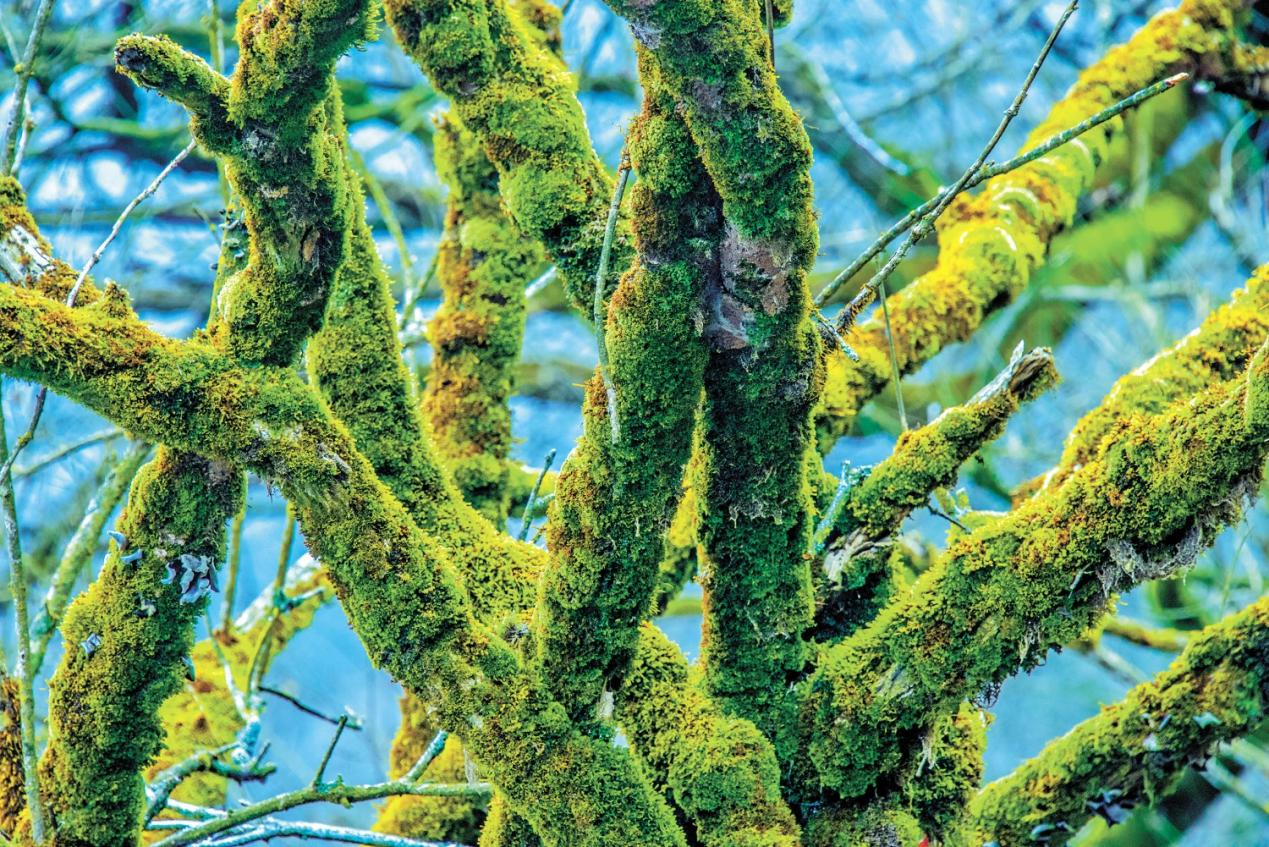 Rich in Moss Species | Photo by Shi Min
On the screen, the locations of 743 infrared cameras are clearly marked, while images captured by 50 real-time transmission cameras are sent back within seconds. The activity tracks of key protected species such as the golden snub-nosed monkey, forest musk deer (Moschus berezovskii), and sika deer (Cervus nippon) are dynamically displayed, alongside synchronized updates of intelligent identification results and environmental monitoring data. Together, these form a closed-loop, full-chain management system of “capture-transmission-identification-analysis-display.”
“In the past, monitoring was a dual challenge against time and environment,” Peng Linpeng, Director of the Information Management Center of Shennongjia National Park, told reporters. Under the traditional monitoring model, rangers had to carry equipment, trek through waist-high shrubs and slippery moss, and spend days or even half a month to retrieve the memory card of a single infrared camera. Data processing was even more cumbersome: photos had to be enlarged one by one, video footage reviewed segment by segment, and species and individual states repeatedly identified. The entire process took months. Not only was it inefficient, but data could also be lost due to sudden events such as heavy rains and landslides.
Since 2025, Shennongjia has placed technological empowerment at its core, and built a three-dimensional monitoring network combining “satellite remote sensing + high-altitude video + ground sensors + infrared cameras”, completely breaking the above-mentioned bottleneck.
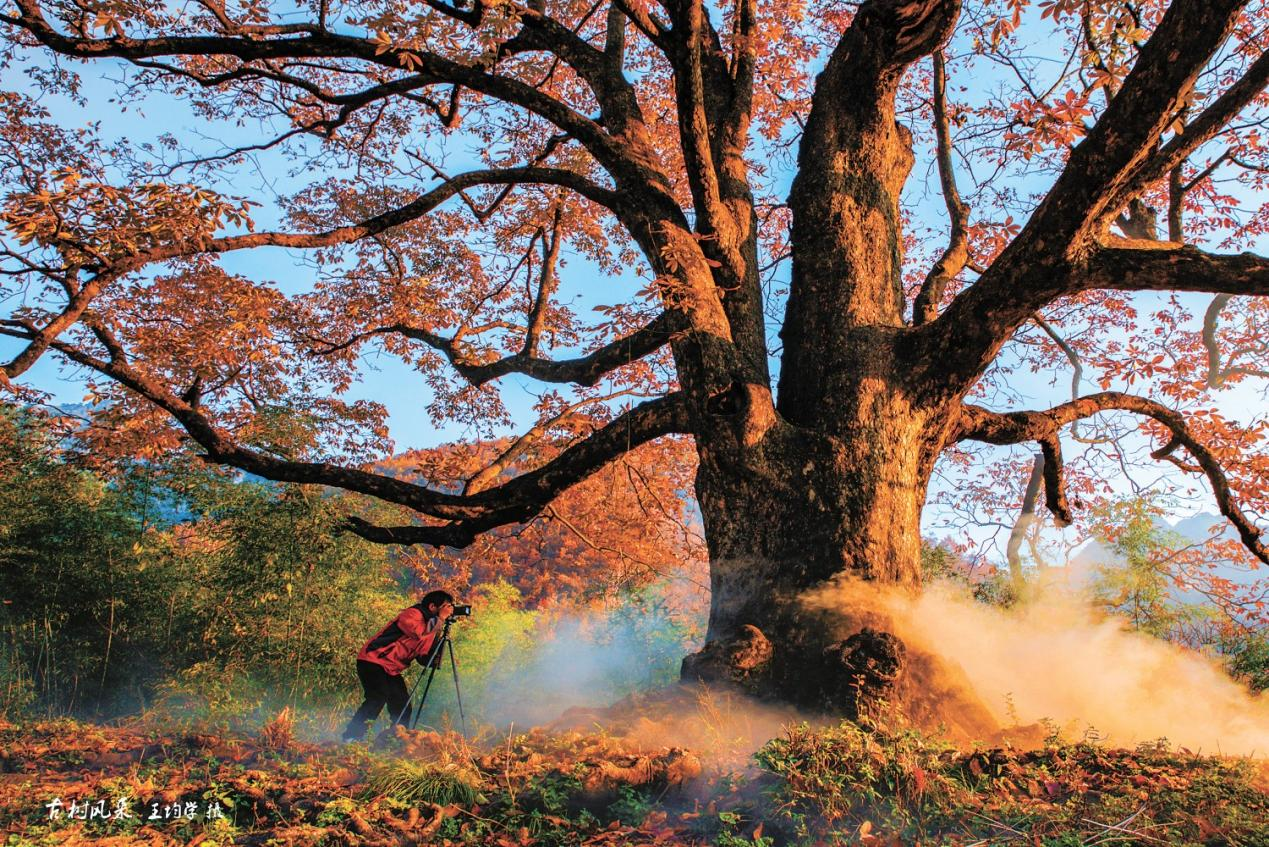 Protection of Ancient and Famous Trees | Photo by Wang Junxue
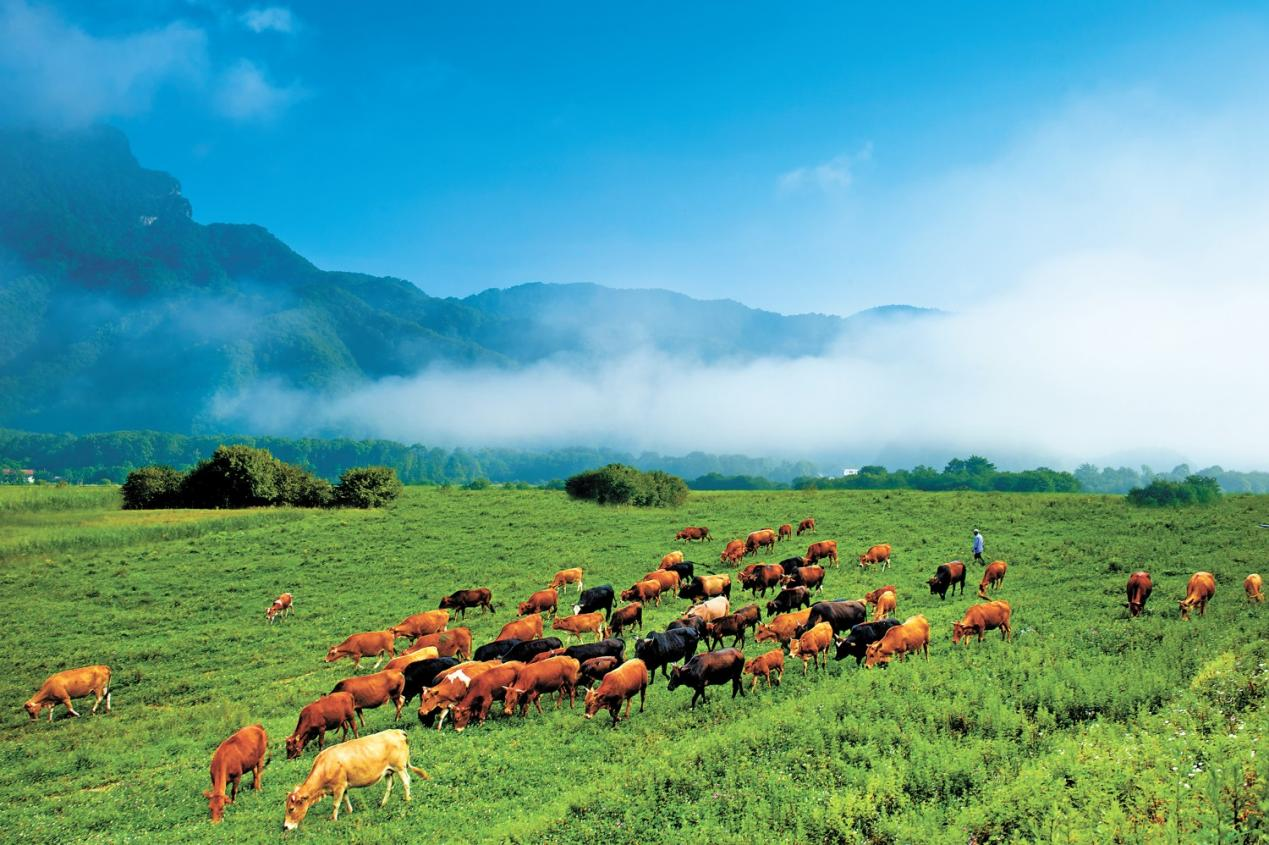 Green Carpet-like Grassland | Photo by Kong Tongron
 Beautiful Shennongding | Photo by Si Zhiqian
The “space” layer integrates satellite remote sensing scanning technology to achieve a macroscopic perception of the regional ecological environment, accurately capturing key information such as mountain displacement and vegetation changes. The “aerial” layer deploys 50 solar-powered real-time transmission infrared cameras, covering key areas including the core habitat of golden snub-nosed monkeys and the distribution areas of rare plants. These devices can automatically trigger image capture, with data transmitted back in real time via 4G/5G networks, eliminating manual memory card retrieval. The “ground” layer deploys universal sensors for understory fire risk, noise, and water quality, collecting real-time data on temperature, humidity, and fire conditions, while also integrating 743 traditional infrared cameras to achieve full-domain monitoring coverage of Shennongjia’s forests.
The core breakthrough of this system lies in the in-depth application of intelligent identification technology. The exclusive intelligent model developed by Shennongjia in collaboration with research teams can accurately identify 87 key protected species, marking Category Ⅰ protected animals in red and Category Ⅱ in blue. It can not only distinguish adult and juvenile golden snub-nosed monkeys but also assess the animals’ health conditions and developmental stages, effectively solving the long-standing problems of “misjudgment based on experience” and “ambiguous data” in traditional monitoring. Taking sika deer monitoring as an example, the system can automatically outline their peak nocturnal activity and core habitat at elevations of 1,800-2,500 meters. Through voiceprint recognition, it can also detect disturbances caused by human activity and automatically generate graphic reports on a daily, monthly, and seasonal basis. Data processing efficiency has increased by more than 10 times compared with traditional methods.
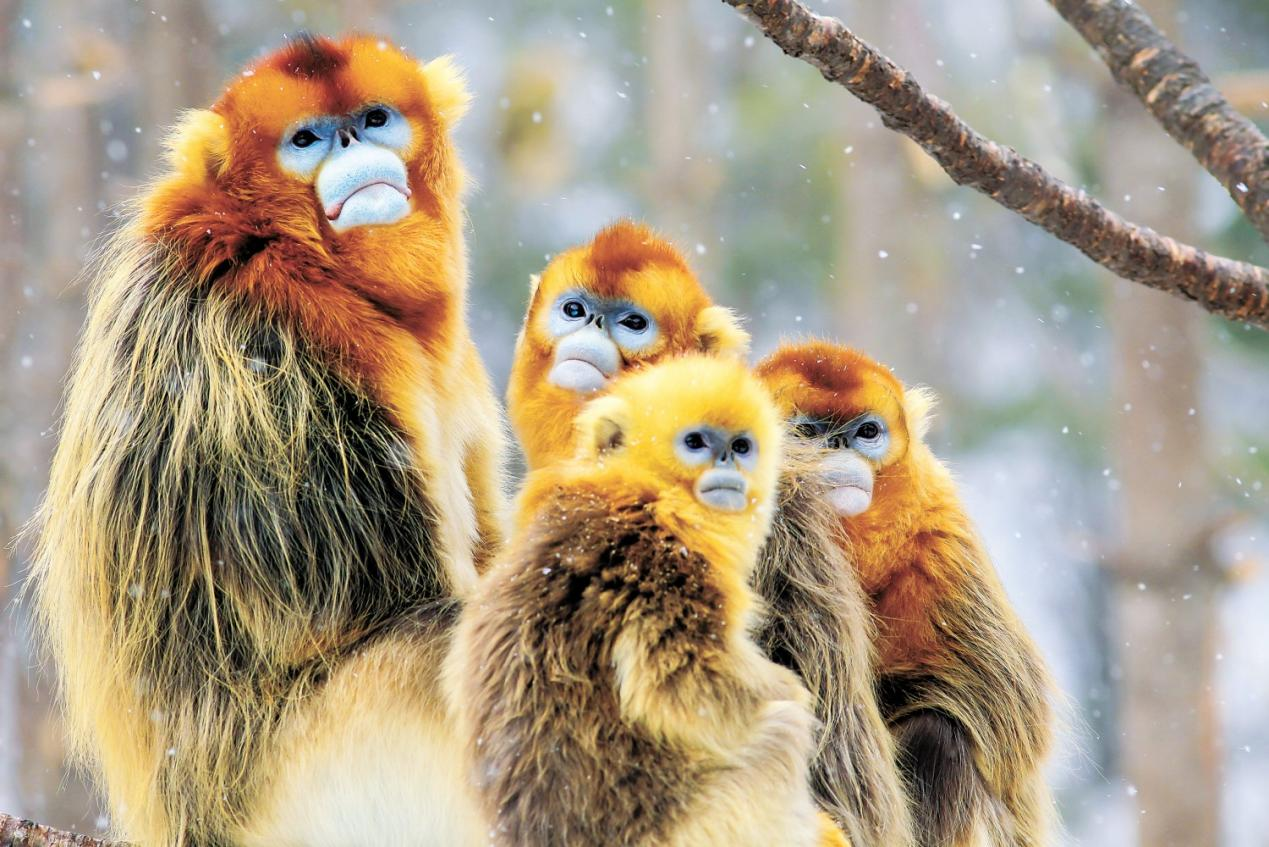 A Family of Shennongjia Golden Snub-nosed Monkeys | Photo by Shu Renqing
“Now, within just a few minutes, we can complete the entire process from discovery and identification to analysis and display, and grasp wildlife activity patterns on the very same day,” Peng Linpeng explained. To date, the system has collected more than 1 million valid monitoring records, providing precise and efficient data support for ecological protection decision-making.
Nestled in the halfway up Shennongding area, the Dalongtan Golden Snub-Nosed Monkey Field Research Base is not only the preferred research platform for golden snub-nosed monkey researchers at home and abroad, but has also become a demonstration base integrating conservation, scientific research, and public education.
“Currently, more than 100 golden snub-nosed monkeys belonging to 7 stable families live on the surrounding mountains,” introduced Yao Hui, Deputy Director of the Science Research Institute of Shennongjia National Park, while guiding reporters on a tour of the base. The Shennongjia golden snub-nosed monkey was originally a subspecies of the Sichuan golden snub-nosed monkey, but evolved into an independent species through geographical isolation, making it a flagship species for global biodiversity conservation. In the 1990s, its population numbered only around 500, with severe habitat fragmentation. Coupled with a low reproductive rate-“one birth every two years” and low survival rates due to infant monkeys falling during jumps, the species’ survival was in crisis.
To address the challenges in golden snub-nosed monkey conservation, the Dalongtan Base has established a protection model integrating “technological monitoring + scientific research + community collaboration”, shifting from “passive protection” to “proactive conservation”.
Yao Hui recalled that initial protection began with “leaving living space for the monkey troops”. The research team conducted trekking surveys across fragmented habitats, spending three years mapping out the first distribution map of golden snub-nosed monkeys. This helped promote forest closure and regeneration in core areas, while also building ecological corridors. “We planted native tree species such as the dove tree and Chinese yew (Taxus chinensis) between isolated mountains, creating 500-meter-wide ‘green corridors’ to allow scattered monkey troops to interact.” To date, the above project has restored 297,000 mu (198 km2) of degraded forest, expanding the golden snub-nosed monkey’s habitat to 401 square kilometers.
 Lake and Mountain Scenery | Photo by Guo Dechun
While restoring habitats, the base has joined forces with over 30 universities and research institutions to tackle the species’ reproductive and survival challenges: analyzing the genetic structure of golden snub-nosed monkey social groups and clarifying population evolution rules through gene sequencing; developing disease prevention and control technologies for golden snub-nosed monkeys, successfully obtaining 6 national invention patents; and establishing an artificial assisted breeding mechanism that has significantly increased the survival rate of infant monkeys from 50% to over 85%. Meanwhile, through long-term monitoring, the research team has fully grasped the social structure, reproductive patterns, and dietary characteristics of golden snub-nosed monkeys, providing solid scientific support for population recovery.
At the base’s observation point, reporters witnessed adult male monkeys vigilantly guarding their families, females carefully tending to their infants, and members grooming and playing with each other, demonstrating complex social behaviors. Yao Hui introduced that through long-term monitoring, the research team has mastered the social structure, reproductive patterns, and dietary characteristics of golden snub-nosed monkeys, laying a solid foundation for population rejuvenation.
As of April, the population of Shennongjia golden snub-nosed monkeys has increased to 1,618, with their range continuously expanding, serving as a key barometer of the region’s ecological conservation progress. (By Liu Siwen, Yang Guangming) 
Copyright Shennongjia National Park
Address:36 Chulin Road, Muyu Town, Shennongjia Forestry District, Hubei Province 鄂ICP备18005077号-3
Address:36 Chulin Road, Muyu Town, Shennongjia Forestry District, Hubei Province 鄂ICP备18005077号-3
Email:2673990569@qq.com
Phone:0719-3453368
Phone:0719-3453368


TOP