
A Visit to the Mysterious Shennongjia: Survey on the Amphibians and Reptiles
Updated:2023-06-16 Source:Shennongjia National Park
Located in the western part of Hubei Province and the northern section of the Three Gorges Reservoir area, Shennongjia spans a total area of 3,253 square kilometers, making it one of the largest primitive and secondary forest reserves in central China. With its rugged and ever-changing terrain, Shennongjia boasts a concentrated distribution of rare wildlife and tree species. As the “Roof of Central China”, it is famous for picturesque natural scenery, where mountains and waters complement each other. The legendary tale of the Shennongjia “Bigfoot” brings a touch of mystery and adds to the allure of this beautiful mountainous forest. Following the peaceful and secluded paths that wind through the vast expanse of green meadows, our expedition made our way to explore the amphibian and reptilian biodiversity of Shennongjia National Park.
On May 16, we embarked on a journey from Chengdu, covering a distance of 800 kilometers and traversing the misty mountains of Wushan along the way, finally arriving at our first destination—Muyu Town, Shennongjia, Hubei Province. The weather was clear. The sun set over the town nestled between mountains, with a stream gently flowing through it. The houses, scattered along the stream, created a picturesque scene reminiscent of a paradise. While enjoying the tranquility of Muyu Town, we were filled with anticipation for the upcoming exploration.
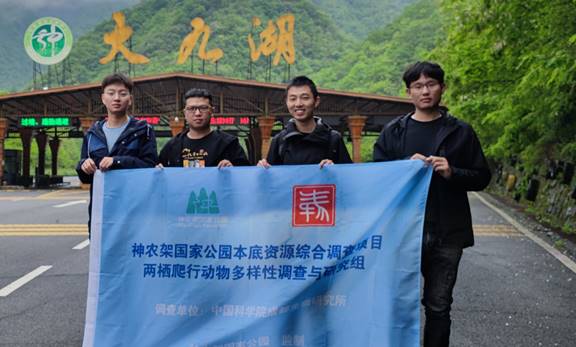 FIG.1 Photo of the expedition team at the gate of the Dajiuhu Scenic Area in Shennongjia
On May 17, we conducted a survey in the Guanmenshan area near Muyu Town. Guanmenshan offered a tranquil environment with lush vegetation. Following the moss-covered wooden trail and guided by the murmuring of flowing water, we ventured deeper into the forest. After walking for about two kilometers, we came across a meandering stream cascading down from the mountains. It was so intriguing that we descended into the valley and proceeded upstream. Along the way, we not only observed the surrounding environment and wildlife, but also conducted tests and recorded data on the water and soil conditions. The stream was clear and flowed slowly, with several calm pools where rocks and fallen leaves accumulated, providing an ideal habitat for amphibians. We did not spot any traces of amphibians and reptiles during the daytime, so, accompanied by the songs of birds and the chirping of insects, we patiently waited for the sunset in the mountains while enjoying our packed meals, eagerly anticipating having a nocturnal encounter with these fascinating creatures we had been longing for.
Our patience finally paid off. After nightfall, equipped with waterproof gear, we went on along the stream. Along the way, we encountered Bufo gargarizans, Feirana quadranus, and their tadpoles. To our delight, in a calm pool with gentle water flow, we spotted the nationally second-class protected species—Liua shihi. They quietly perched on rocks or hid beneath the accumulated fallen leaves. Excitedly, we captured photographs of these creatures and their surroundings, documenting the environment’s conditions and the species of the area. Finally, we concluded our survey in Guanmenshan and returned to our lodging around midnight.
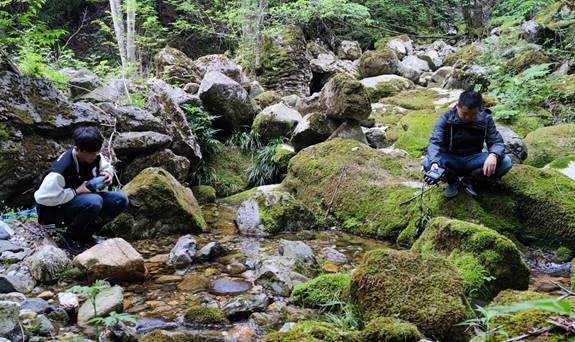 FIG. 2 The team testing water and soil for environmental factors
Over the following two weeks, we conducted surveys in various locations, including Qianjiaping, Muyuping, Caihong Valley, Huaping, Nanyang Town, Xiaguping, Dajiuhu, Shennongding, Longtan, Jiuhu Forest Farm, and Jiuchong Village. We were immersed in the diverse landscapes in these places: charming and picturesque Muyuping, Dajiuhu lush with vegetation, and Shennongding shrouded in mist and clouds. The unpredictable weather also added to the fun of our trip. While Qianjiaping and Muyuping enjoyed sunny days, heavy rain accompanied our arrival at Xiaguping and Dajiuhu. Throughout the journey, we not only marveled at the varying climate and scenery of Shennongjia, but also found ourselves deeply captivated by the rich amphibian and reptile species found here. Besides forests, we conducted surveys of farmlands, streams, and ponds within Shennongjia, too.
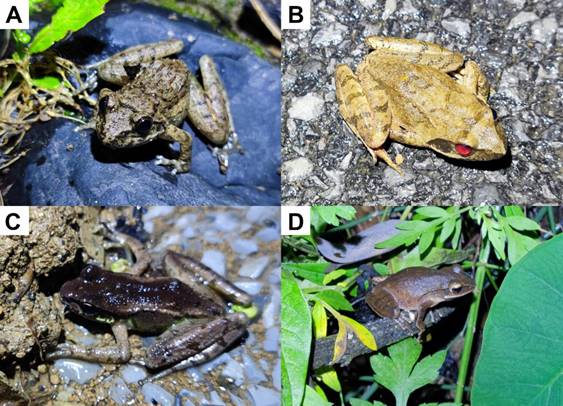 FIG. 3 Batrachia: A. Feirana quadranus; B. Rana chensinensis; C. Amolops granulosus; D. Polypedates braueri
 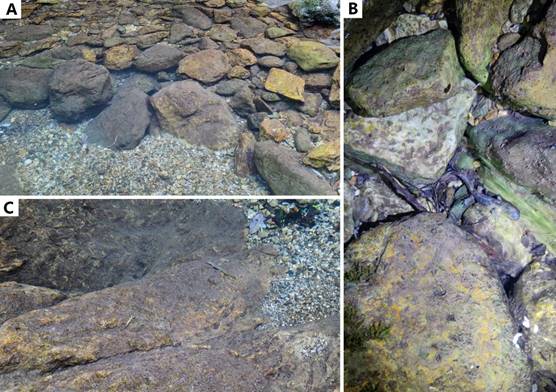 FIG. 4 Liua shihi in streams in Guanmenshan Scenic Area
 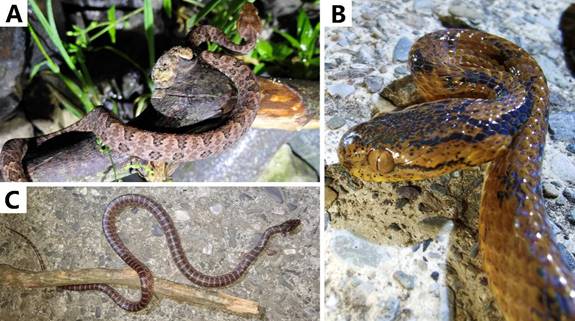 FIG. 5 Snakes: A. Protobothrops mucrosquamatus; B. Pareas boulengeri; C. Lycodon rufozonatus
On May 30, we ended the survey and returned to Chengdu from Gaoqiao Town. Looking back on the two weeks, we gained a great deal. For one, we collected a wealth of basic ecological data and biological samples, including information on water and soil environments, photographs of animals and their habitats, records of amphibians and reptiles, e-DNA water samples, as well as animal specimens and tissue samples. These foundational data and samples will contribute to a better understanding of the ecosystem and the biodiversity of amphibian and reptilian life in Shennongjia, so as to specify the conservation needs of the region. We also experienced the allure and preciousness of natural resources. This will inspire us to continue our scientific survey and documentation in an effort to facilitate the understanding and effective conservation of diverse amphibian and reptilian species and these valuable natural resources.
Written by: Chen Qiheng, Shen Cheng, Ma Shun and Zhao Tian Reviewed by: Jiang Jianping
Chengdu Institute of Biology, Chinese Academy of Sciences

Copyright Shennongjia National Park
Address:36 Chulin Road, Muyu Town, Shennongjia Forestry District, Hubei Province 鄂ICP备18005077号-3
Address:36 Chulin Road, Muyu Town, Shennongjia Forestry District, Hubei Province 鄂ICP备18005077号-3
Email:2673990569@qq.com
Phone:0719-3453368
Phone:0719-3453368


TOP