Researchers and Golden Snub-nosed Monkeys
Updated:2022-07-08 Source:Shennongjia National Park
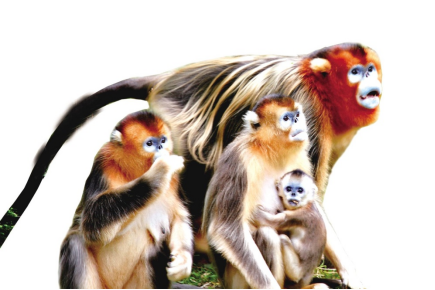
"Ee-ee", the sound of monkeys resounded in the Dalongtan Field Research Base for Golden Snub-nosed Monkeys, Shennongjia National Park. With a few calls from researcher Huang Tianpeng, the monkeys gathered around him from the treetops, hills and creeksides.
These monkeys habitually wake up at sunrise and rest at sunset, so researchers must get up earlier and sleep later than them in order to complete their tasks such as follow-up study, dynamic monitoring, and behavior data collection. Conflicts, new births, and "family leader" changes are common in a flock of monkeys. The observation and recording of their physiological and behavioral changes are part of researchers' daily tasks.
Over the years, the researchers have traveled all over the mountains and waters where the golden snub-nosed monkeys inhabit in Shennongjia, and have thoroughly investigated their population, number and distribution. Having traveled more than 20,000 kilometers and surveyed an area of over 400 square kilometers, their efforts provided a scientific and theoretical basis for the effective protection of golden snub-nosed monkeys in Shennongjia. Also, 25 wildlife corridors have been built in the Park and the Alliance of Neighboring Nature Reserves in Western Hubei and Eastern Chongqing was established. The fragmented habitats were connected by a "road and bridge network" for animals, further optimizing the living environment of golden snub-nosed monkeys.

Address:36 Chulin Road, Muyu Town, Shennongjia Forestry District, Hubei Province 鄂ICP备18005077号-3
Phone:0719-3453368